


The trip to my next destination, the capital of Portugal’s Alentejo region, Évora, started seamlessly. The Rede Expressos bus was listed on the board and was at the station on time.
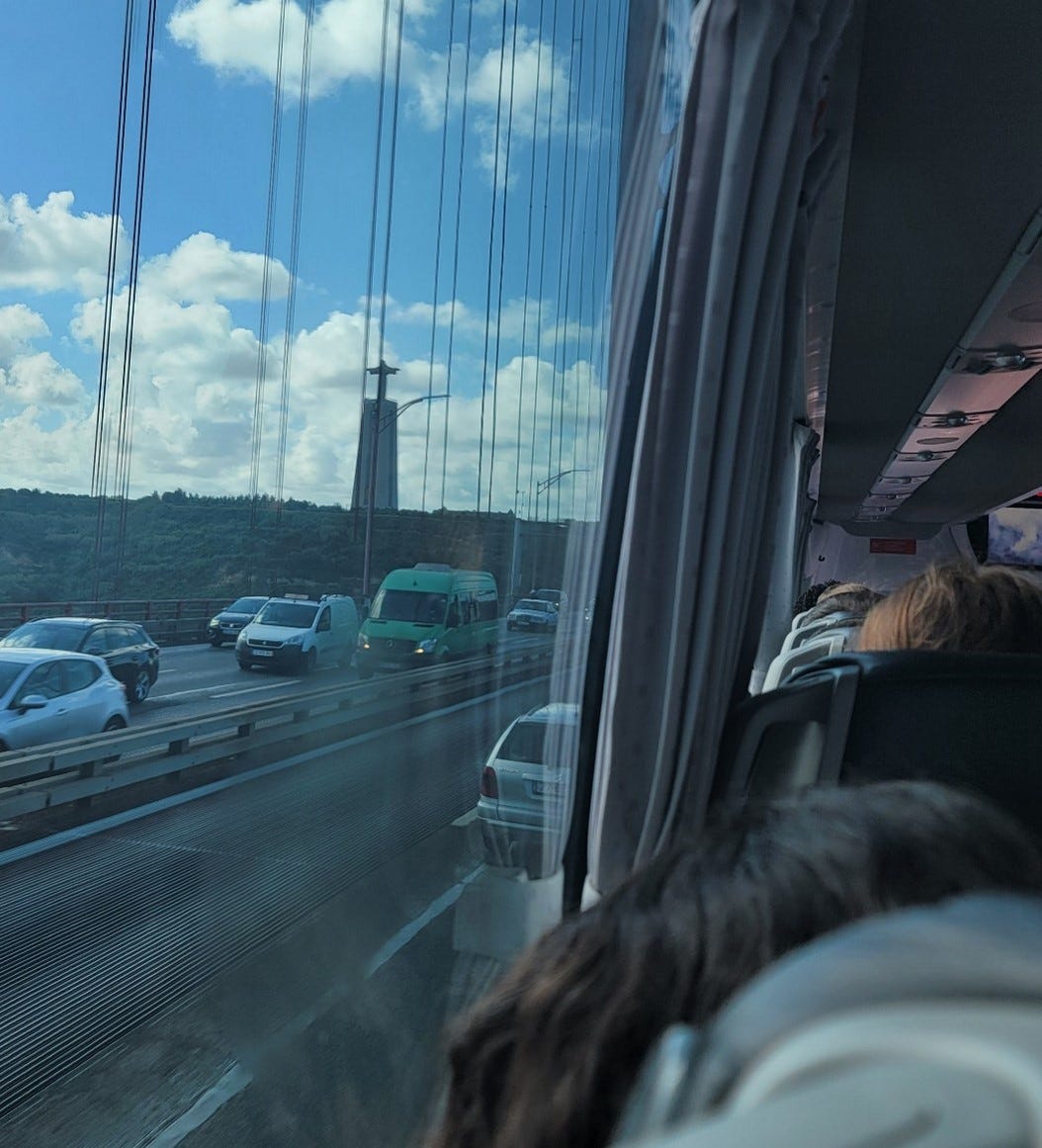
I was sad to leave Lisbon, where I made so many fine memories. On the ride over the long bridge across the Tagus River, I snapped the last picture of Christ the King, reminiscent of the Christ the Redeemer statue in Rio de Janeiro:
Upon on-time arrival in Évora, only a couple of hours later, I took a taxi to my hotel.
It looked fairly inauspicious from the outside:
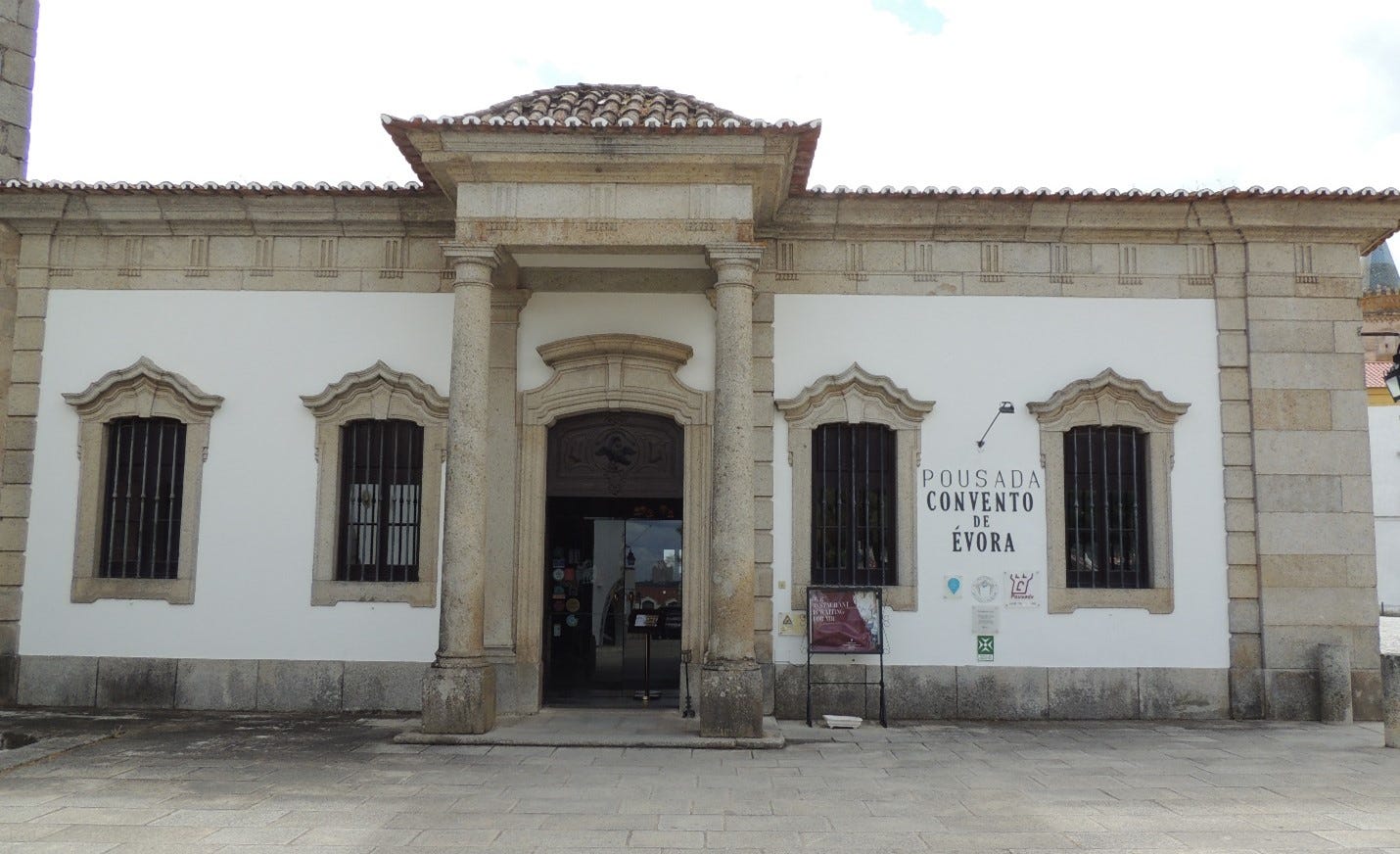
No wonder – it was a former convent! I was assigned “Cell 4” on the first floor
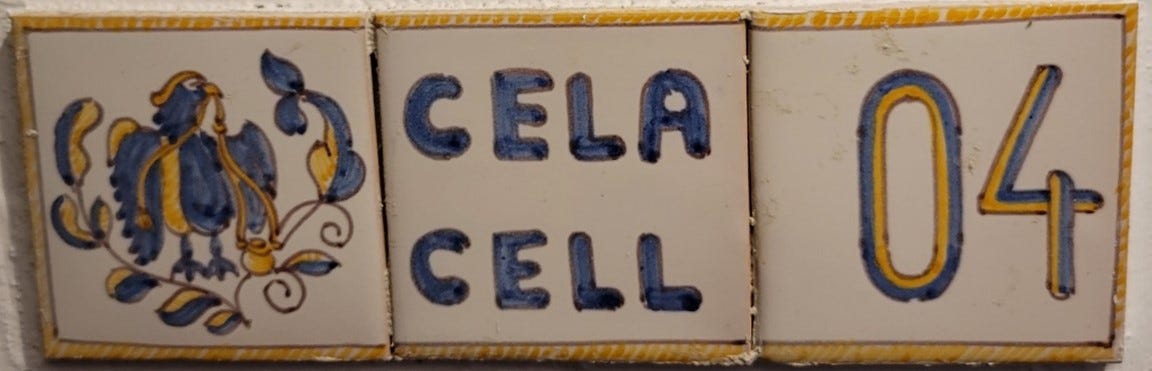
, which turned out to be much more spacious than expected – with its own living room
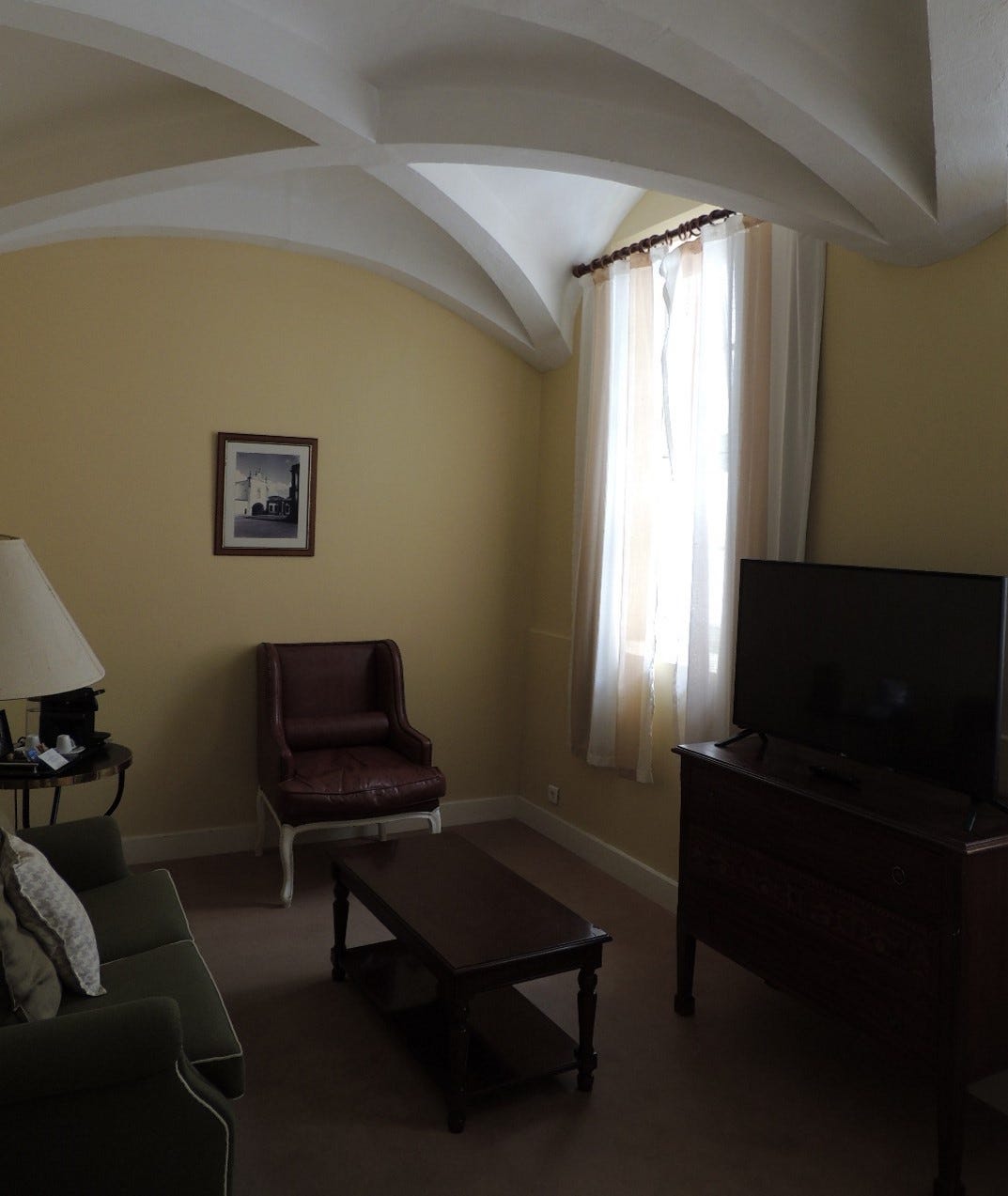
, and a separate bedroom:
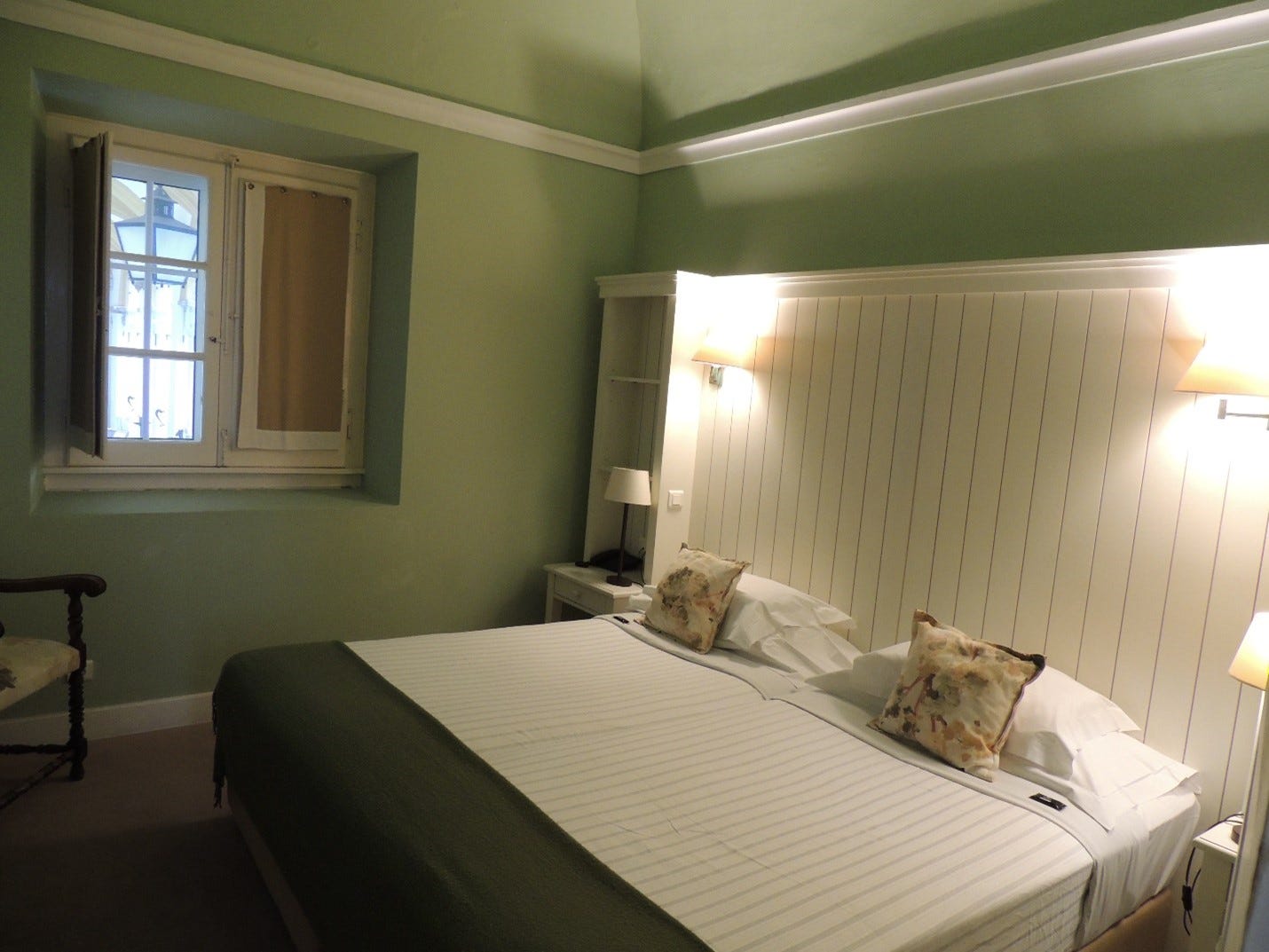
It was when I stepped back outside that I realized my incredible luck in securing this accommodation. On the left, this is the view I beheld:
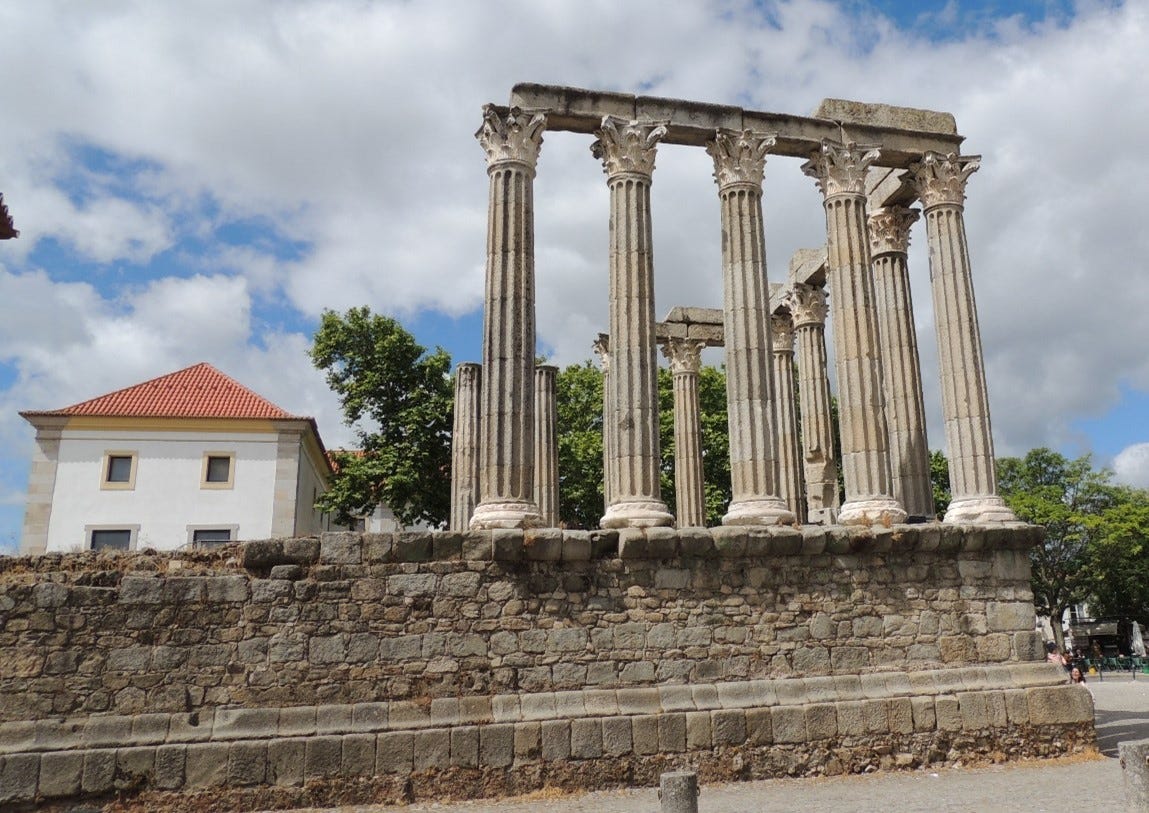
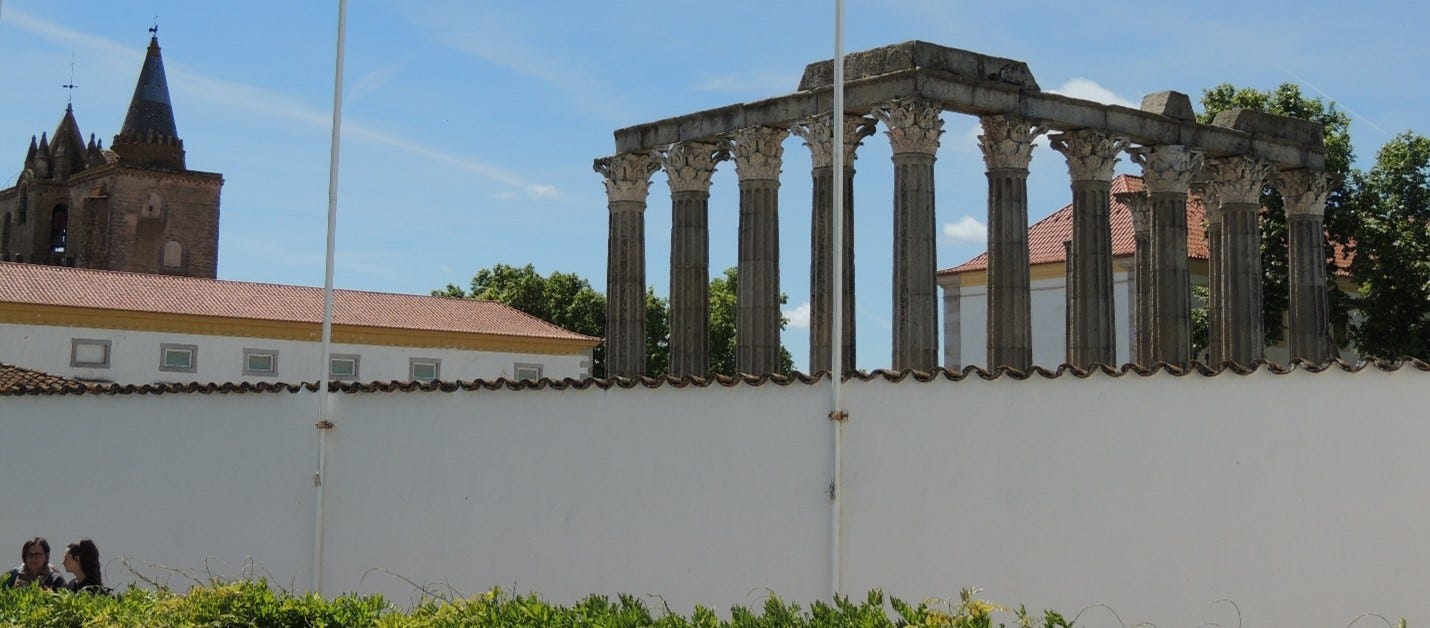
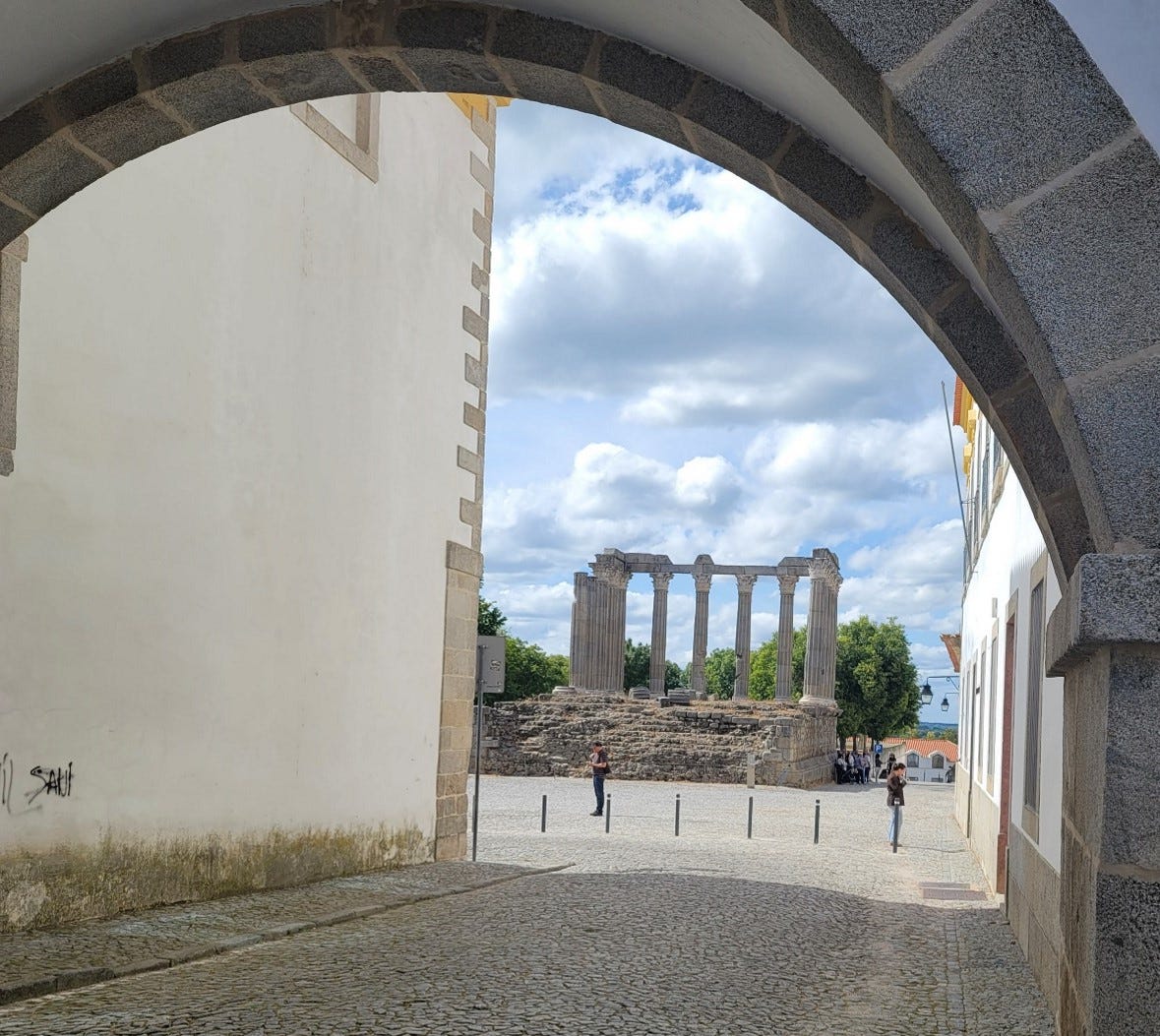
A Roman temple from the 1st century!!! In better condition than many other ruins I’ve seen to date!
On my right, I saw Palácio Cadaval, the ancestral home of the Dukes of Cadaval, dating from the 14th century!!! (and open to the public)
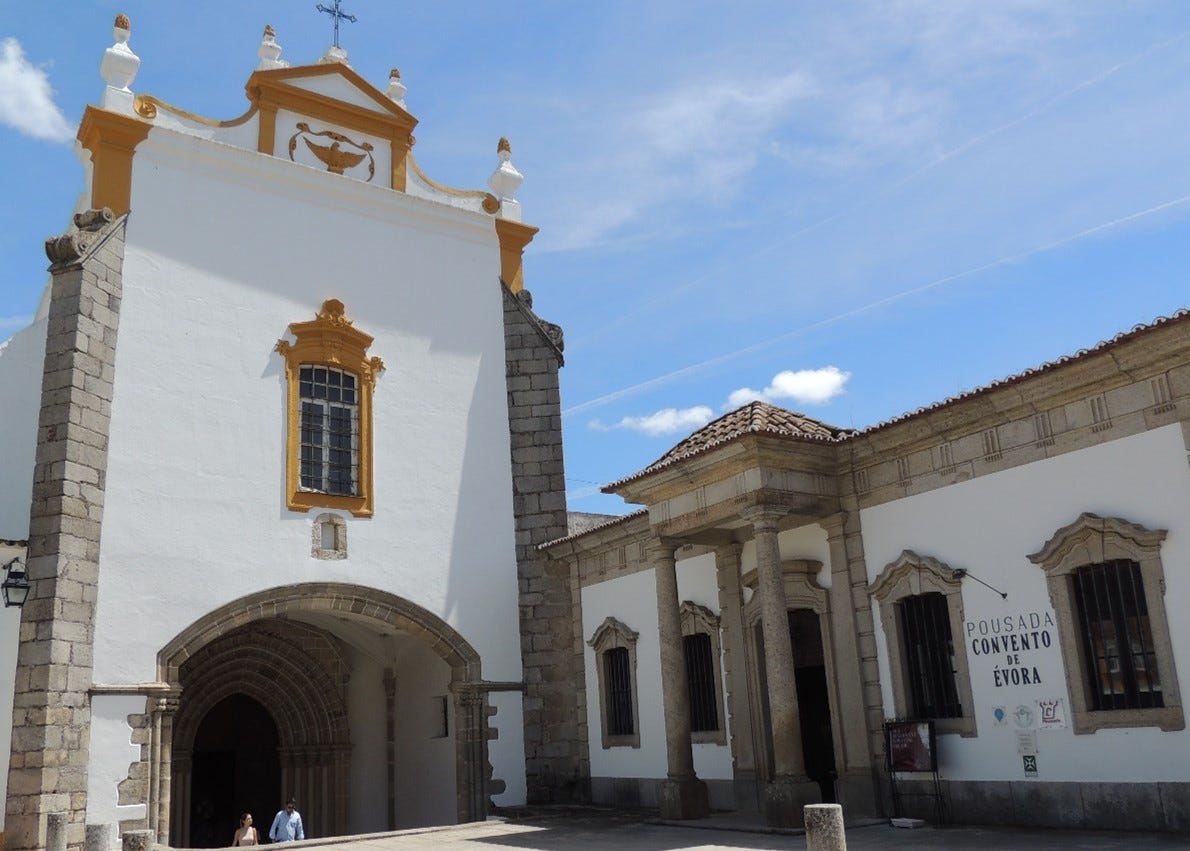
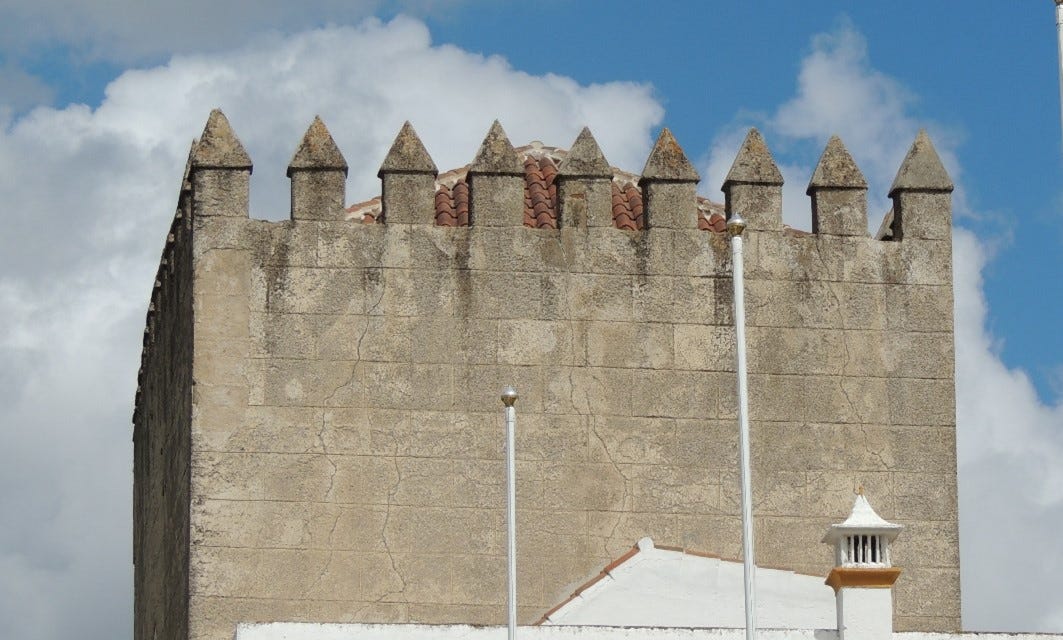
And straight ahead, there was a park marked Centro Histórico de Évora, where I would spend a lot of time,
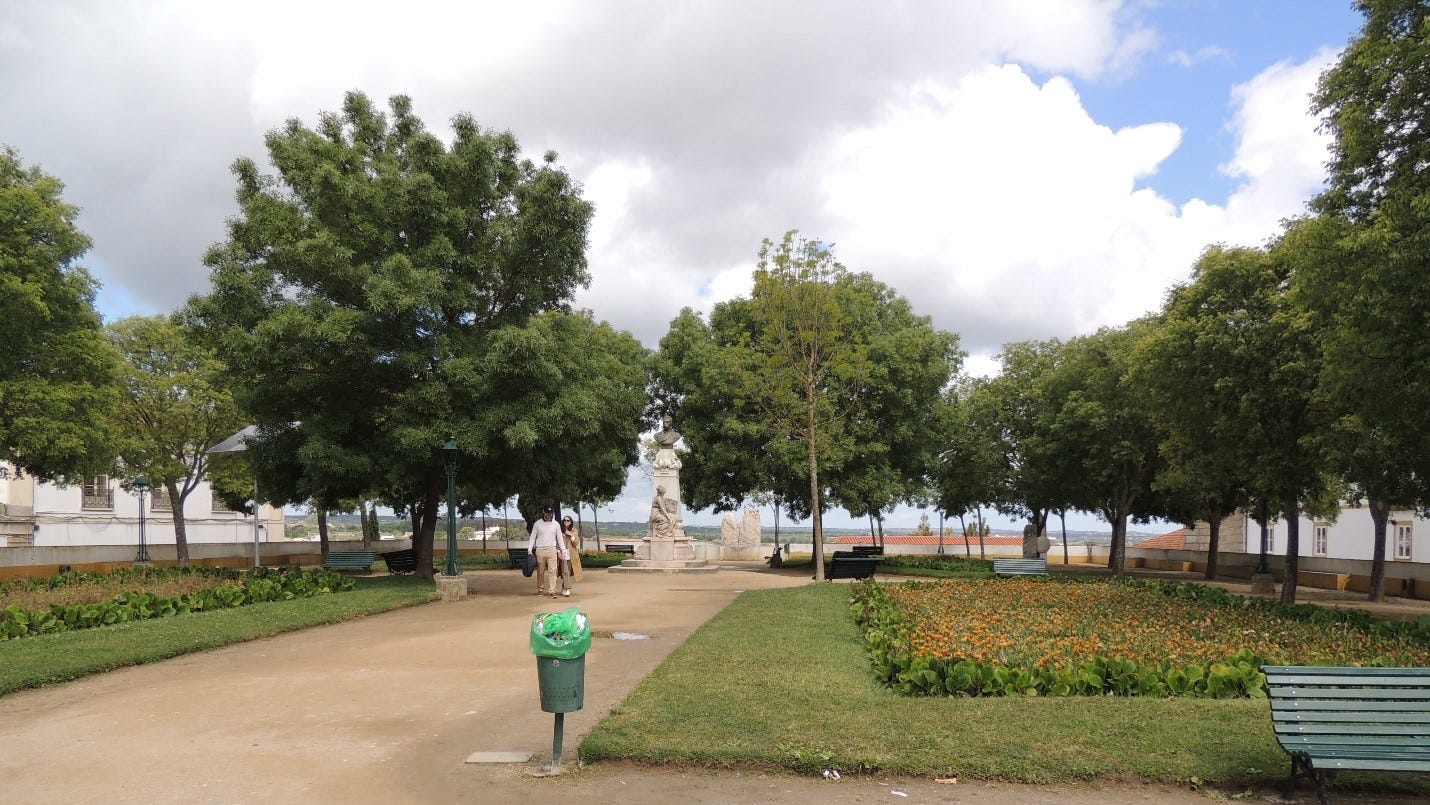
with a commanding view of the town!!!
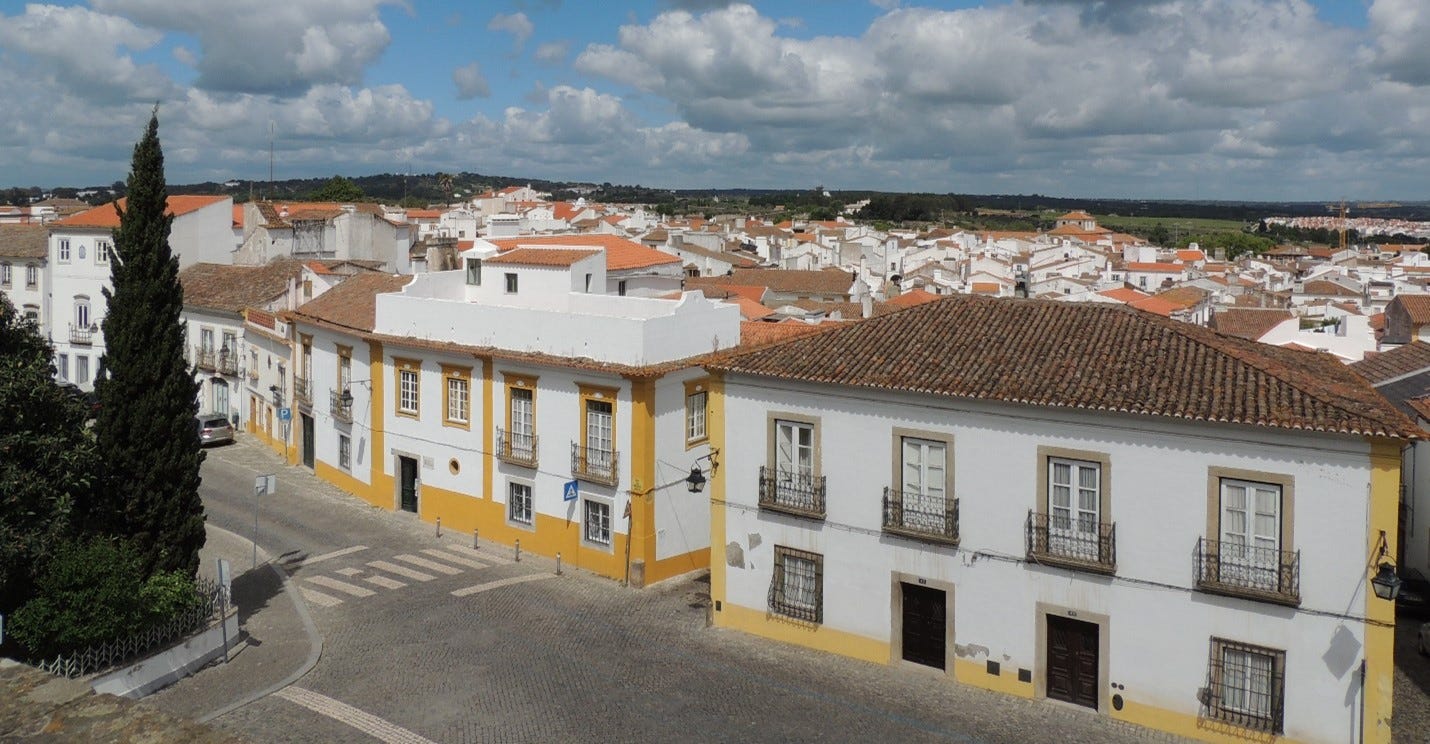
I was just overwhelmed. All this just steps away!
I had a late lunch at an excellent restaurant recommended in the guide, Dom Joaquim, where I tasted the excellent local wine for the first time,
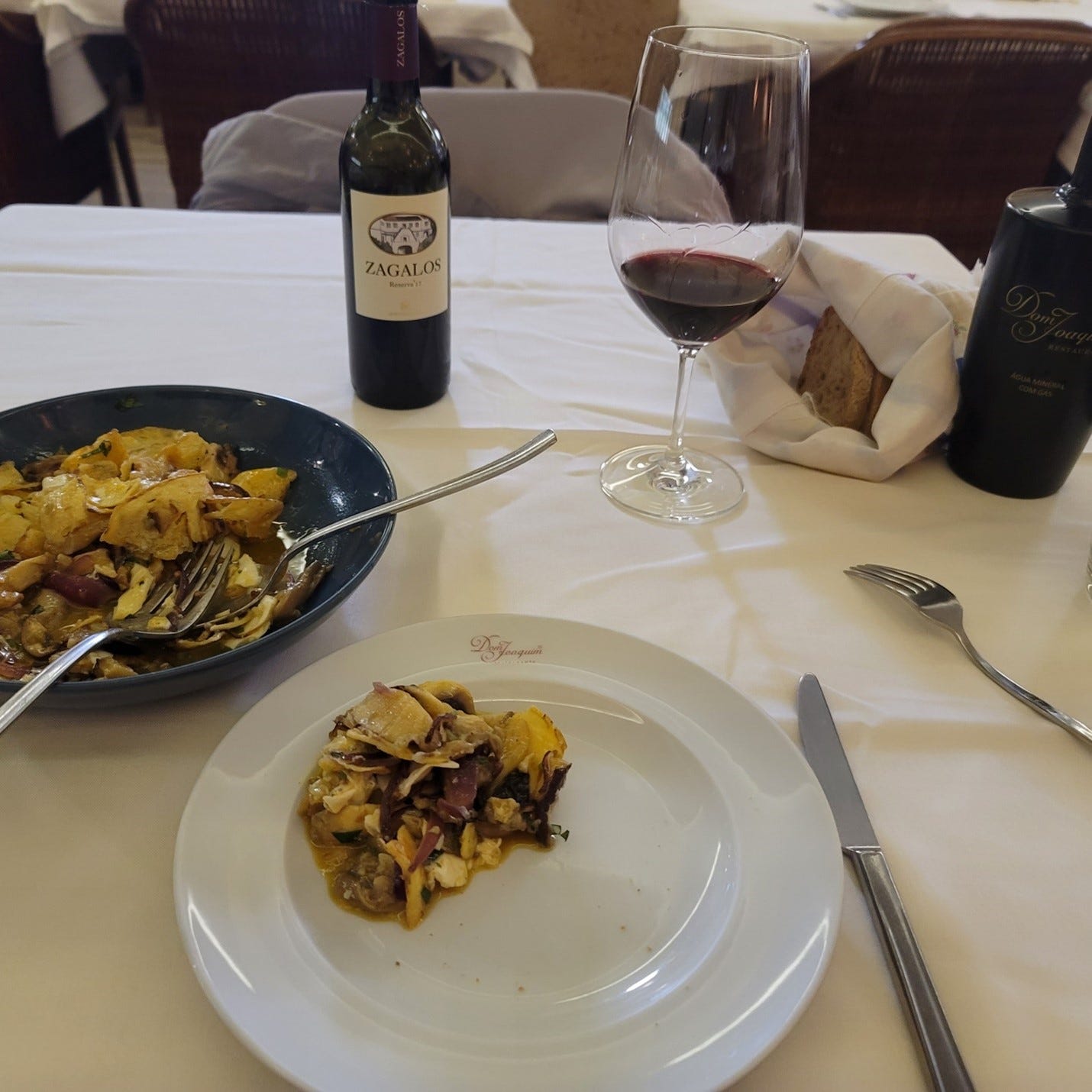
and went to explore the city.
When I returned, it was getting dark, and the temple was lit up! What an incredible sight:
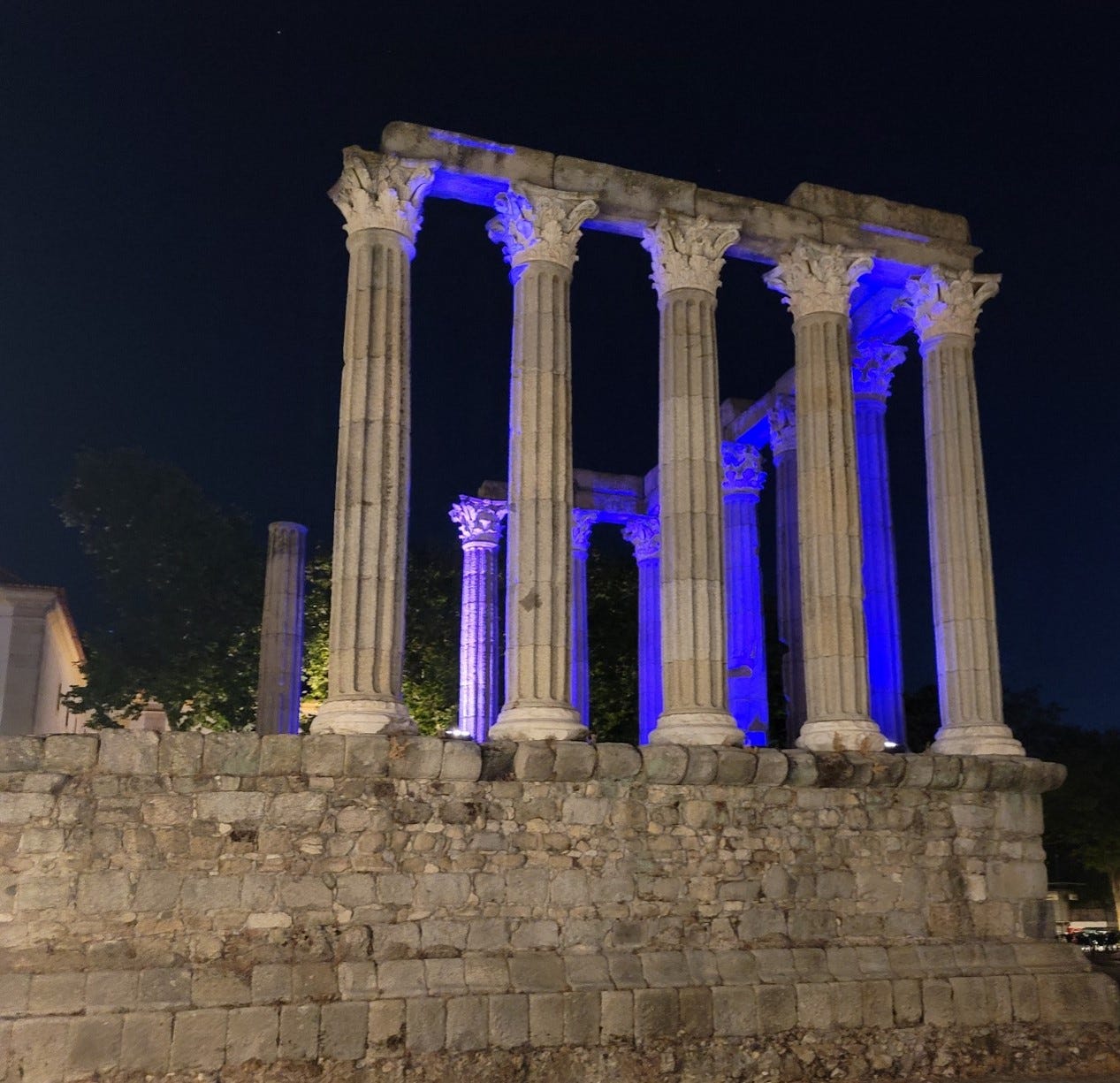
I couldn’t believe I was privileged to see and experience all this…
The next morning started with breakfast at my “convent”:
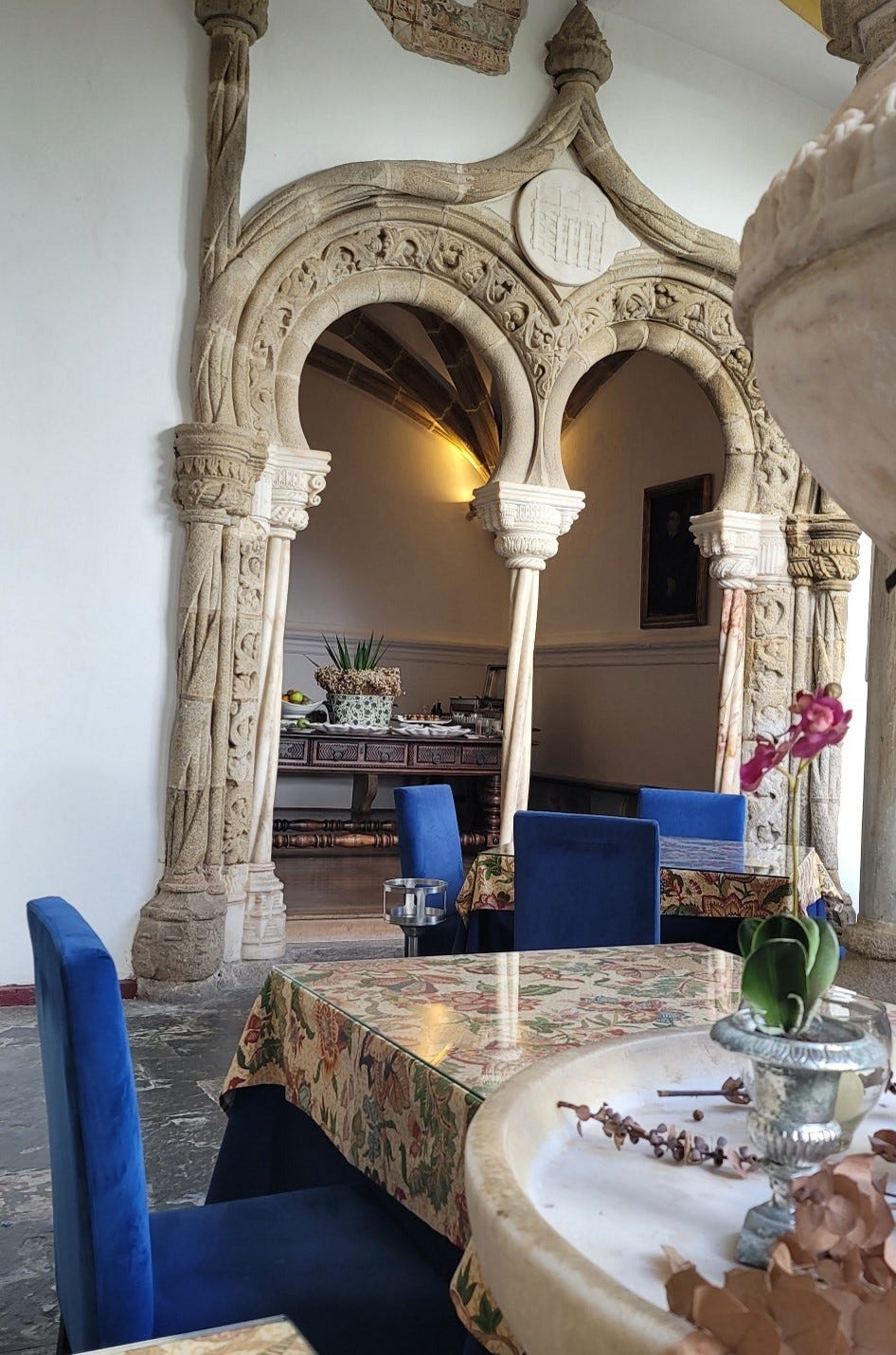
Those nuns didn’t have it so bad!
I decided to familiarize myself with the town overall by doing Rick Steves’ “Évora walk,” which starts in the main town square - Praça do Giraldo. It’s named after Geraldo the Fearless, a knight who liberated the town from the Moors. The legend has it that he beheaded the two town lookouts, a father and a daughter, and the town’s coat of arms features Geraldo riding over the two heads with his sword held high:
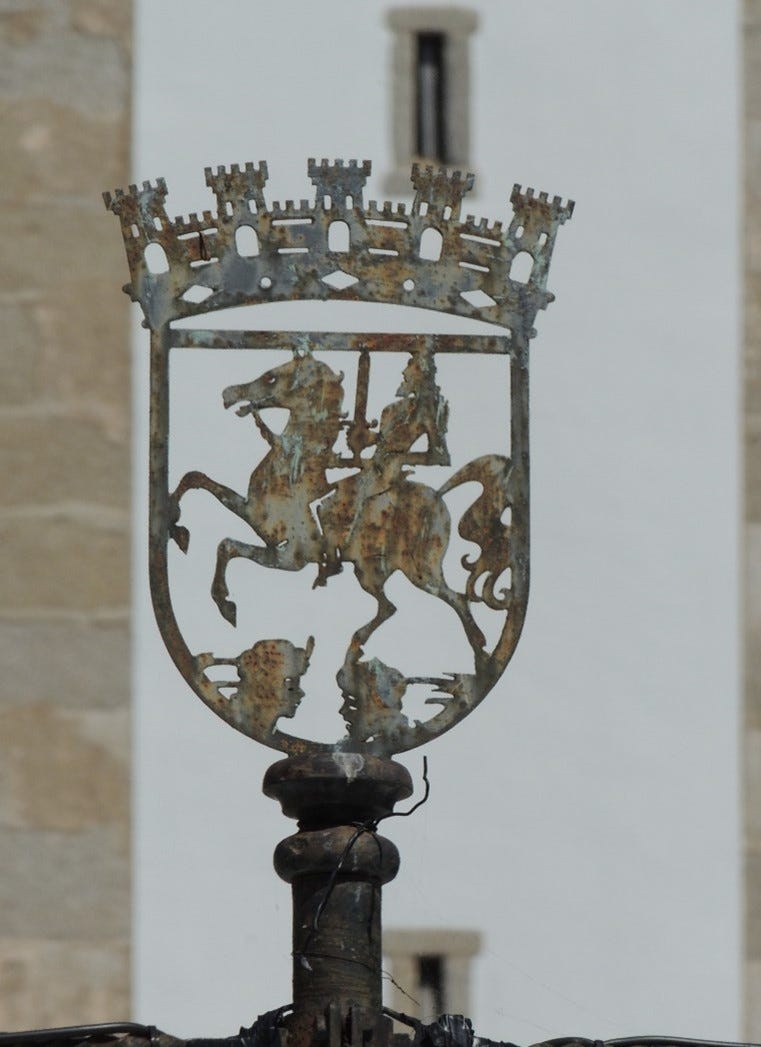
It’s on top of every lamppost.
Here’s the town square:
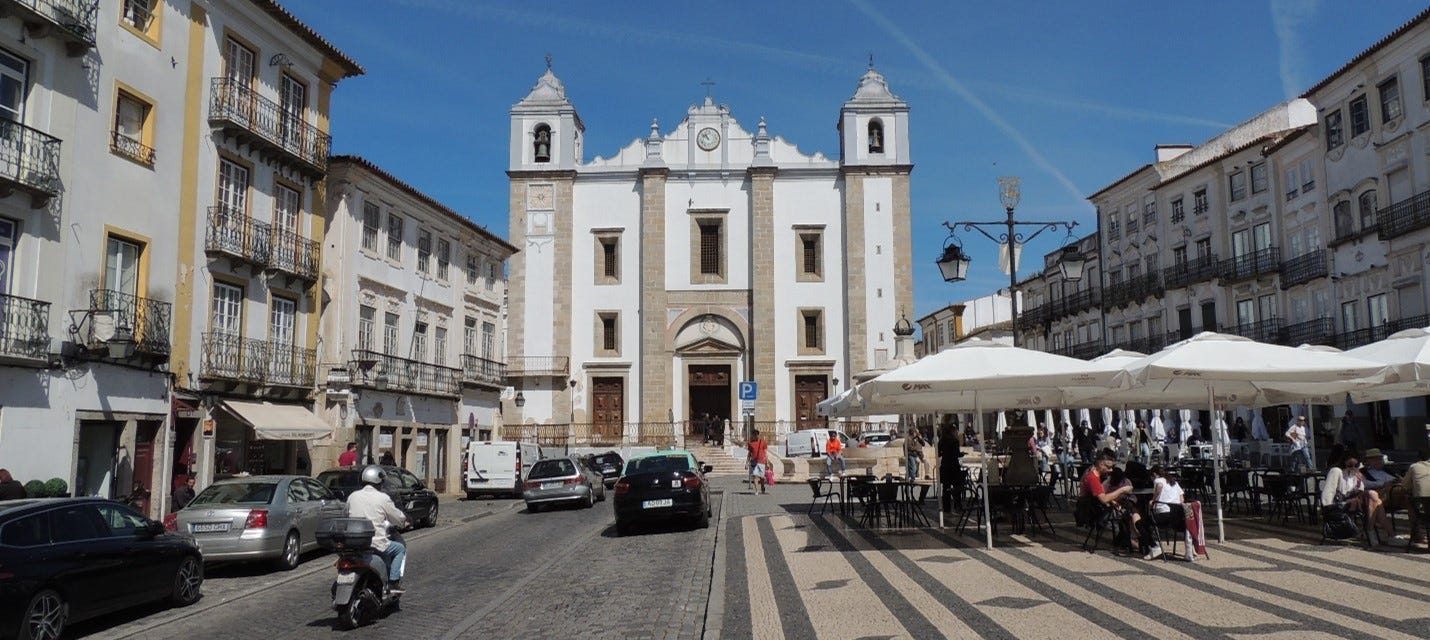
It sure looks peaceful now, but when King João III lived in Évora in the 1540s, this plaza was used to burn heretics at the stake!
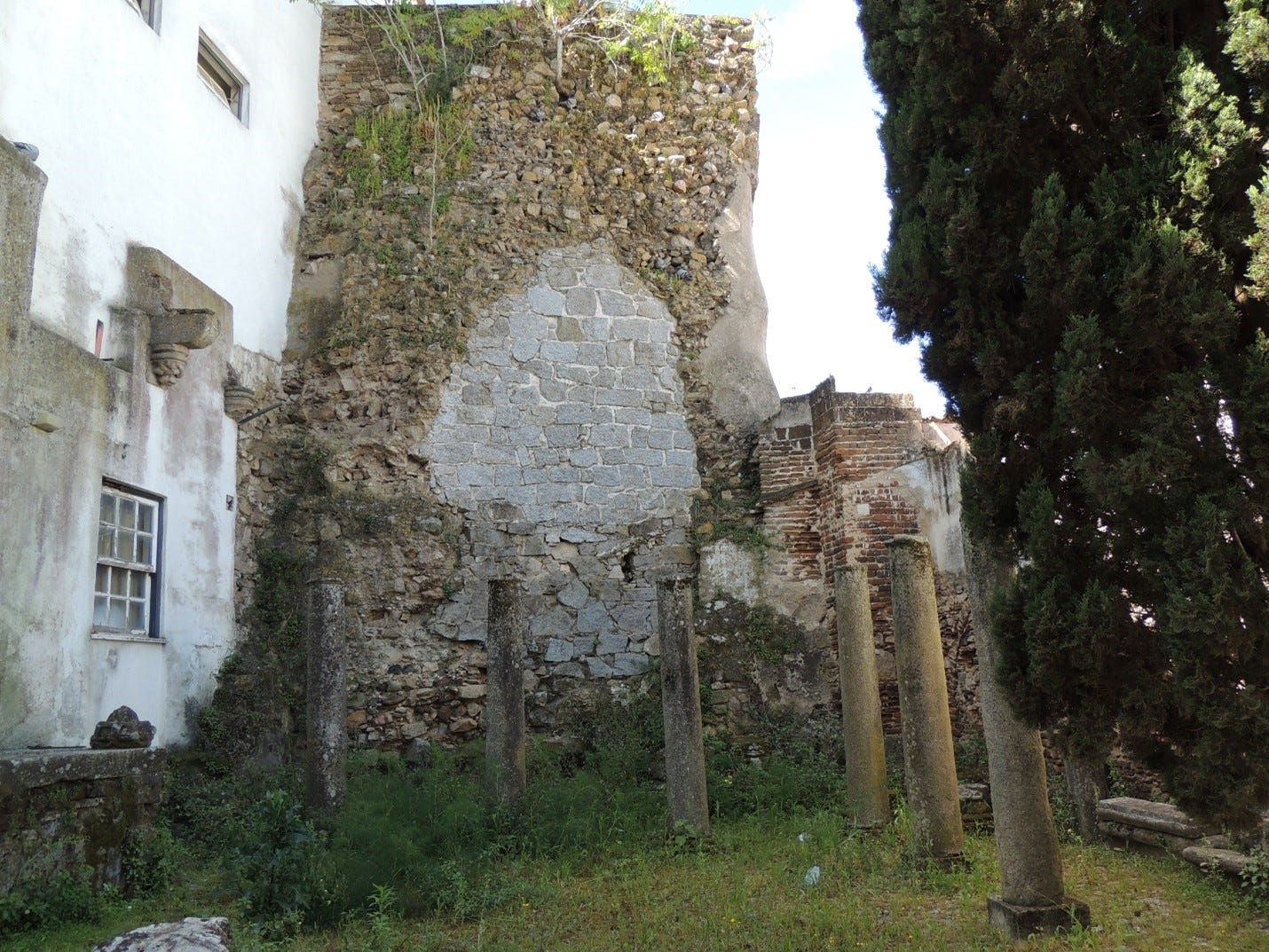
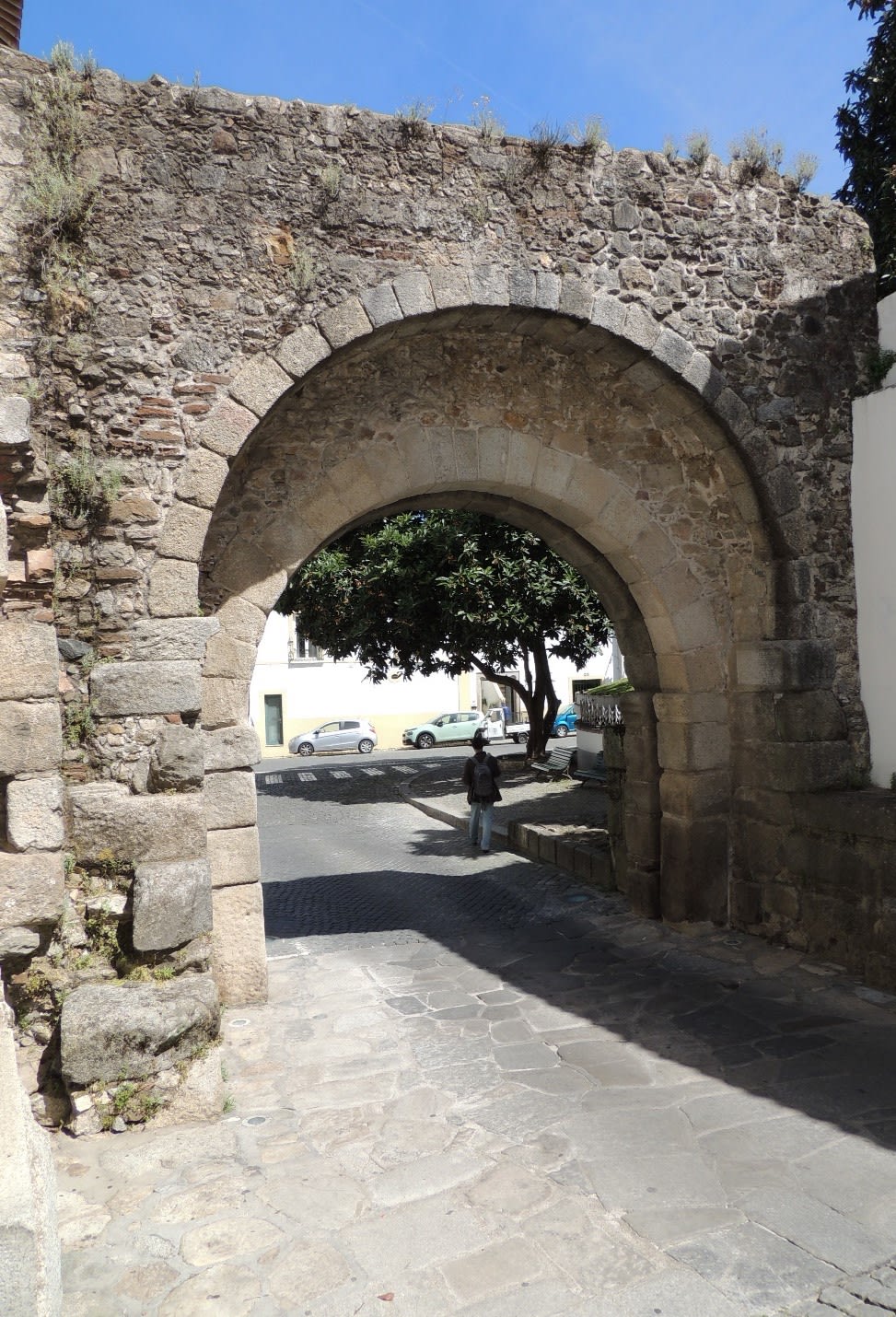
Over many centuries, the town has been fortified with different walls by the Romans, the Visigoths, the Moors, and the Christians. Some houses used the existing wall remains as their own walls! Here’s one using remnants of a Roman wall:
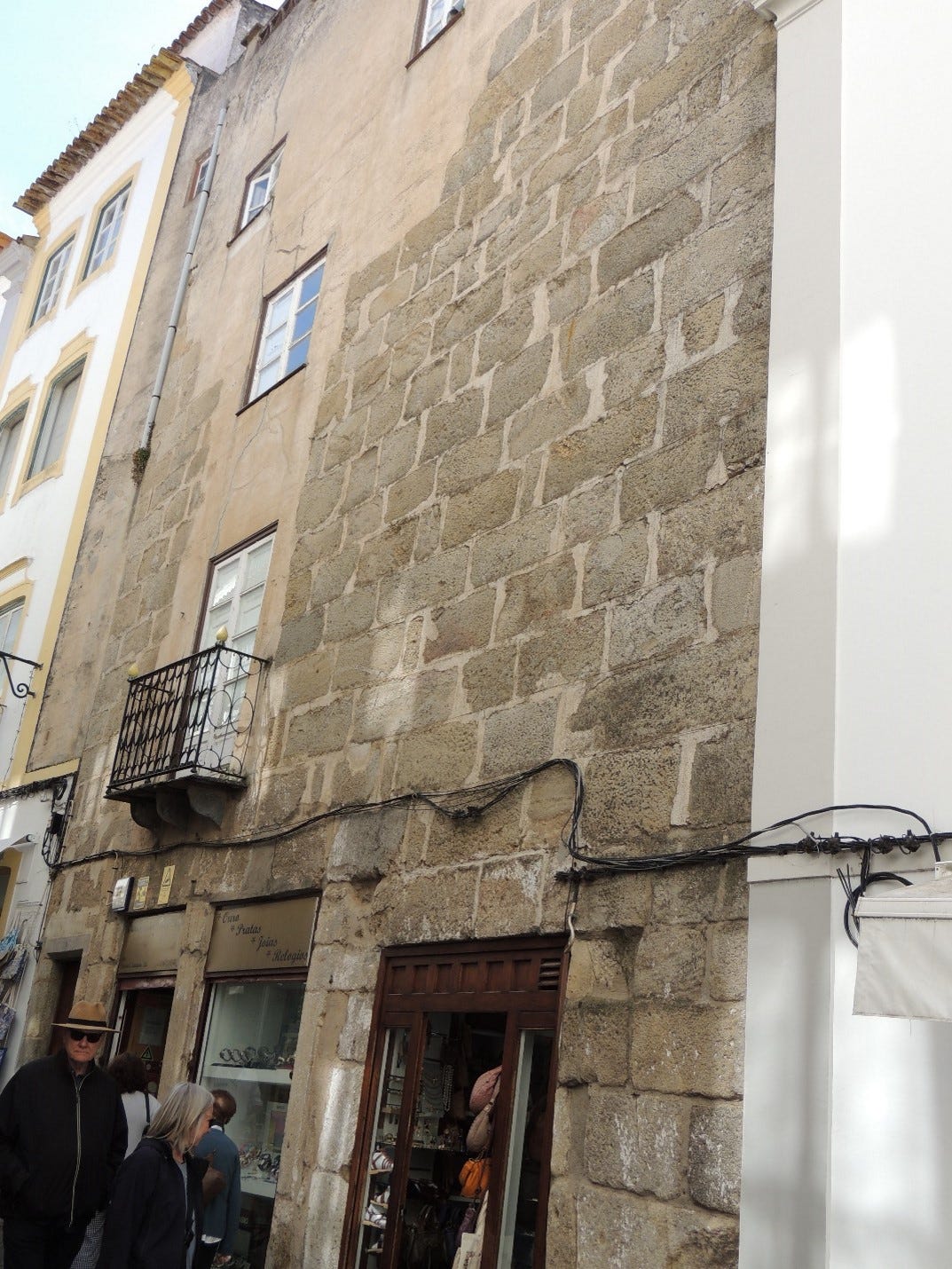
Here are some typical Roman ruins you can stumble upon while walking through the town:
Speaking of stumbling on things. I was walking down one of the streets and saw this unassuming church:
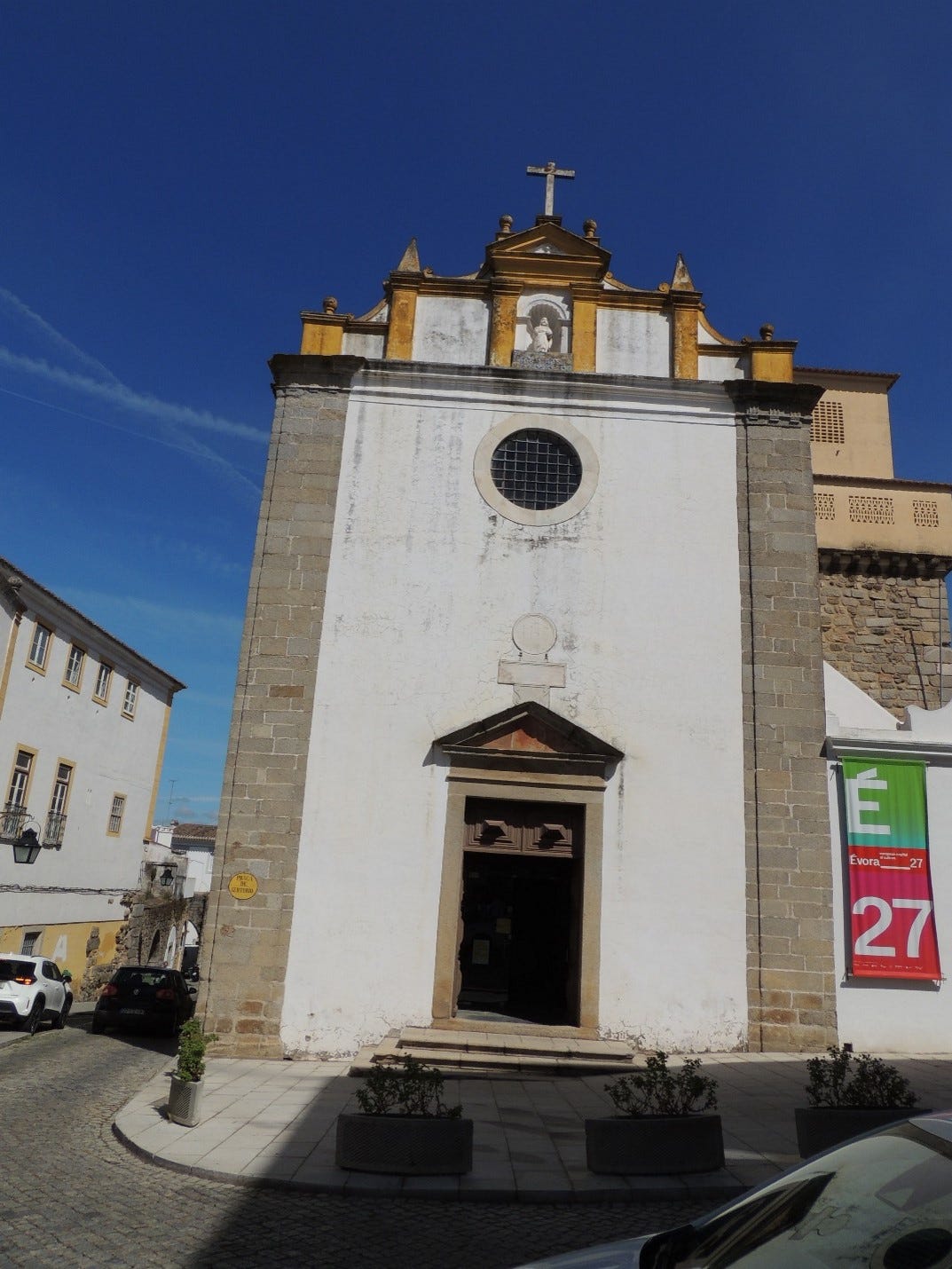
I ducked inside, and couldn’t believe my eyes!!
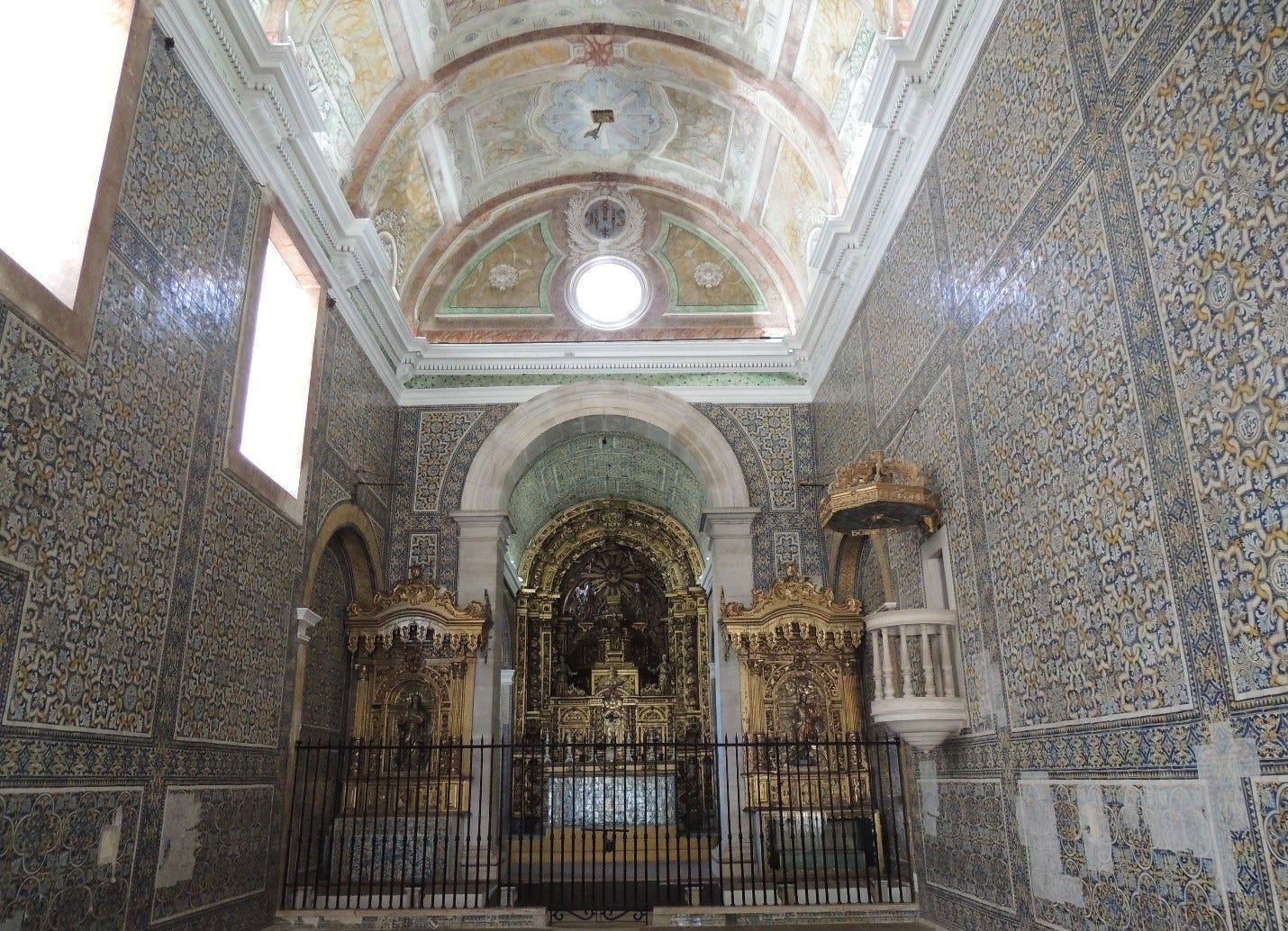
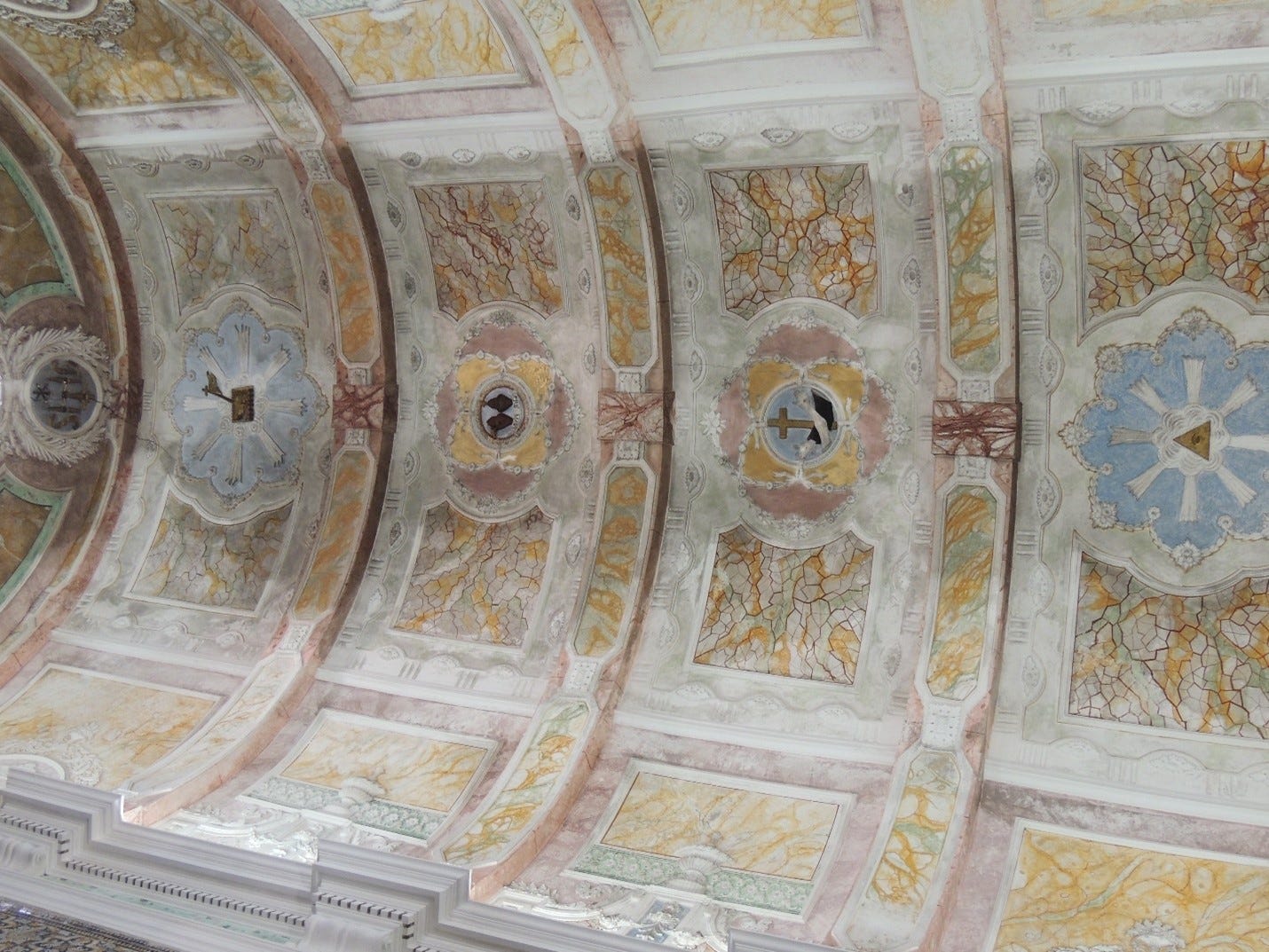
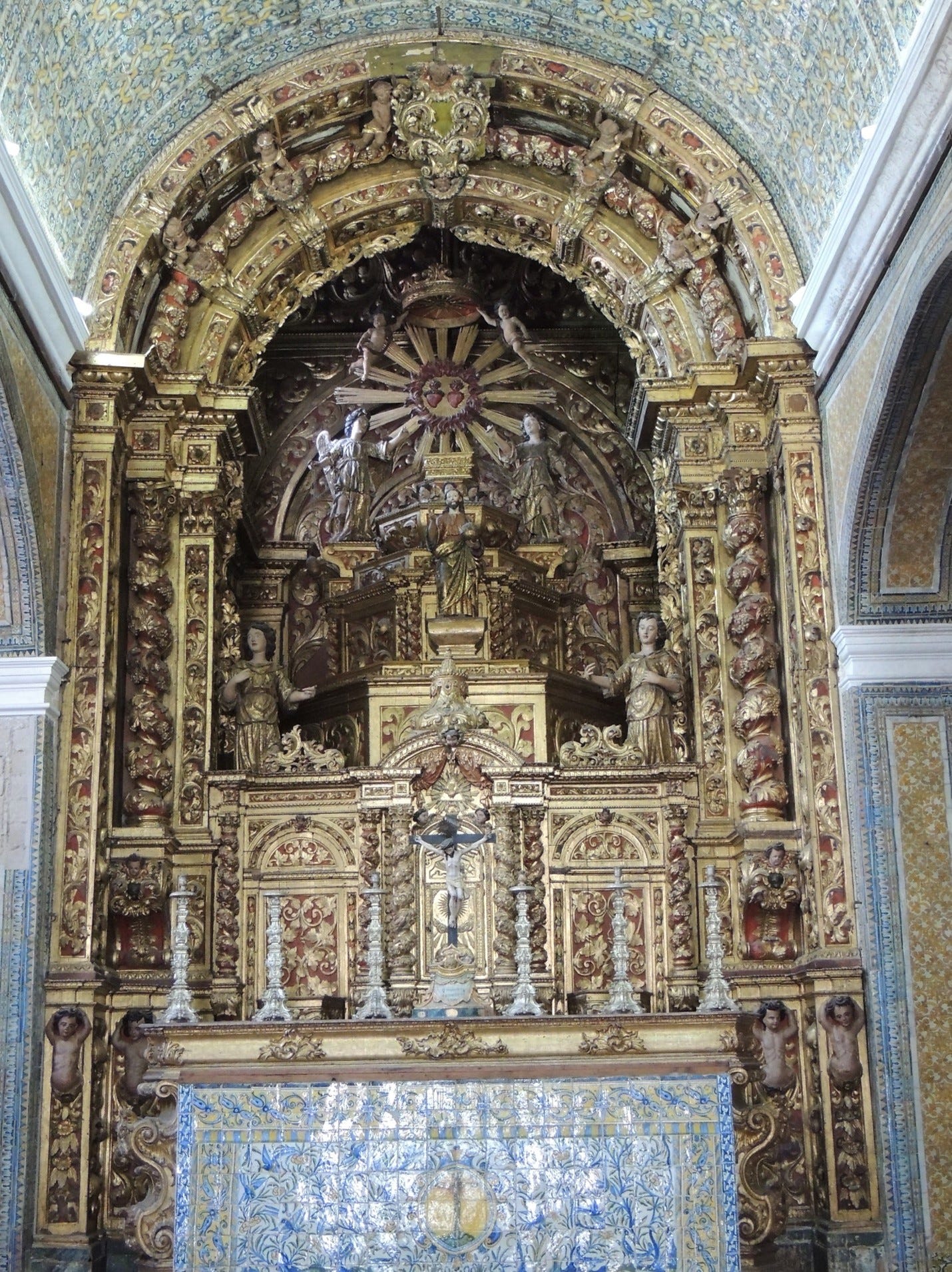
This was a run-of-the-mill chapel of an insignificant convent in a minor city!!! What happened since to art? To religion? Why is such beauty not created anymore?
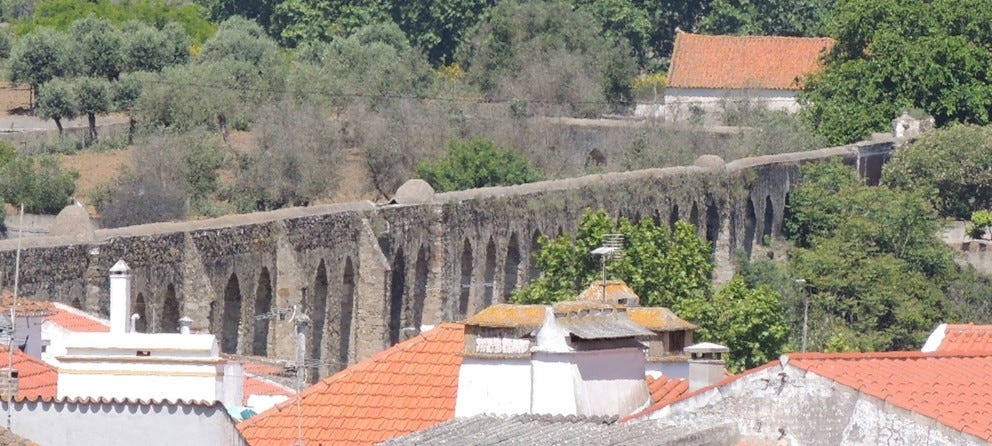
A little farther on, I spied the aqueduct that fed water to the city. It was not built by the Romans (although some traces of the Roman aqueducts also remain) but by the Portuguese in the 16th century.
The next big stop was Palácio dos Duques de Cadaval. The Cadaval family still owns its Ducal palace, which is full of portraits of the Dukes of Cadaval throughout history. The Palace remains the family’s residence, even while much of it is open to visitors.
The Palace has its own place of worship, the Church of St. John the Evangelist:
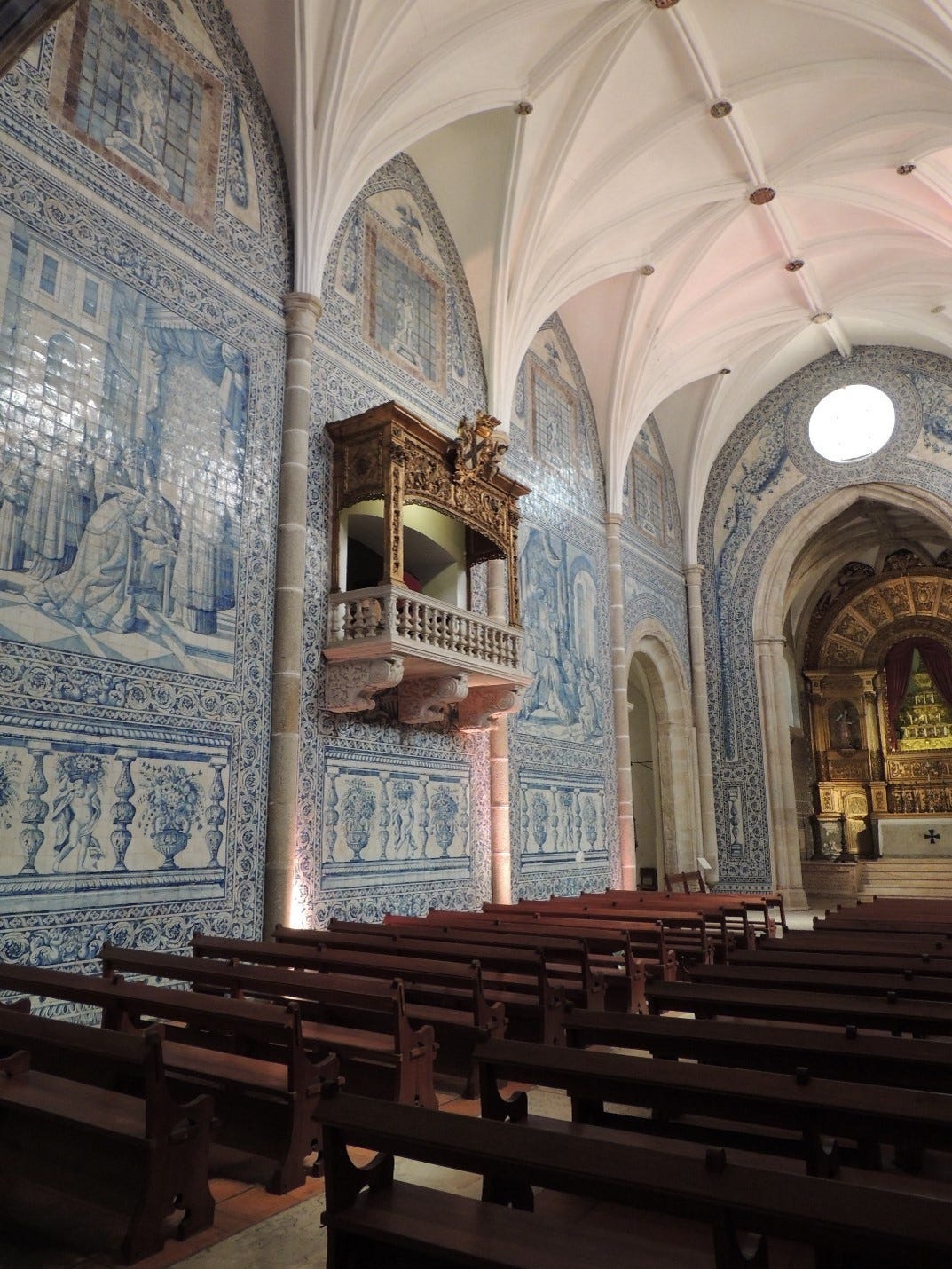
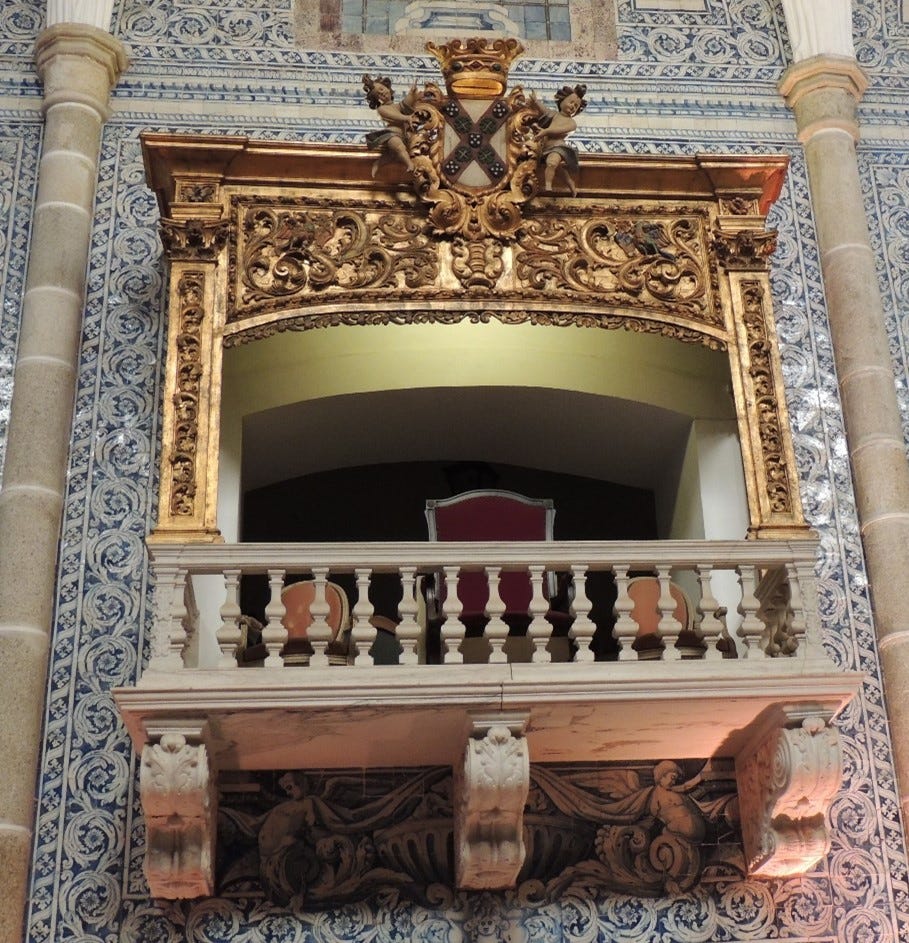
Of course, the Duke’s family didn’t sit with the hoi polloi; they had their own “box” at church.
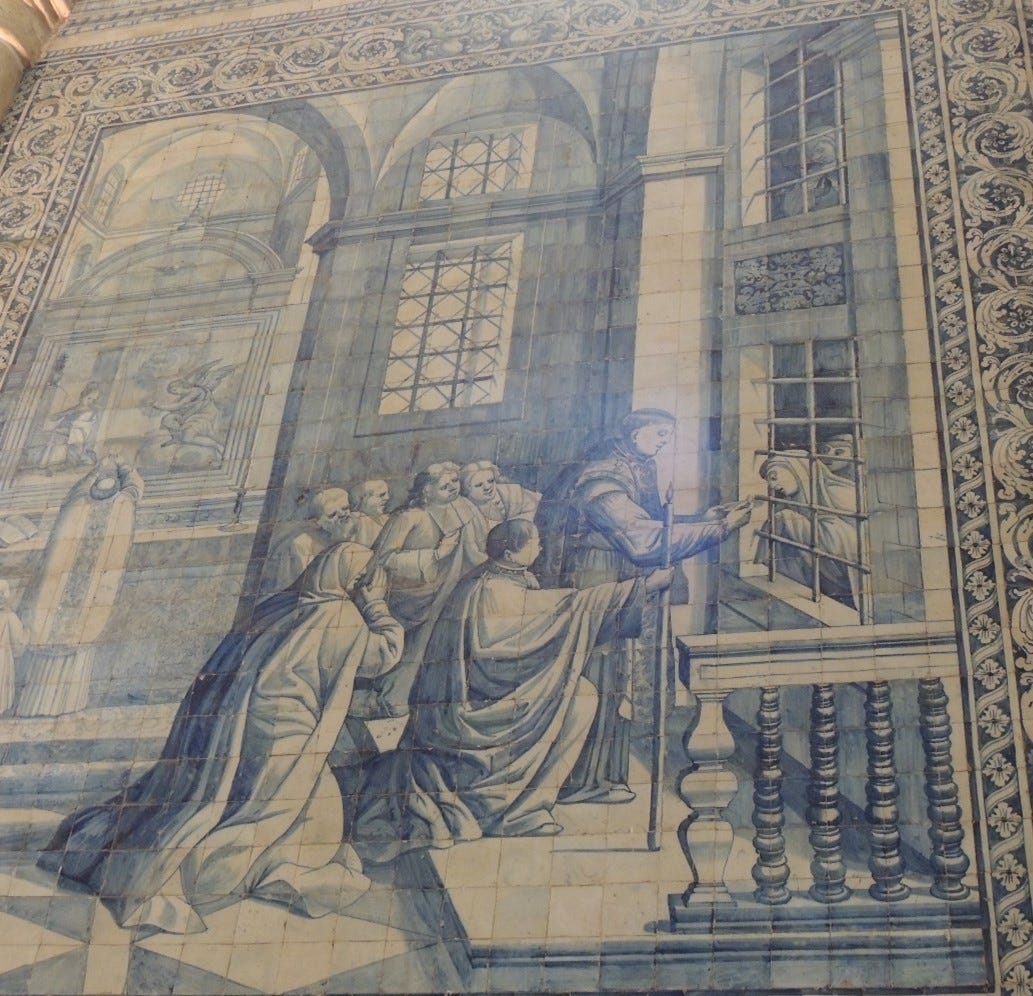
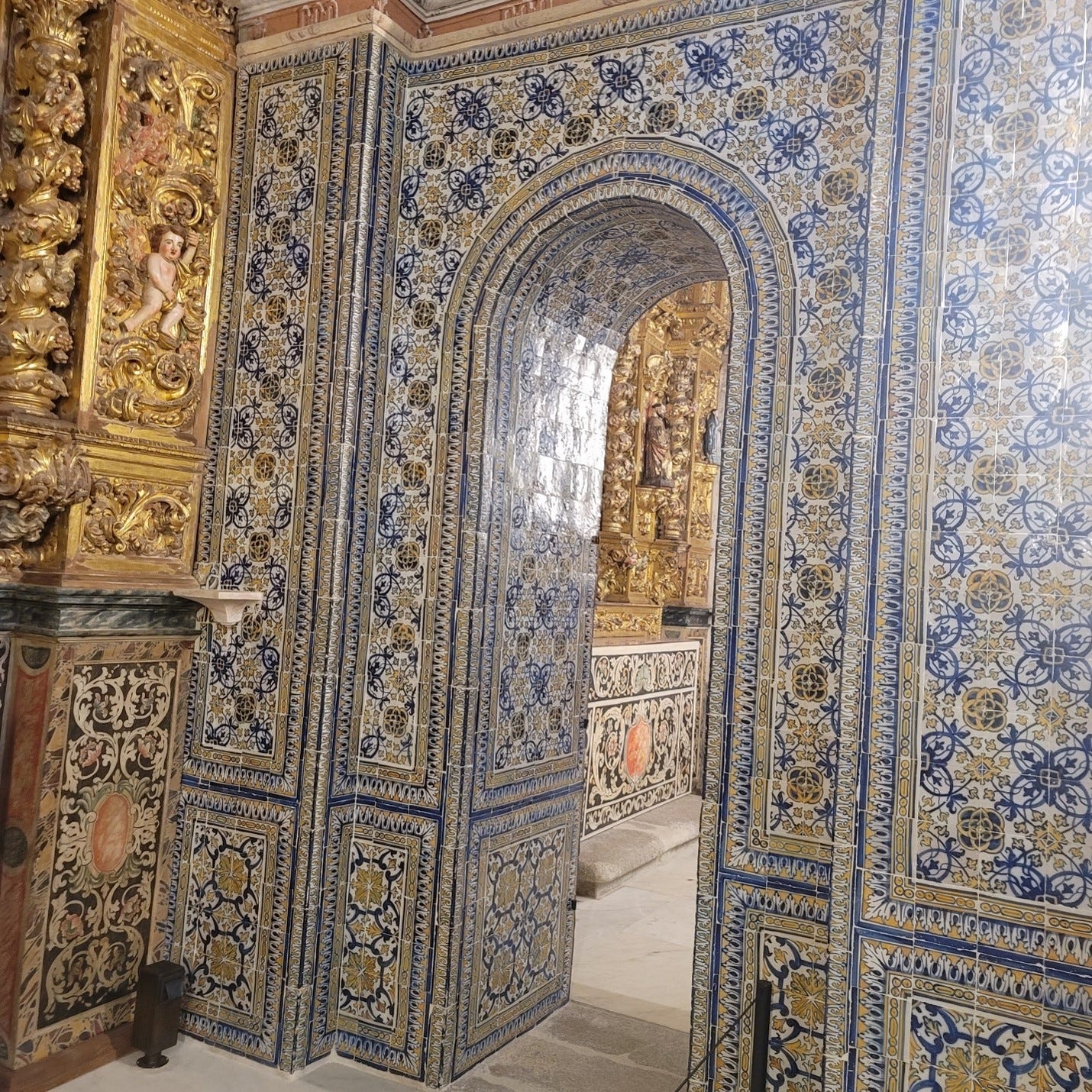
The Church has spectacular tilework:
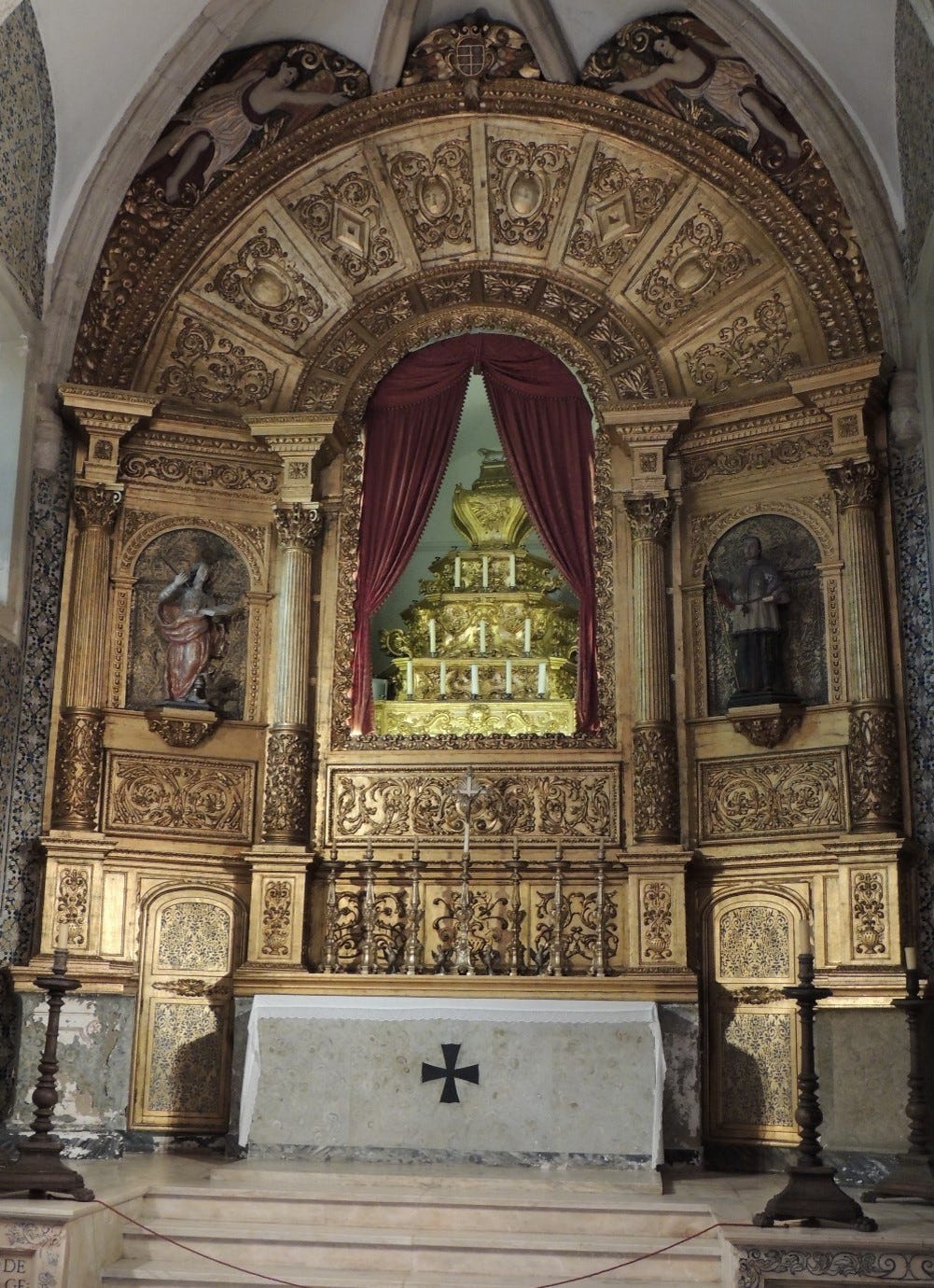
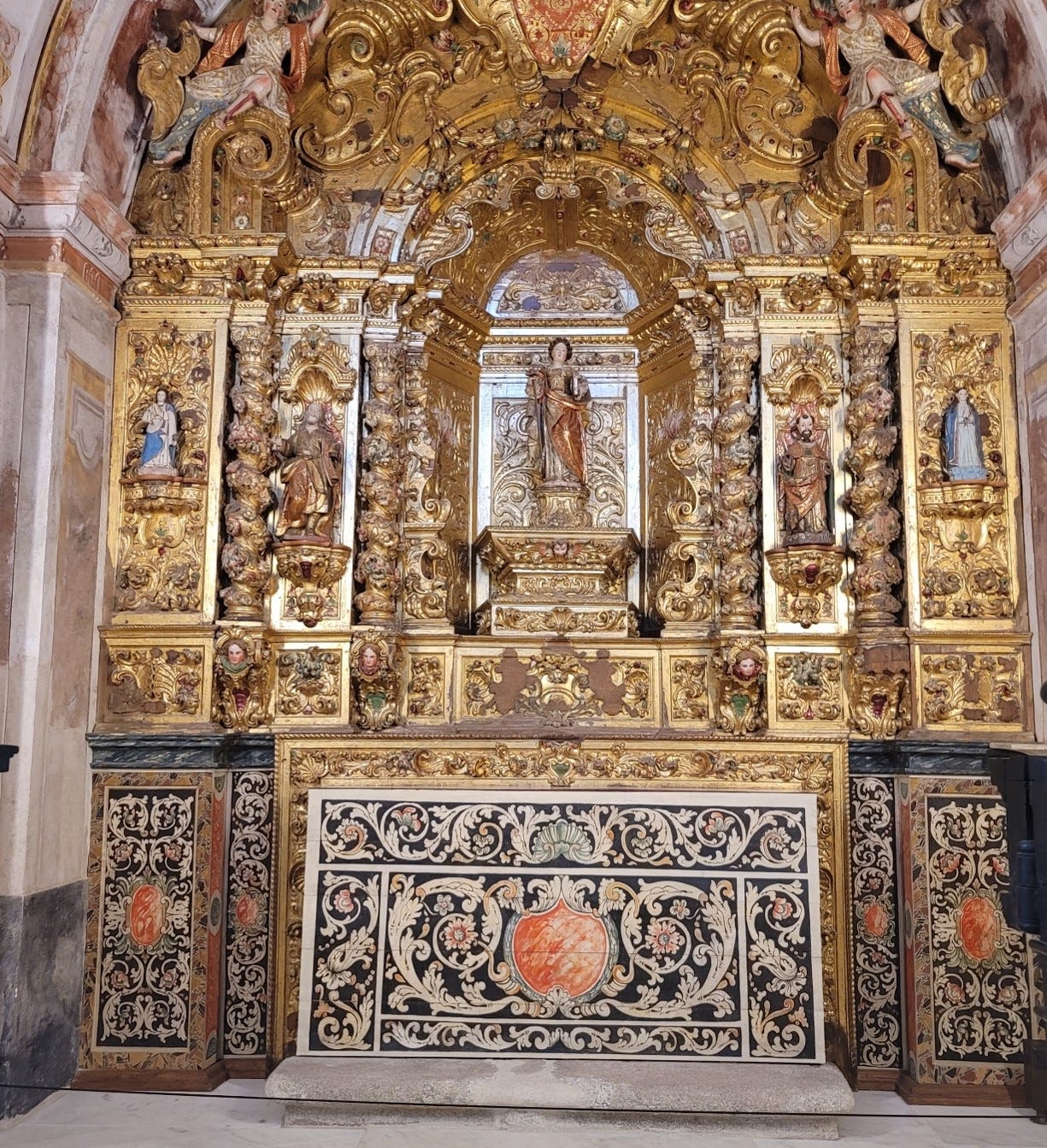
, and a beautiful altar area:
Here’s the Duke’s family tree:
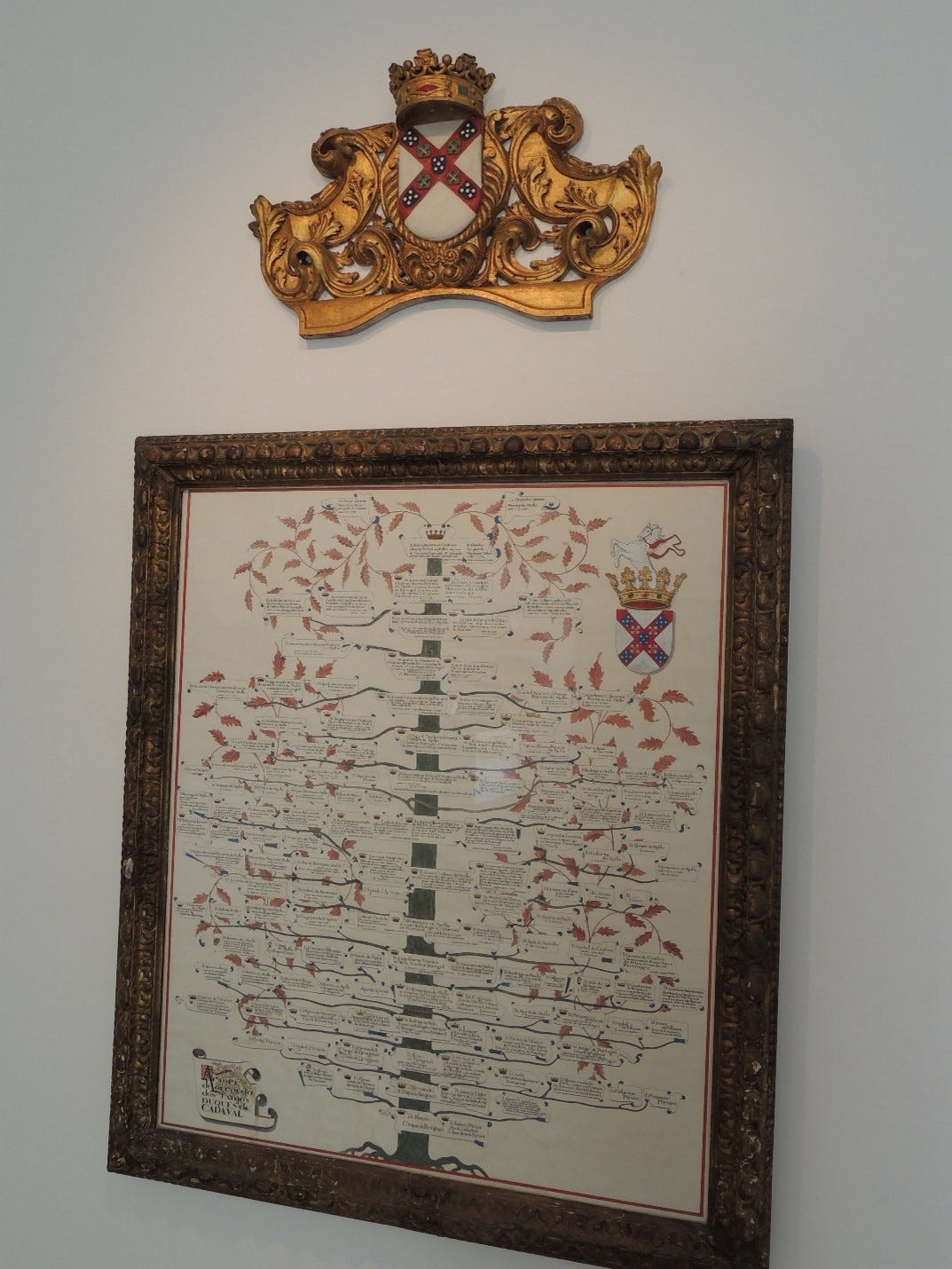
It bears a remarkable resemblance to the family trees of European monarchs that hang in my library at home!
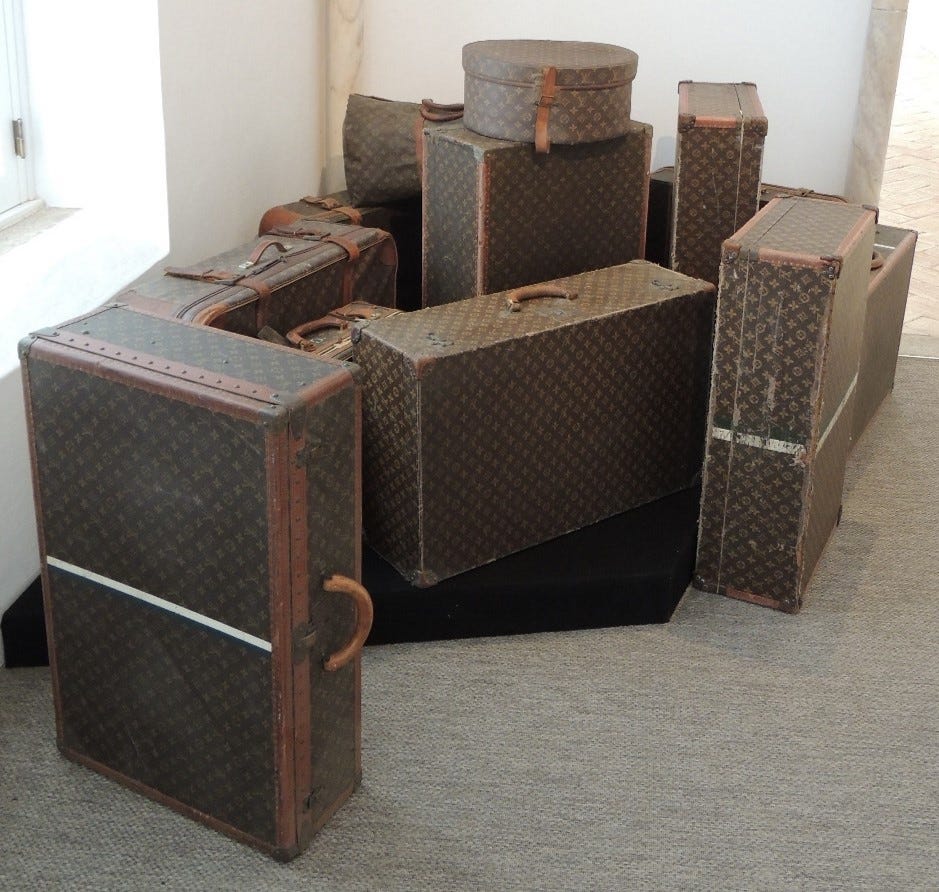
The Duke liked to travel in style; here are his Louis Vuitton “traveling bags” from the 1960s and 1970s:
The prior Dukes didn’t even have to get their feet dirty:
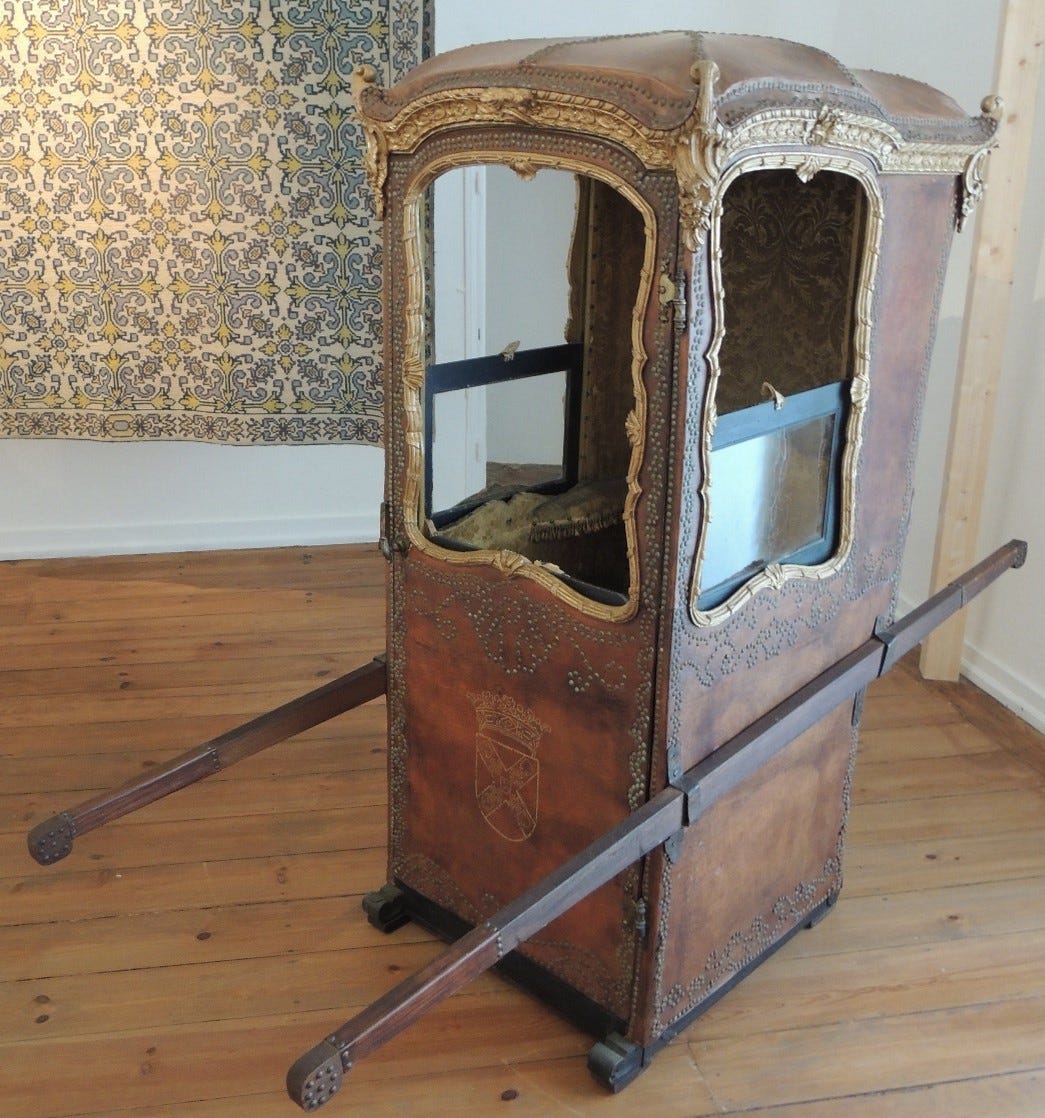
It’s nice to be a Duke, I guess!
Here are some long-ago family members:
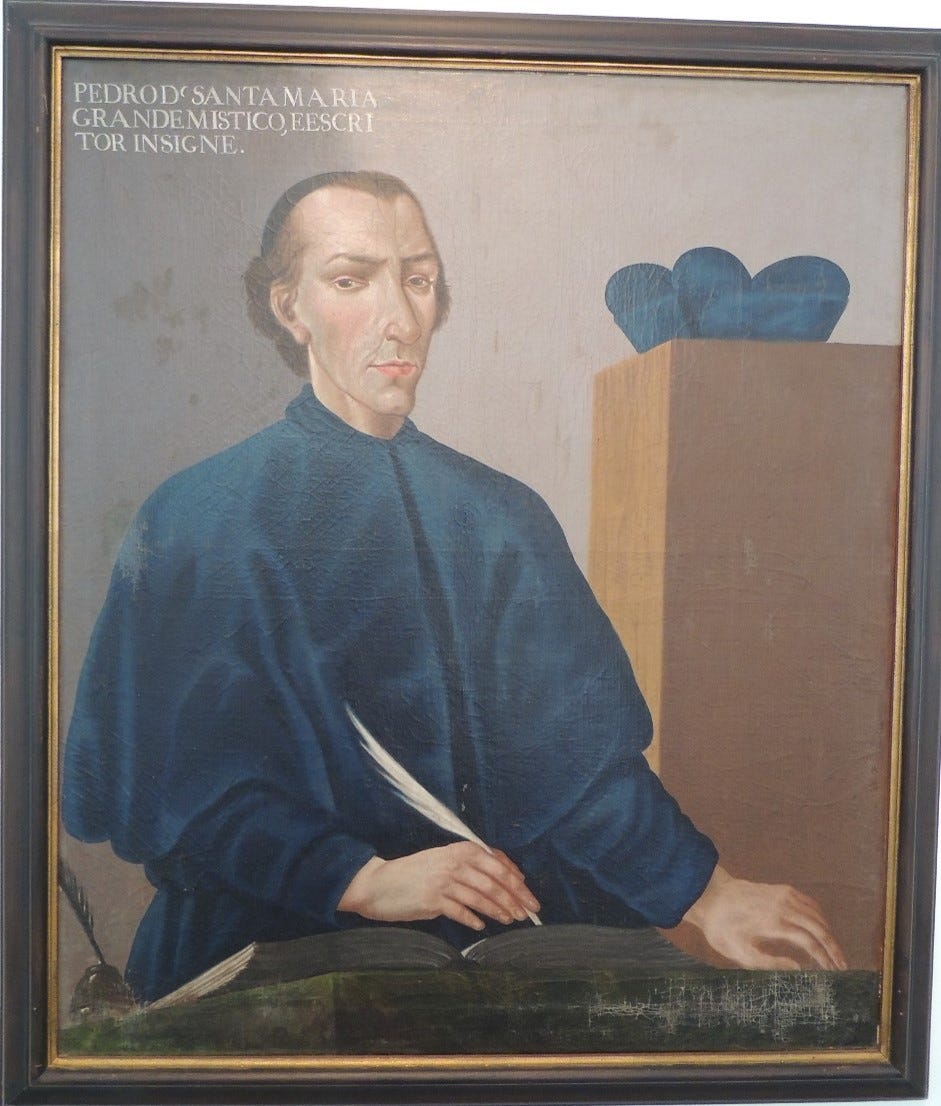
Doesn’t he look like a “Grande Mistico”?
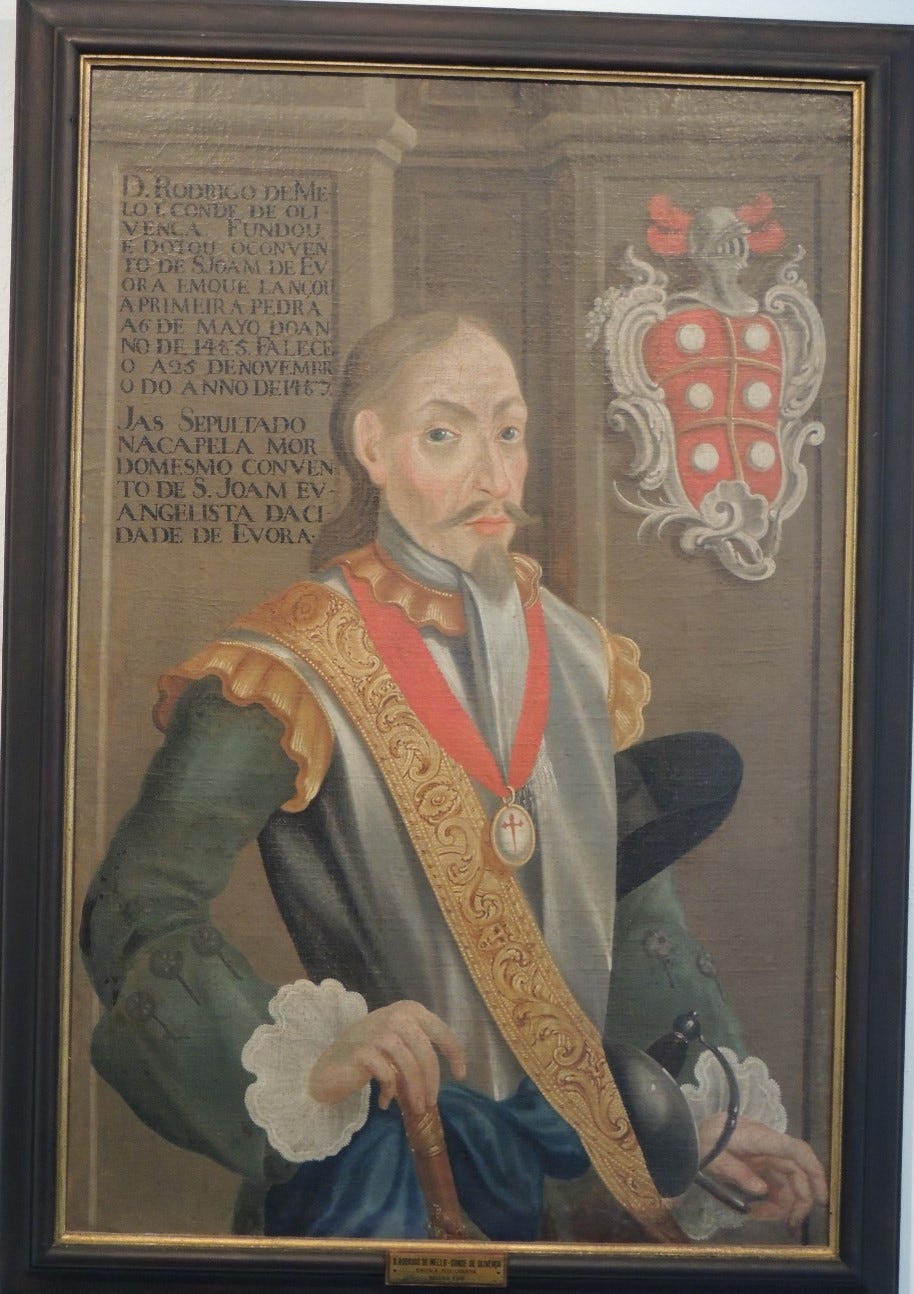
I think the inscription says this guy founded the beautiful church we saw earlier.
This object in the second-floor gallery mystified me:
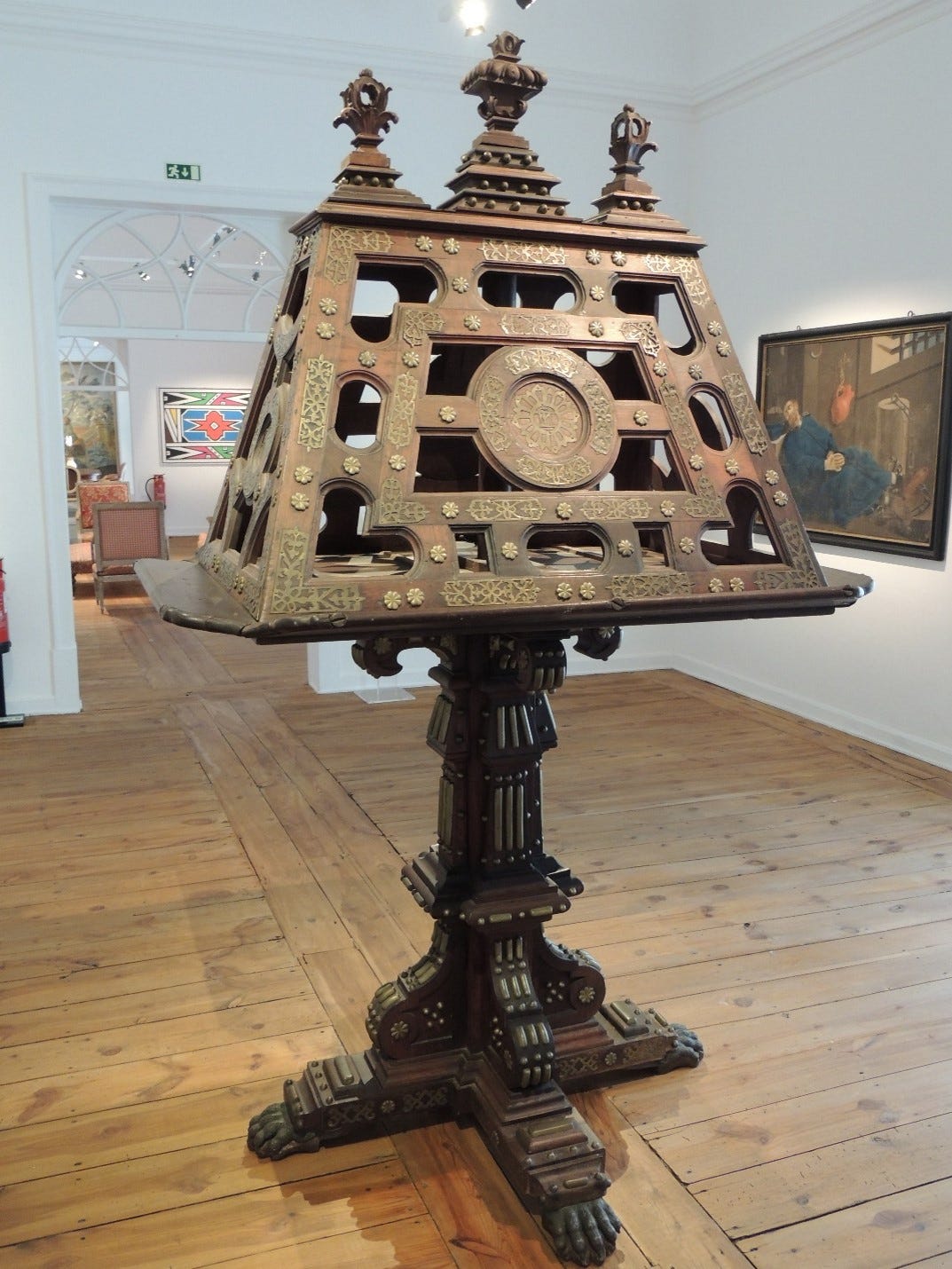
Does anybody have any idea what it may be? Please respond in the comments! There was no plaque to explain it…
The Ducal Palace sports some lovely views, too:
The next big stop was the Évora Cathedral:
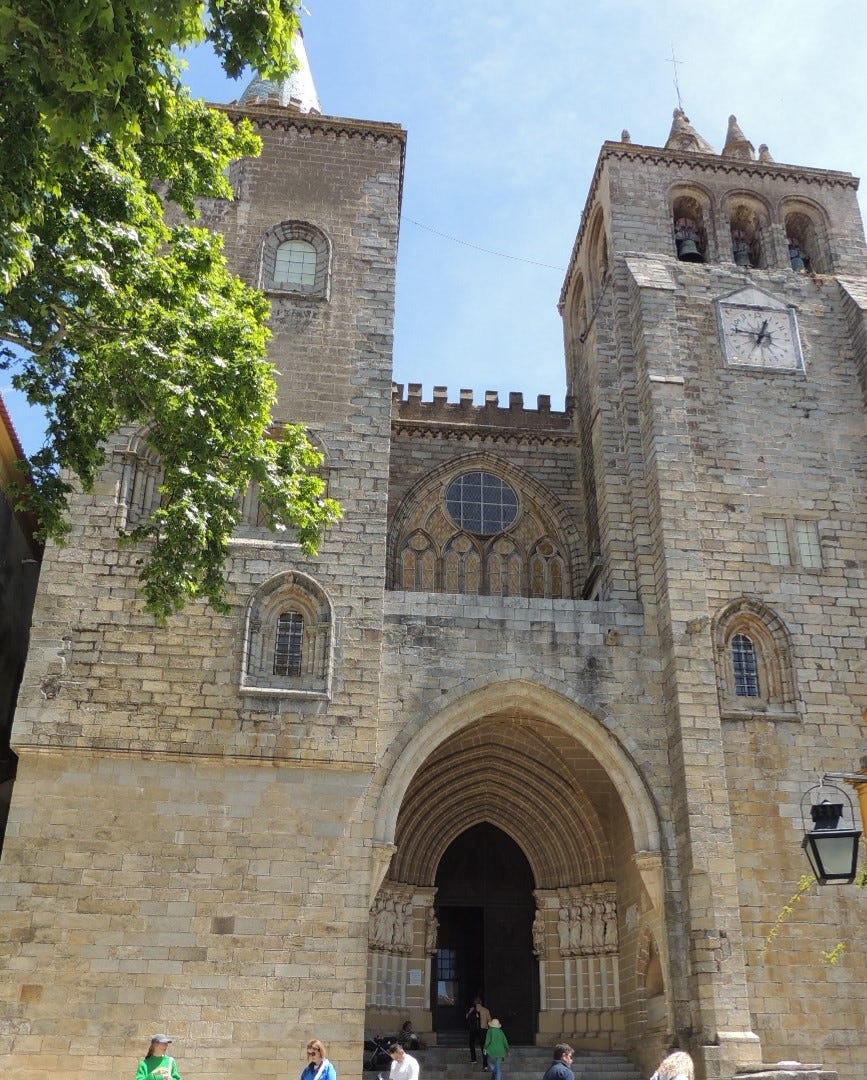
It is the seat of one of Portugal’s three archbishops. A Visigoth church was originally built here, rebuilt as a mosque when the Moors conquered the Iberian Peninsula, and again as a cathedral during the “Reconquista” in the 12th century.
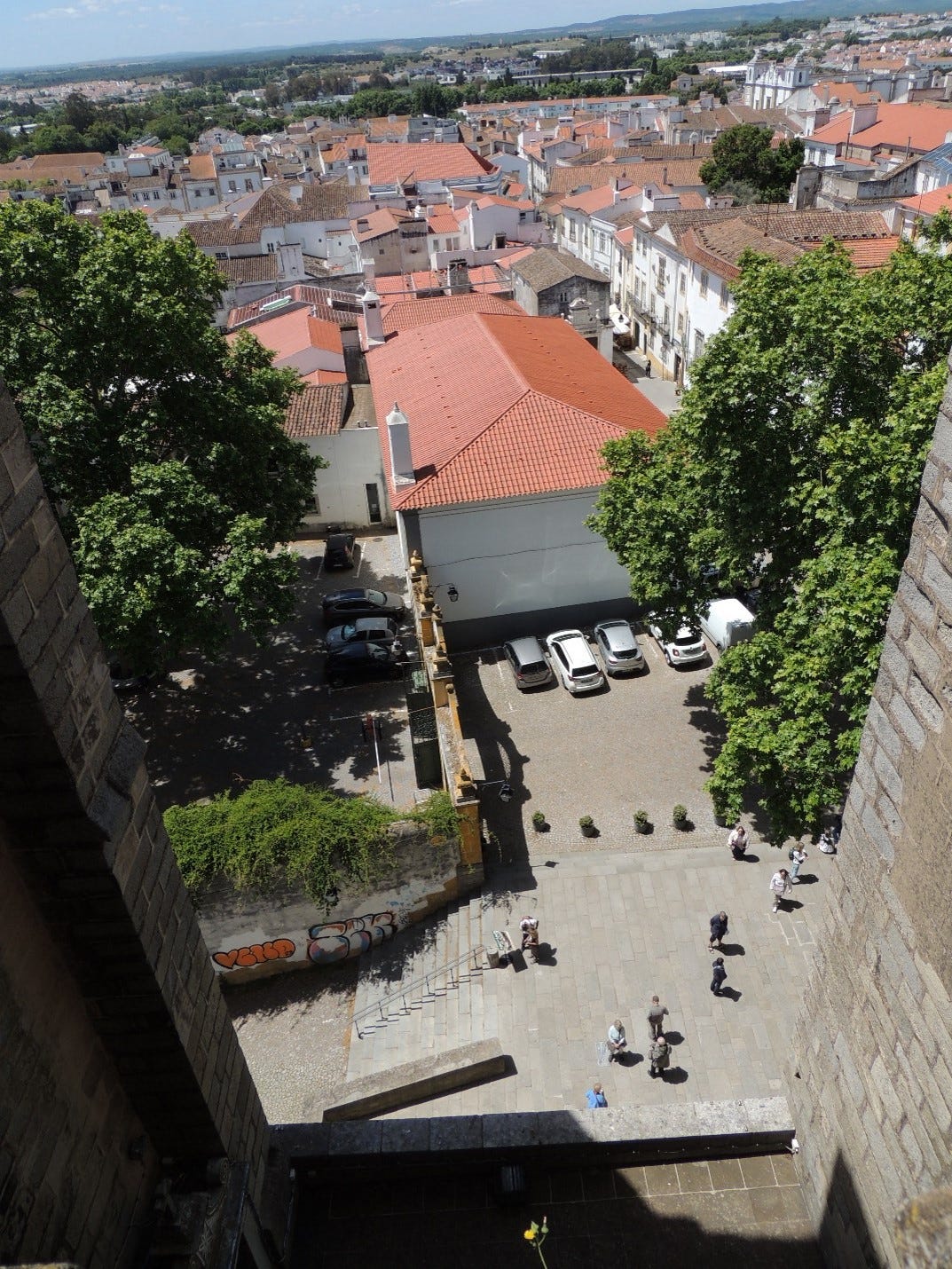
Thanks to my Lisbon conditioning, I had no problem climbing to its rooftop:
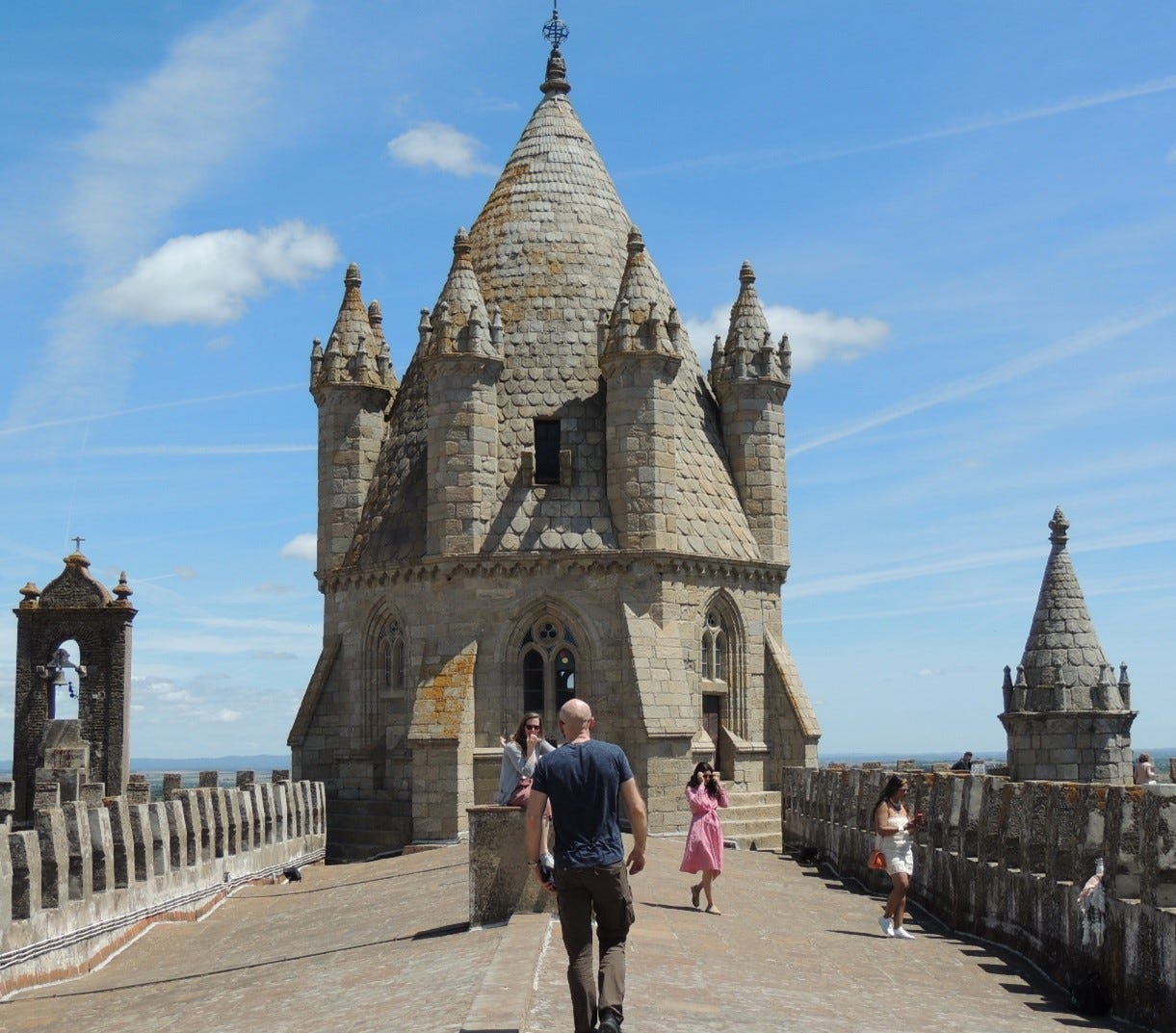
It’s a long way from the bottom:
I could see the bells close-up:
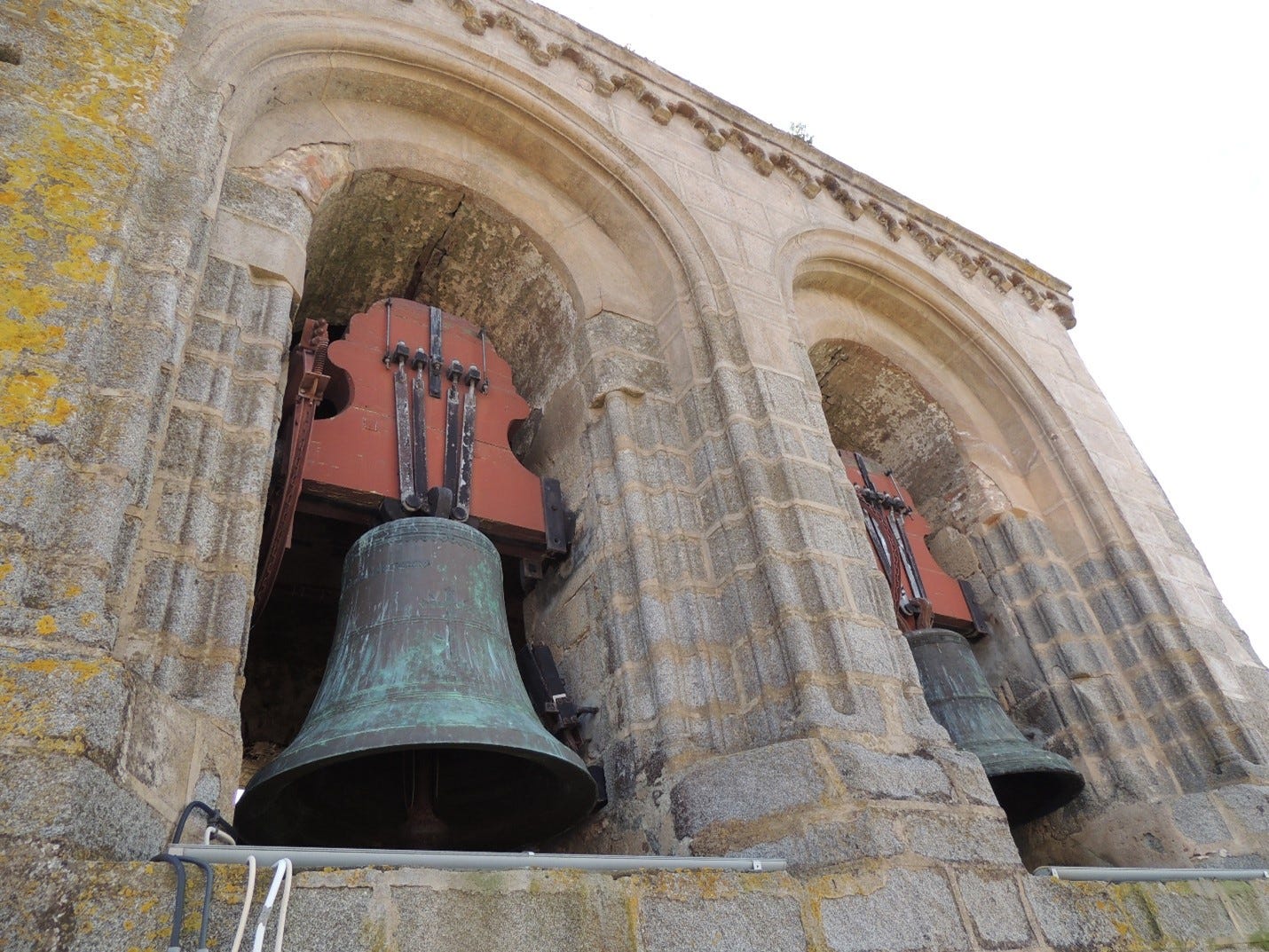
, and heard them chime the hour!
I saw this sundial with a gnomon on the roof, from 1810:
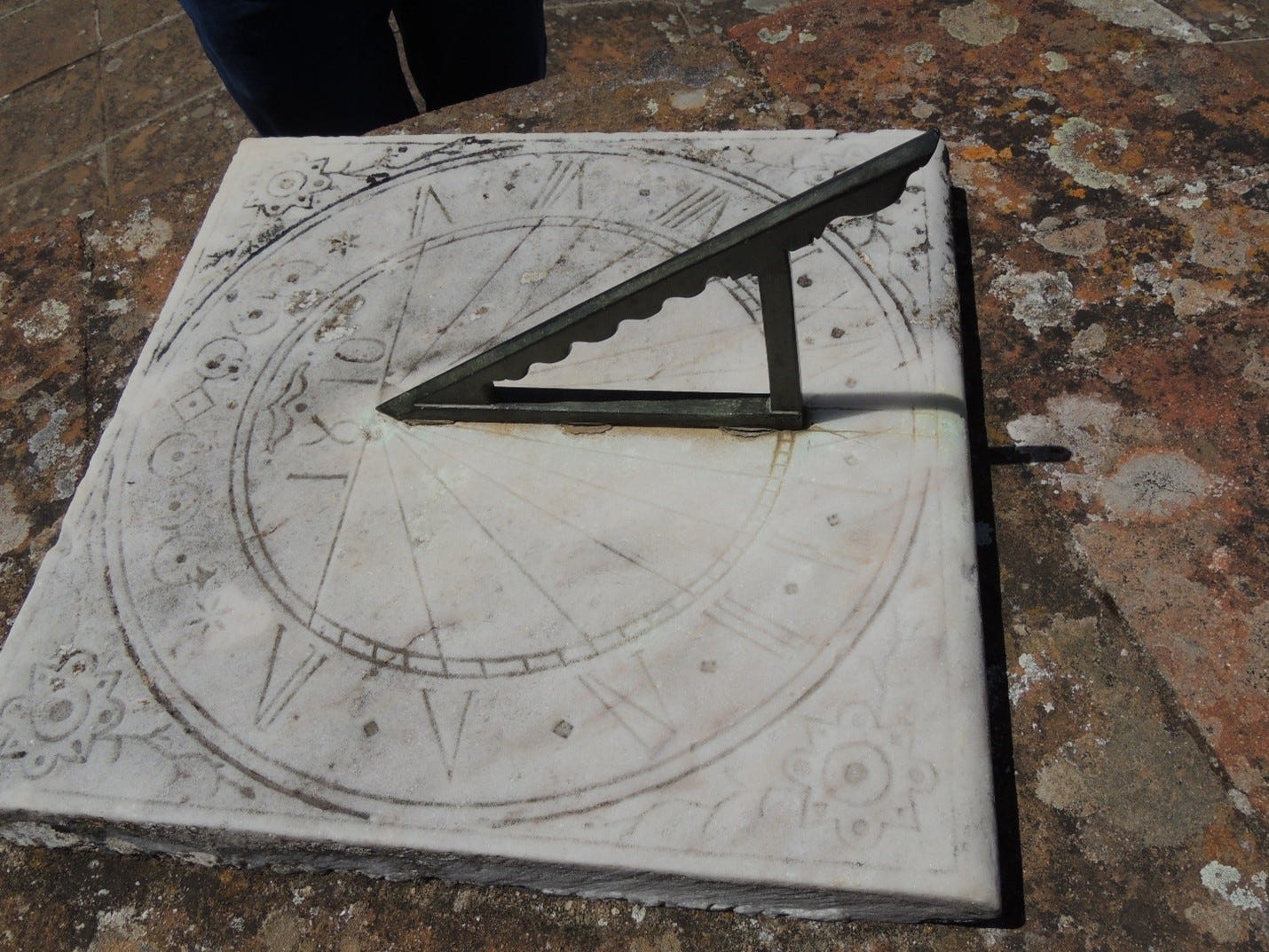
I don’t know if it got out of synch in the two hundred years since or whether Daylight Savings Time mixed it up, but it showed Noon while the belltower chimed 1 p.m.
I loved the view from the top:
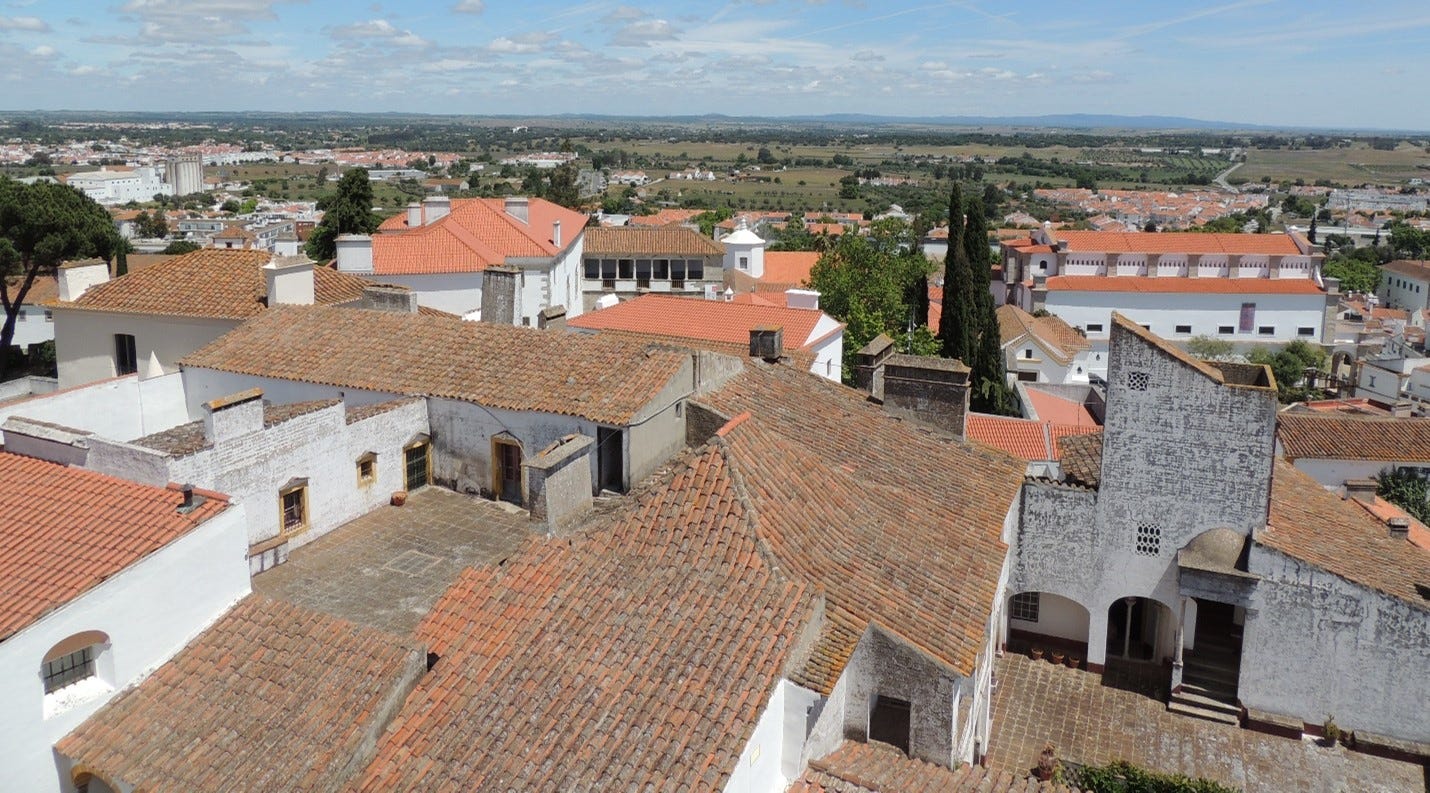
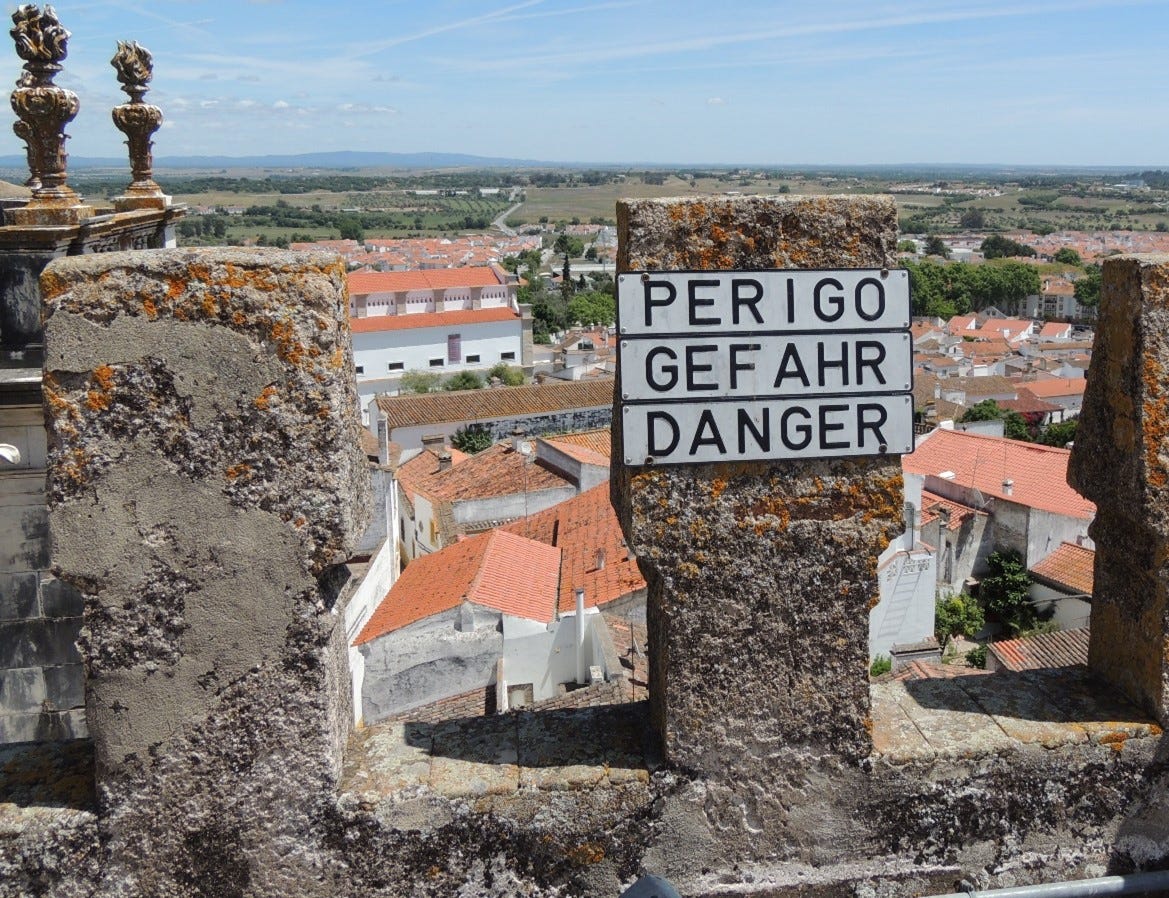
, even as the signs screamed “Danger” (the crenels were only a few inches from the rooftop; it may have been easy to stumble off it into the abyss):
I also loved these stone torches:
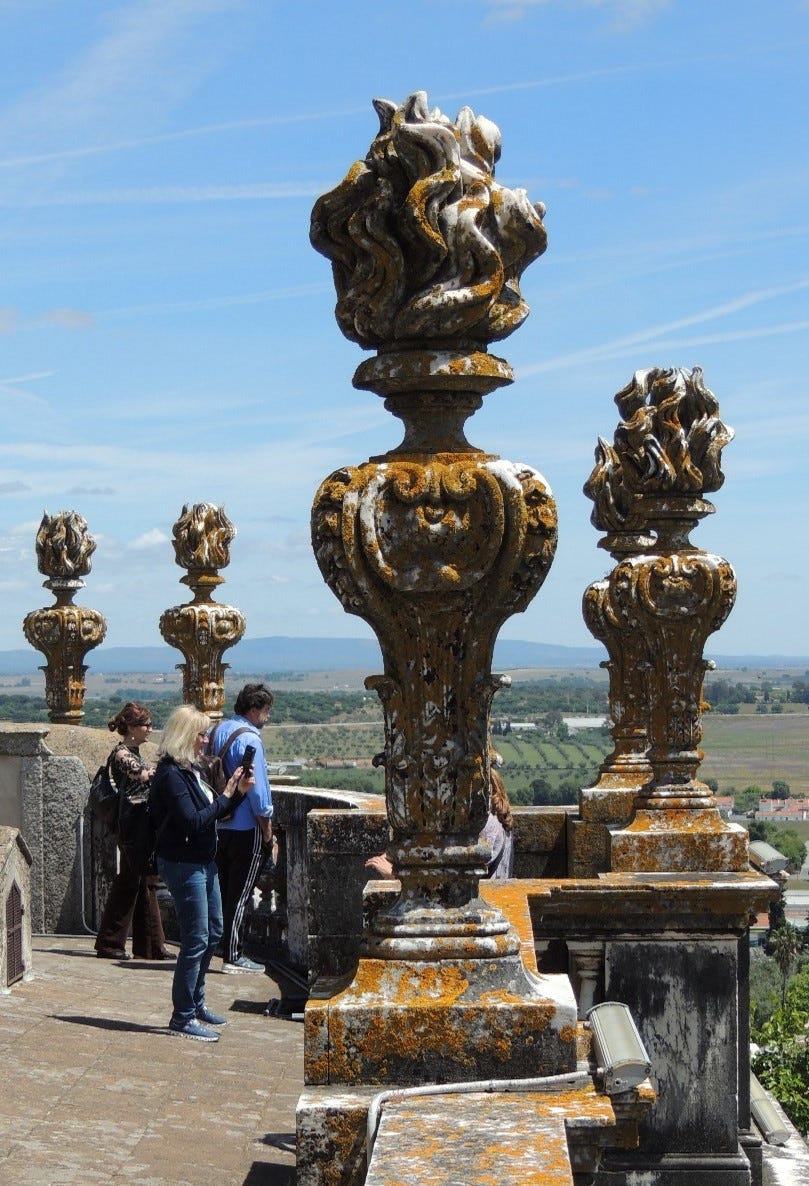
Incredibly, lichens of just the right color covered them!
And, of course, no cathedral would be without its gargoyles!
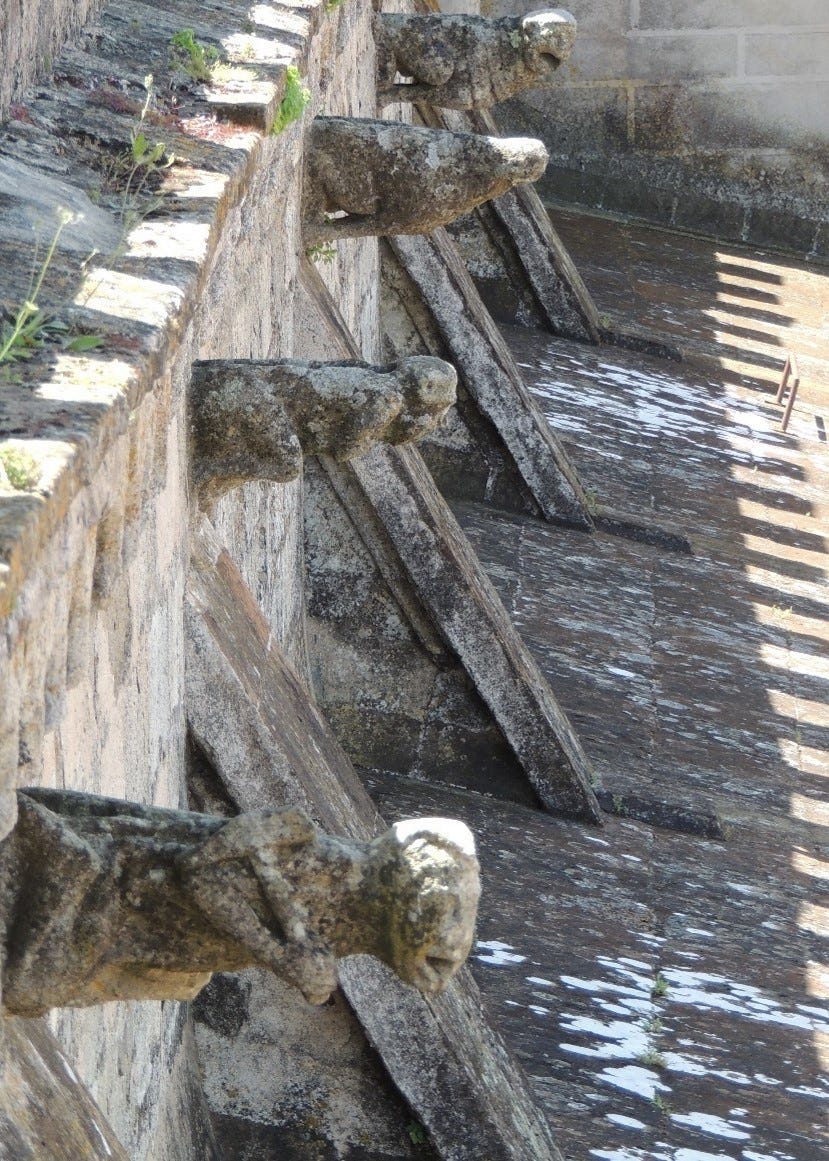
Although some of them are weathered beyond recognition…
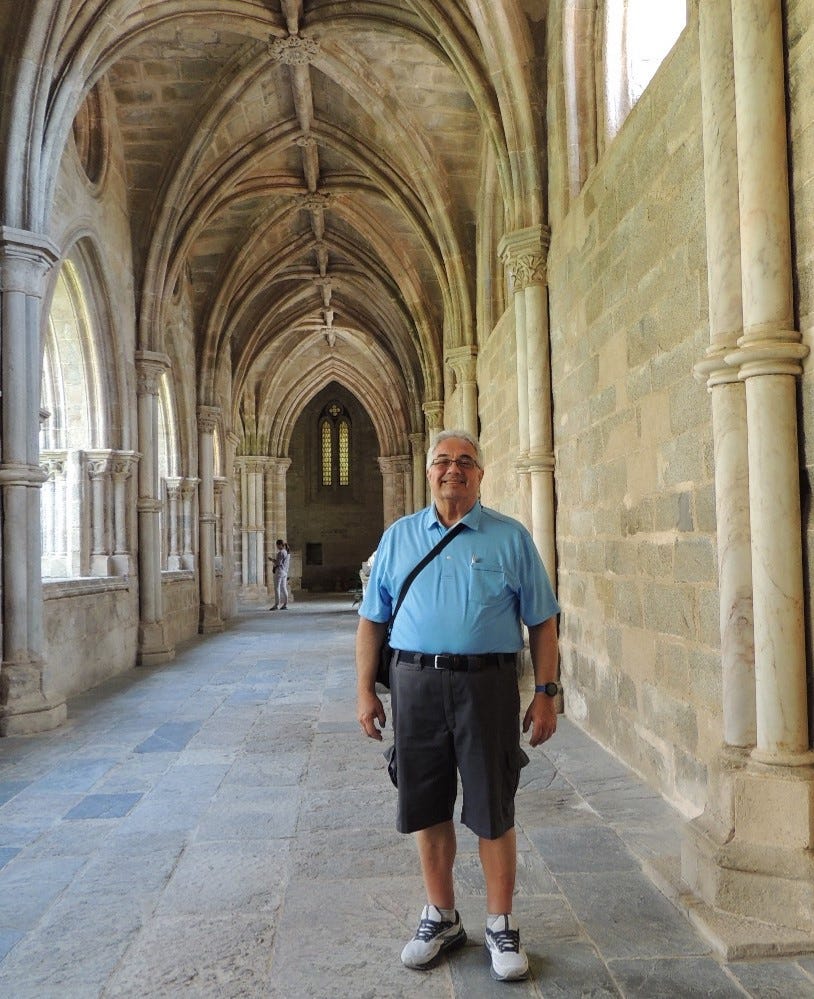
In the cloister of the cathedral, I asked someone to take my picture, the first one since I came ashore:
The Cathedral also houses a Museum of Sacred Art with some very interesting objects.
The crown jewel of the collection is this beautiful reliquary of Santo Lenho, supposedly housing pieces of the True Cross:
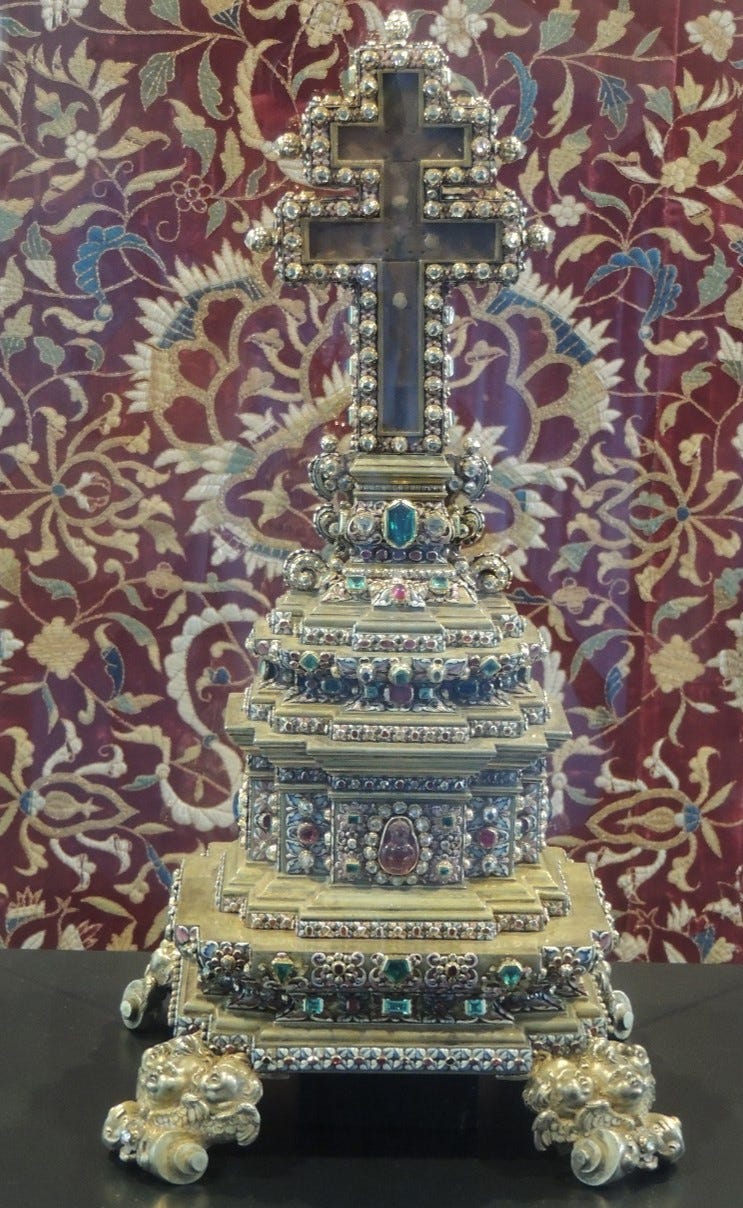
It is encrusted with 1,426 true gems (840 diamonds, 402 rubies, 180 emeralds, two sapphires, one hyacinth, and one cameo)!
The inside of the Cathedral itself is gorgeous as well:
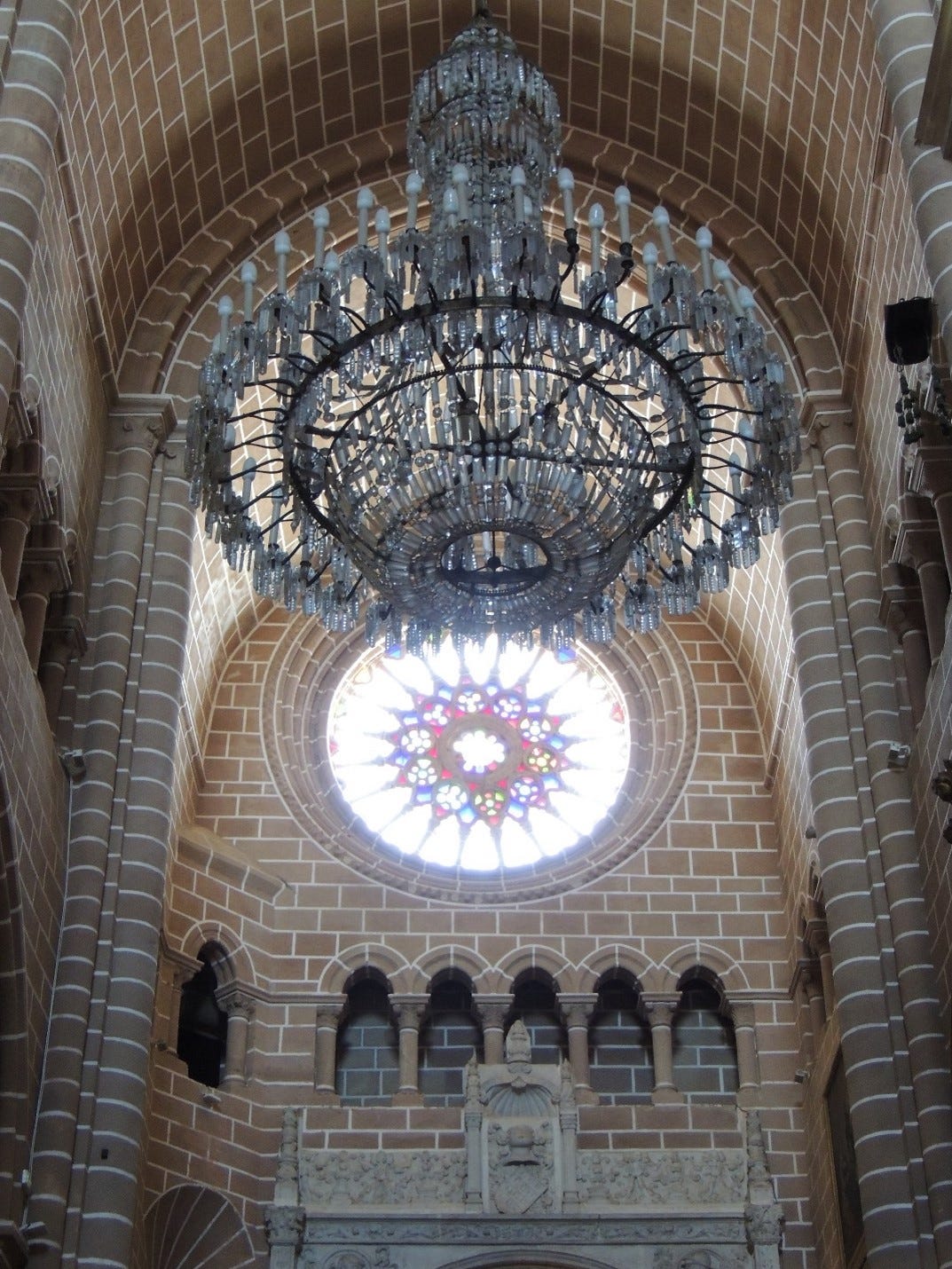
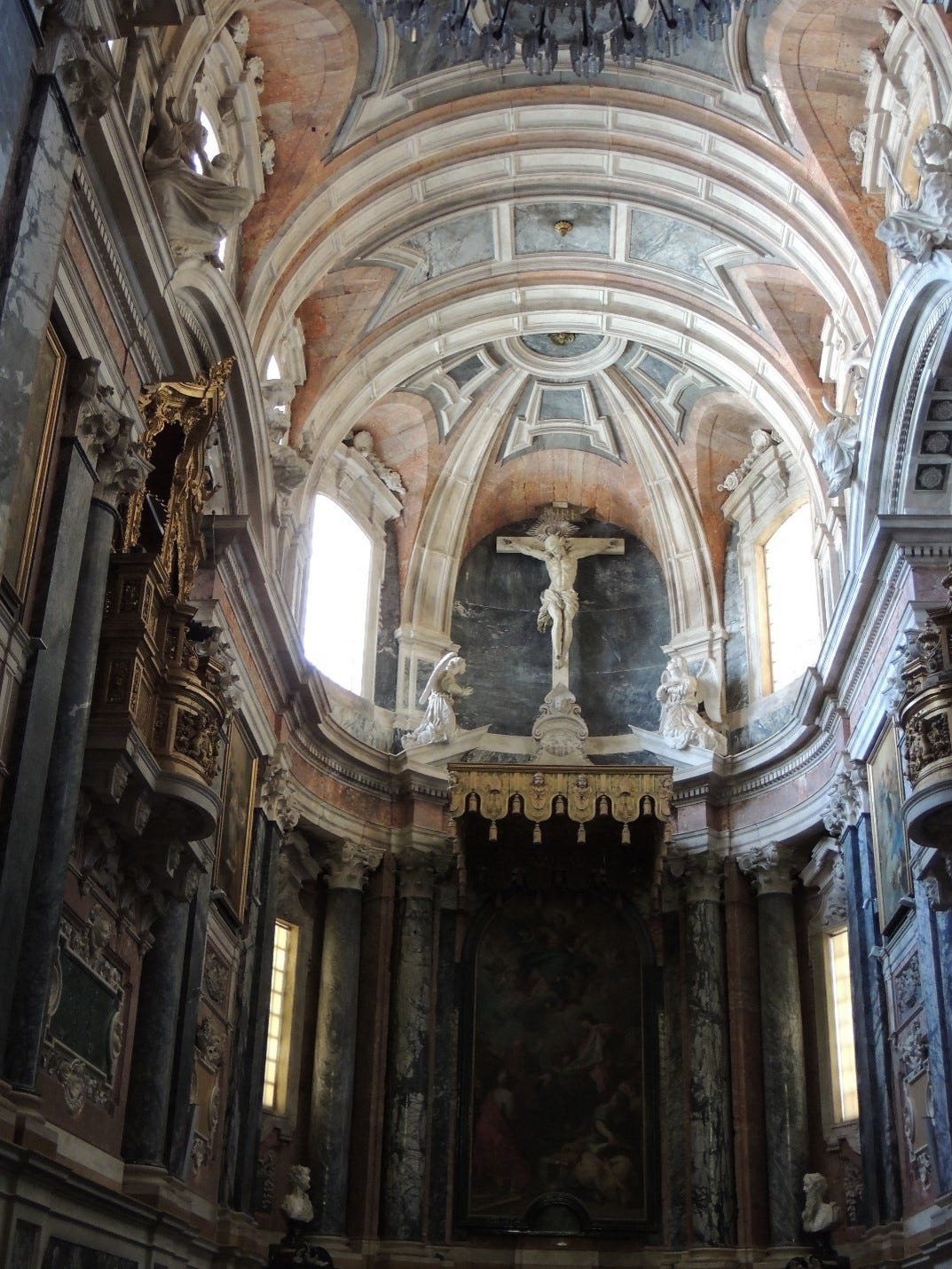
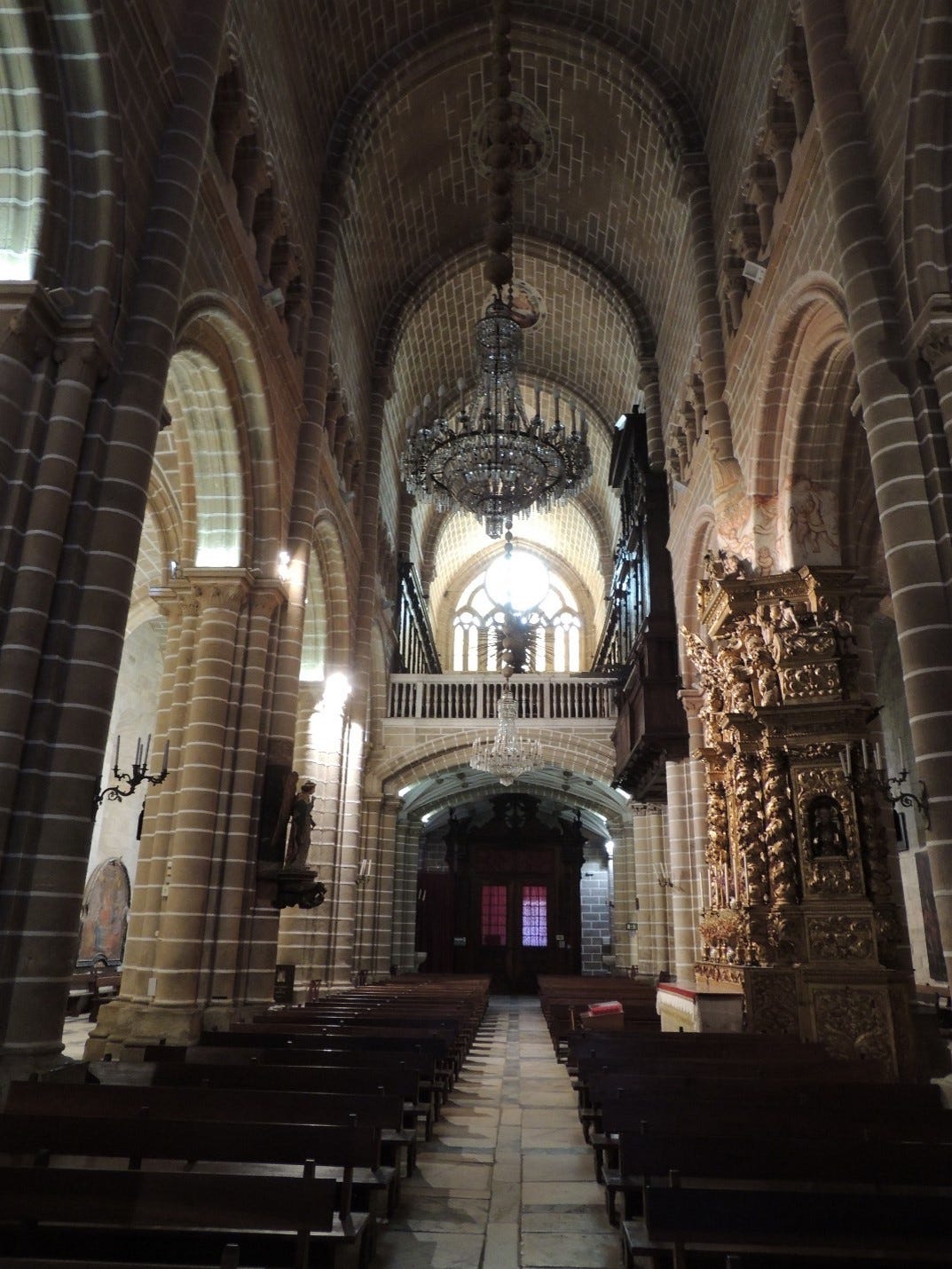
My final sightseeing stop that Friday was Igreja do Espírito Santo (Church of the Holy Spirit), one of the first Jesuit churches in the world, and it was also beautiful inside.
On the way back, I saw a couple of other interesting sights:
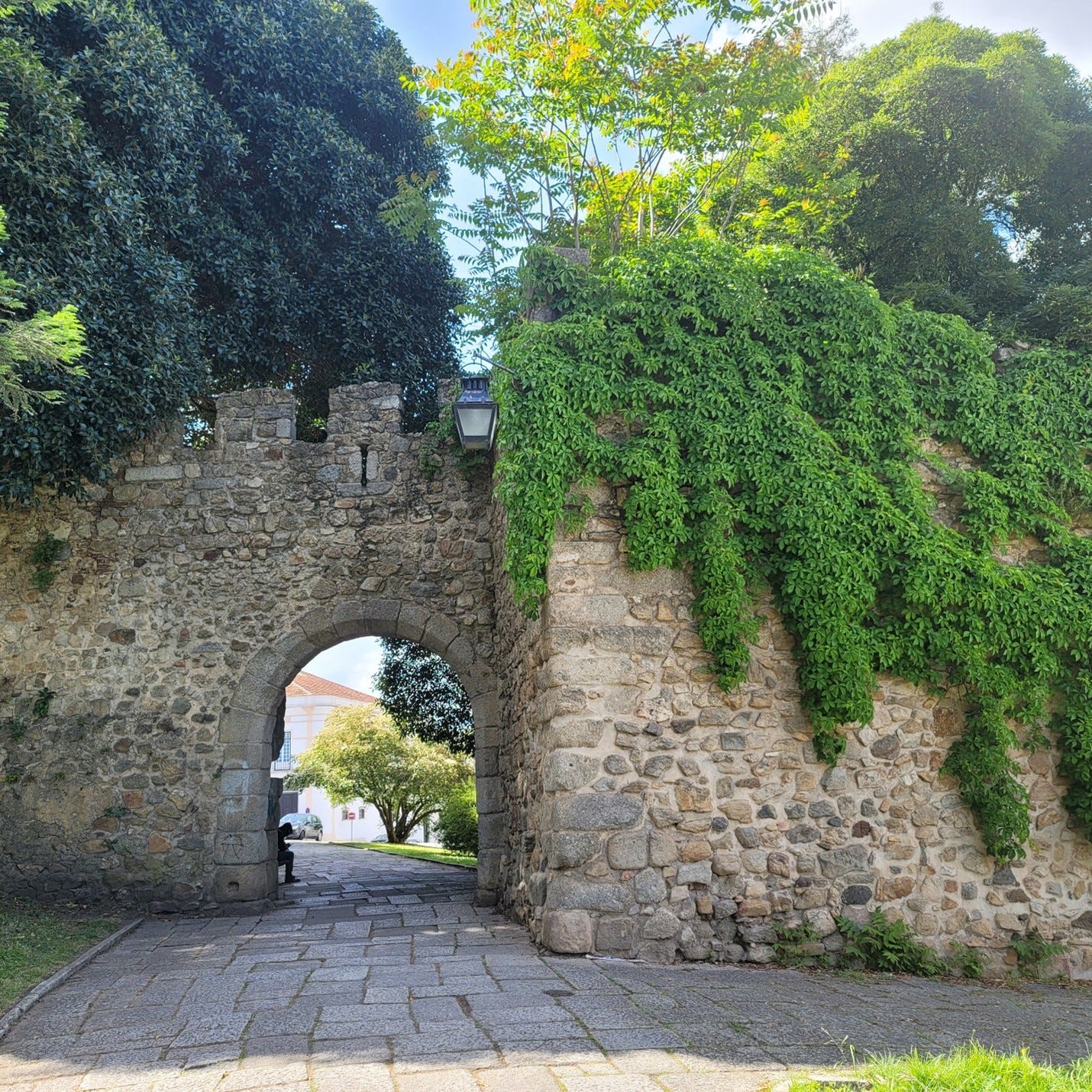
Another Roman memory
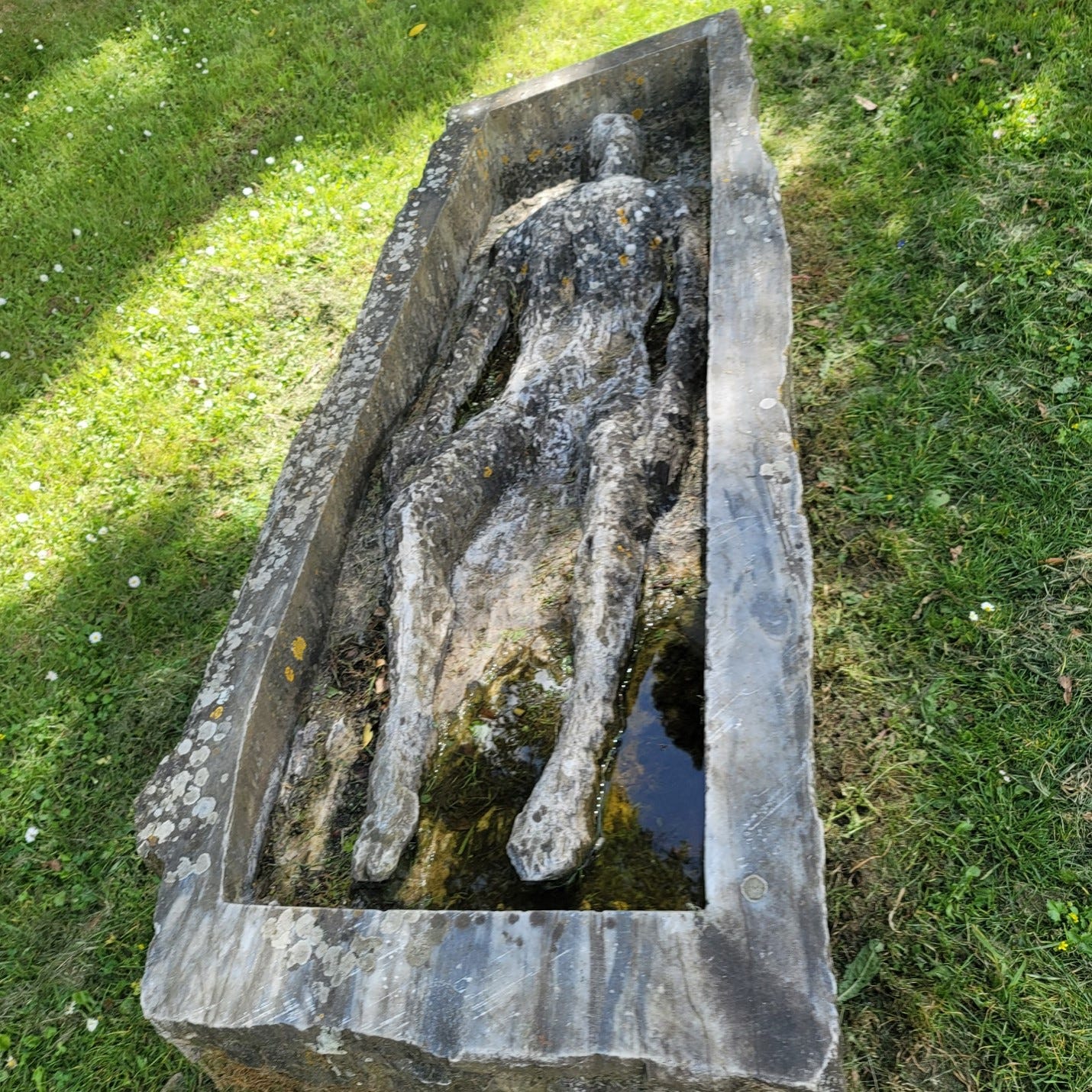
An alien burial?! Remains of a zombie? I have no idea what it is or why it’s out on the town lawn…
Finally, back to the hotel:
But the day was not over yet! I missed an opportunity to see a Fado performance in Lisbon. Well, it turned out there was a small restaurant in Évora that hosts Fado singers on Fridays and Saturdays! I couldn’t miss this chance.
So, at 8 pm, I set out for an evening of Fado.
Caso de Fado is a very small restaurant – I counted nine tables:
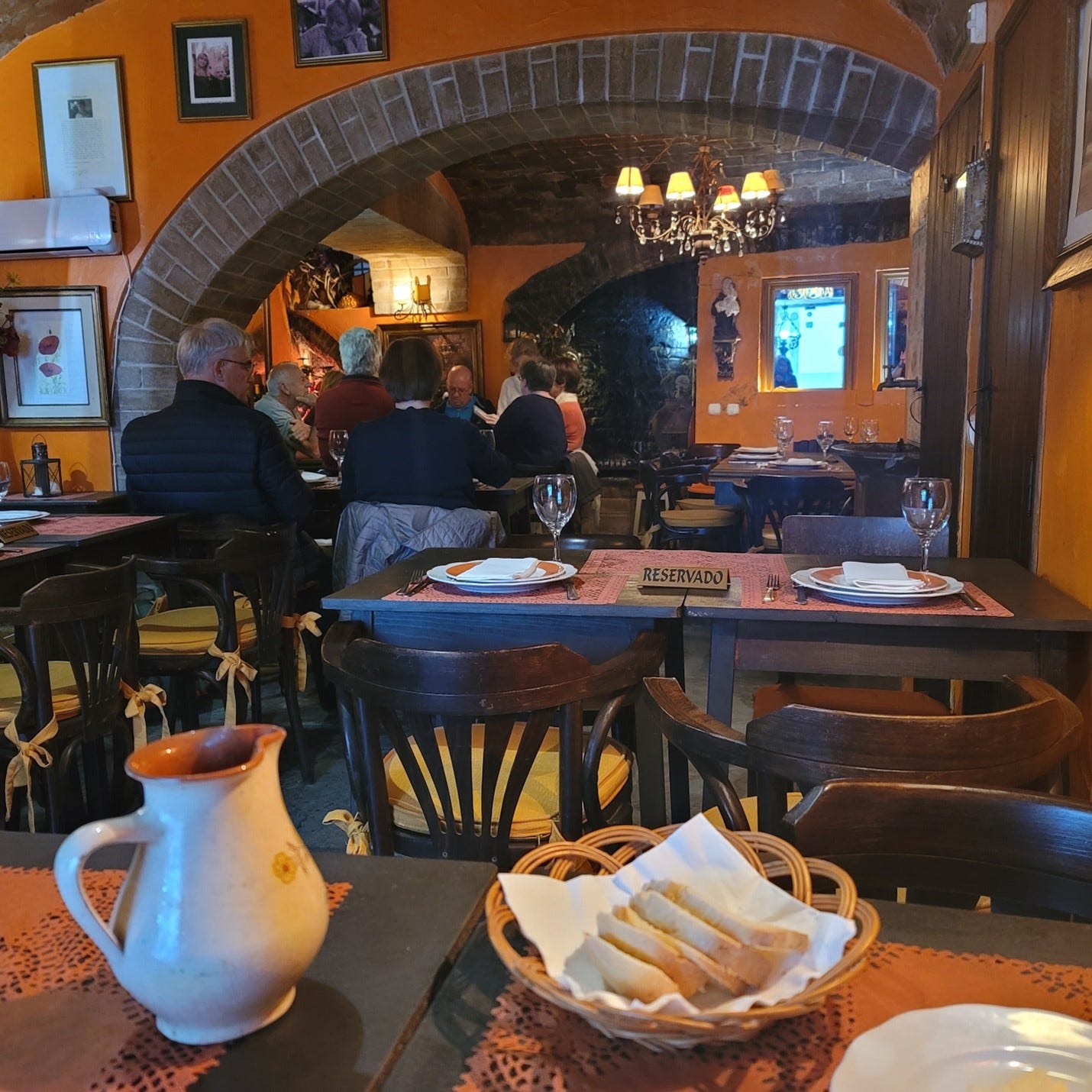
, and to say it’s a “family” restaurant would be overstating it: from what I gathered, it is run by two sisters who do everything: hostessing, serving, bussing, and cooking!
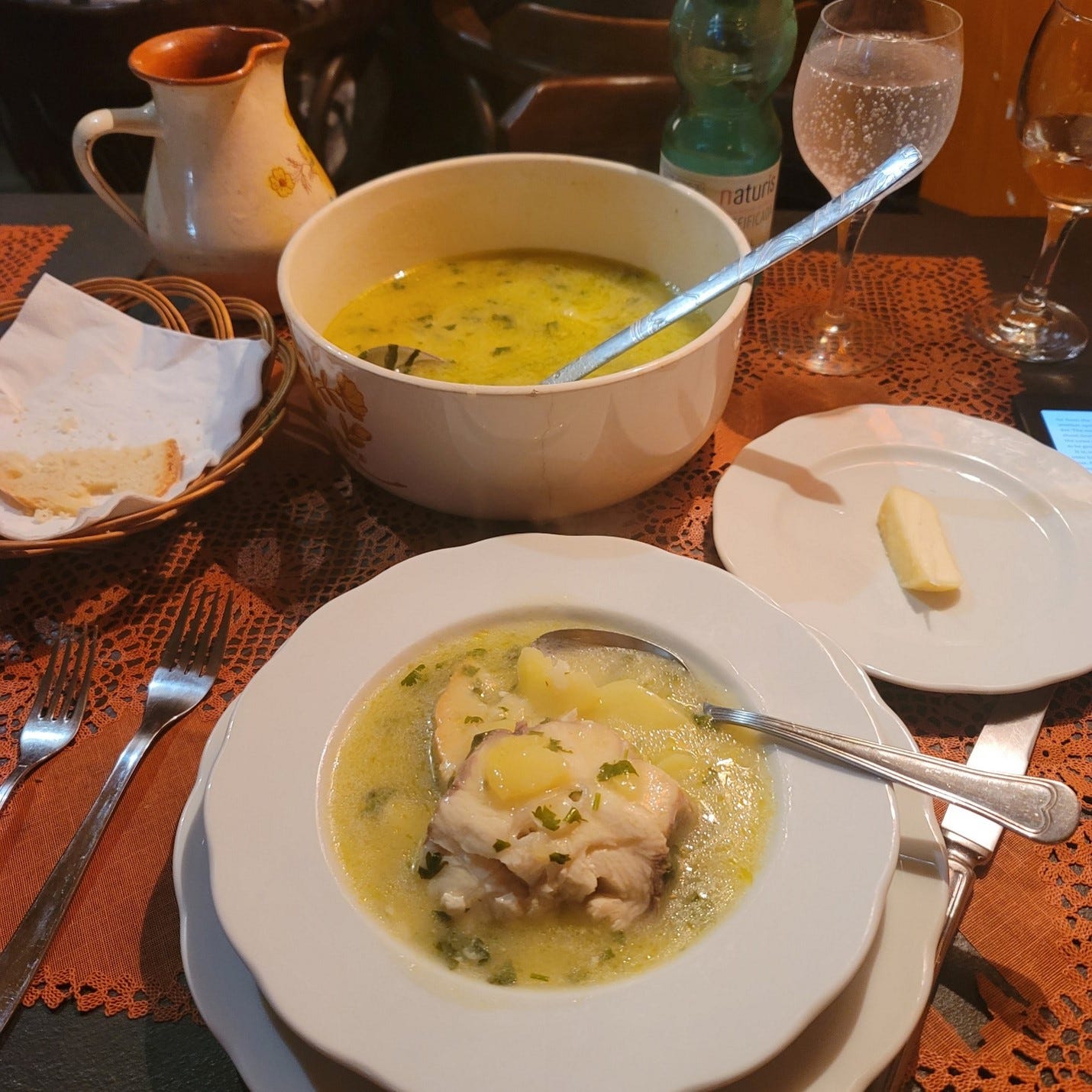
I got there early (by Portuguese standards: 8 pm) on the advice of Google, to get a seat and have an opportunity for a leisurely dinner before Fado started at around 10:30. The restaurant kept filling up with couples and small groups. I had fish stew and plenty of bread, cheese, and local wine:
At around 10 pm, I saw a couple of musicians in the back of the place getting their instruments out and starting to tune them. At 10:30, a gentleman sitting at a table next to mine rose, walked to the “stage,” and started singing!
After he was done, various folks at different tables would do the same—get up, walk to the stage, have a word with the musicians, and start singing their hearts out!
For some songs, the whole restaurant joined in!
Fado wrapped up around 11:30, even though the hostess implored everyone to keep it going. On some nights, I am sure it did!
My last day in Évora was going to be a long one: my overnight bus to Seville was leaving at 8:30 p.m. (There is no direct service from Évora to Sevilla; the first bus would take me to Lisbon, where I would switch to another one going from Lisbon to Seville.)
I decided to visit the remaining major sight in Évora: the Church of St. Francis.
The Franciscan church is an imposing structure on the outside:
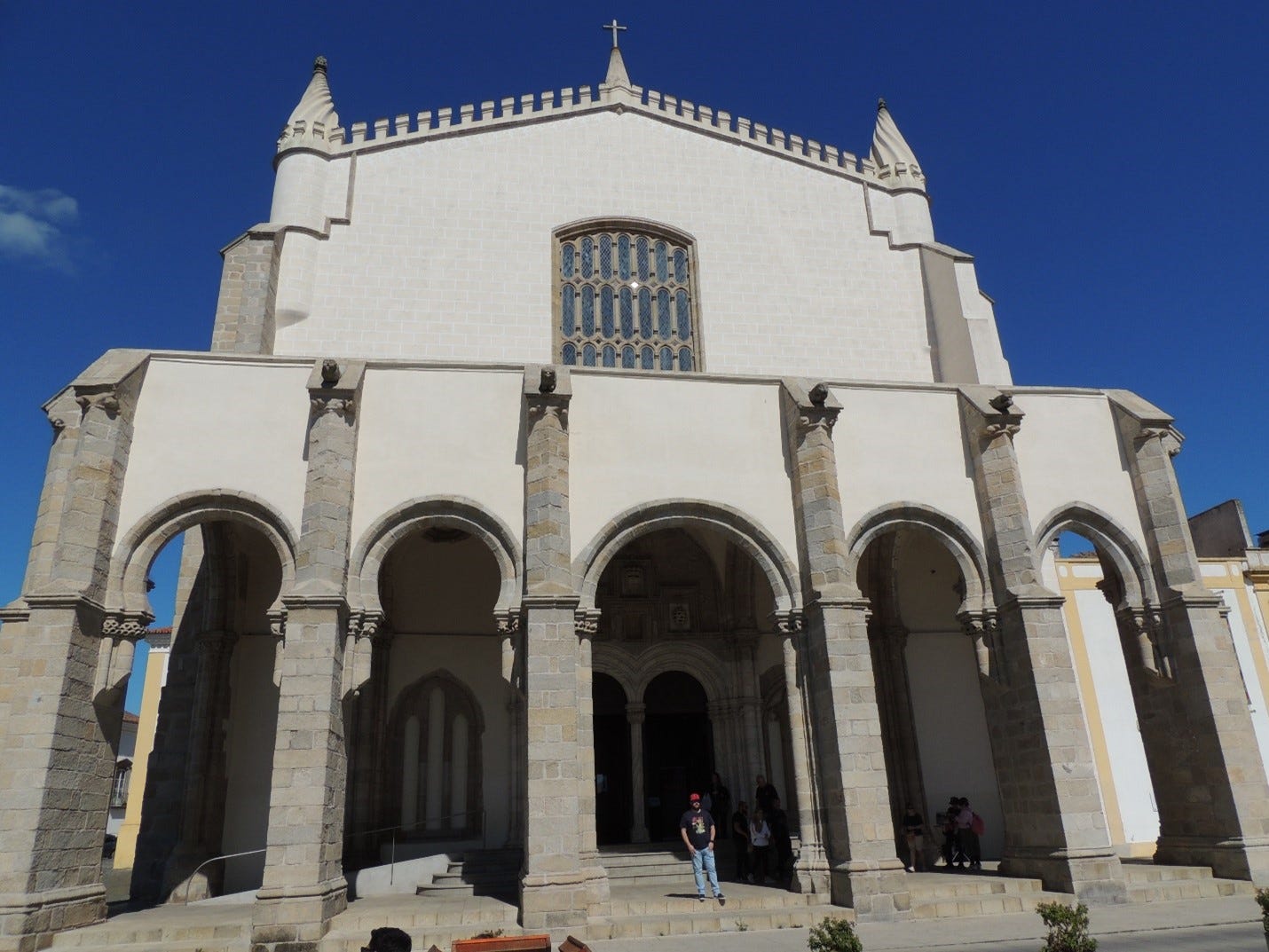
, and a magnificent complex inside:
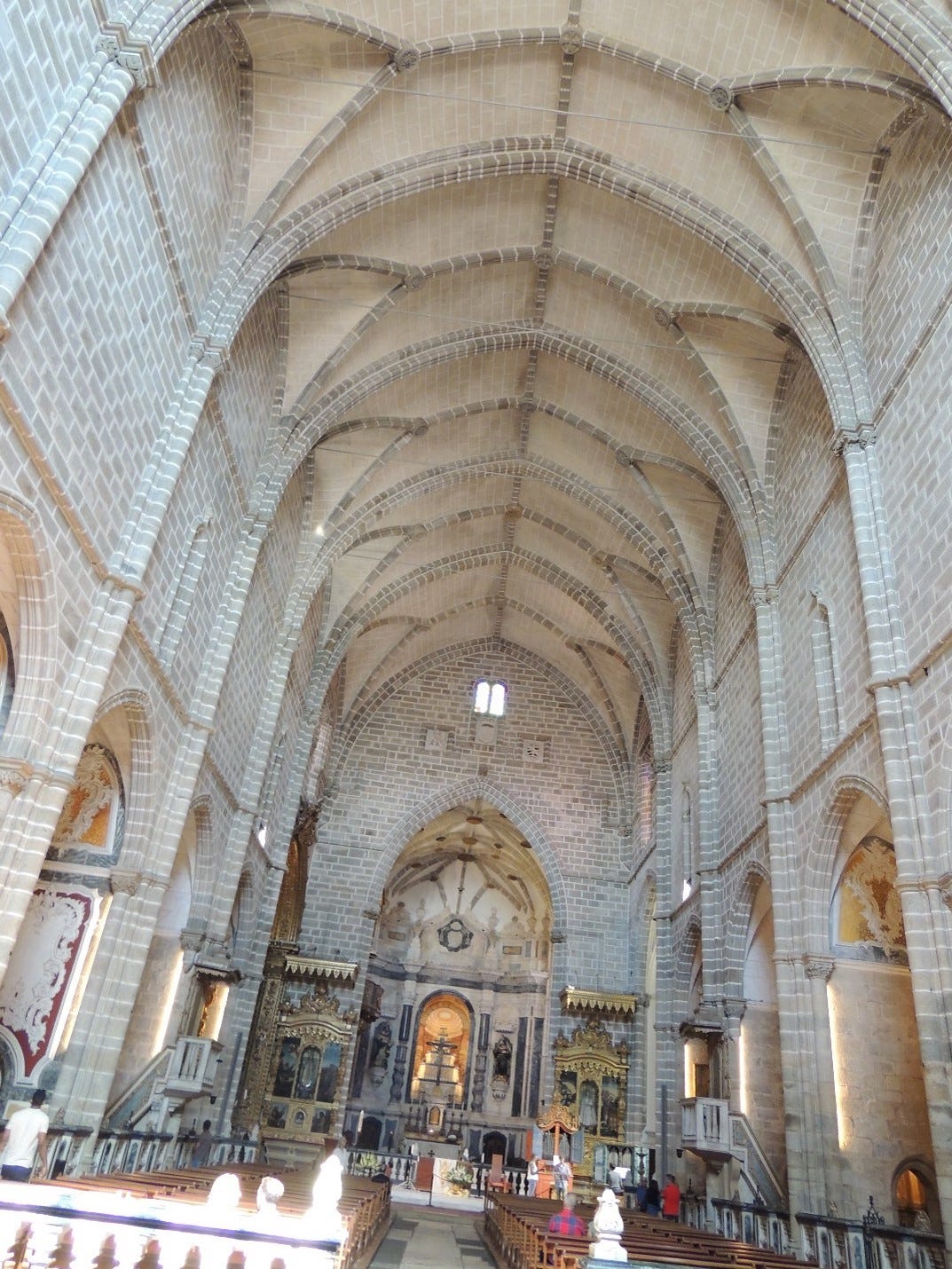
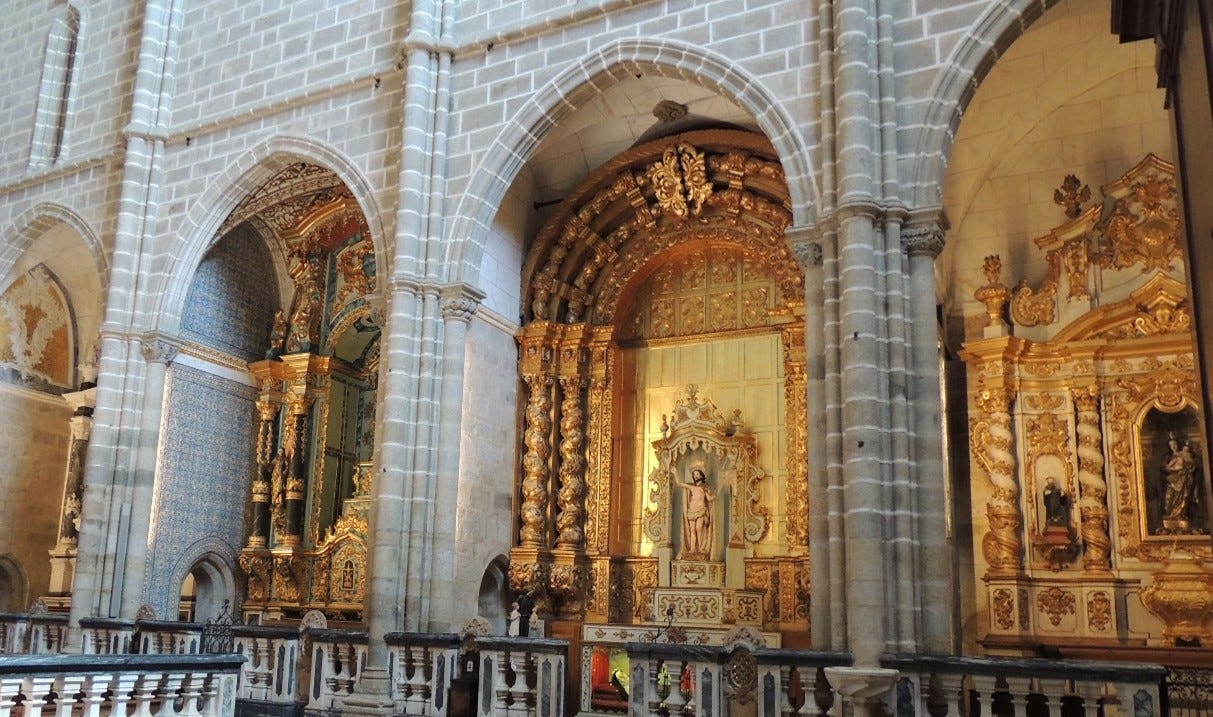
, with multiple richly decorated side niches:
But the biggest surprise waiting for me inside was the music! Student performers were rehearsing for a later service or a concert at the church!
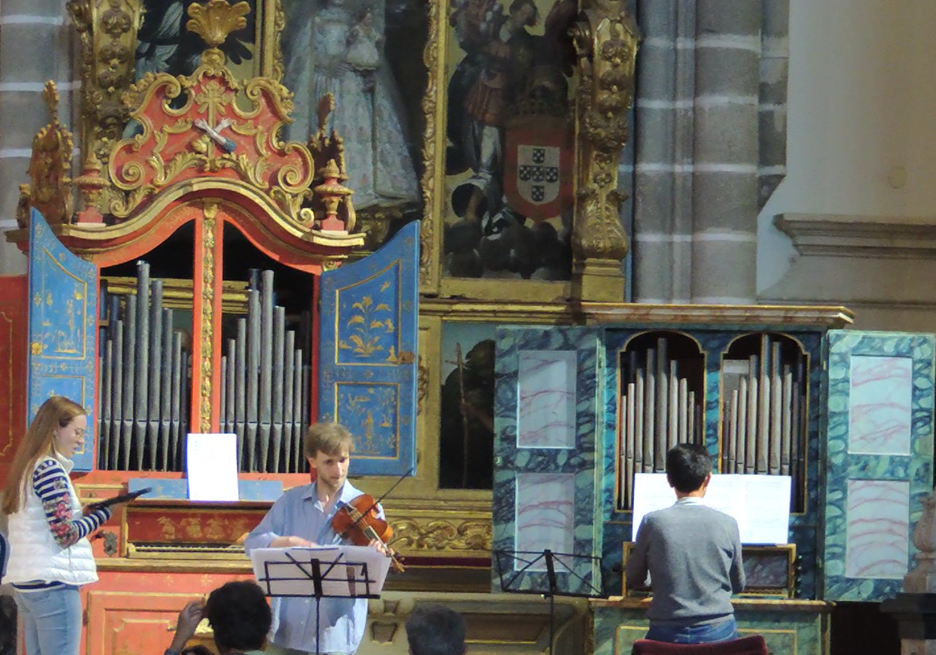
THIS is how these Gothic churches are supposed to be experienced!
On this high note (😉), I said goodbye to Évora.
For some reason, I enjoyed this town more than other places I have visited so far on this trip. It was large enough to have a variety of places to see and things to do, yet small enough to preserve—and present—the authentic way of life. It is a town with a life of its own, outside of the tourist trade.