


Turns out, there are two parallel sets of locks on the Panama Canal – the old one, and the new one. The old locks are smaller and mechanically operated; the new ones are much larger and controlled by computers, monitors, and other electronic devices.
Our ship, being a bit over one thousand feet long, had to go through the new locks; however, there was an excursion that took us to a ferry going through the old two-step Miraflores locks near the Pacific Ocean end of the canal while Joy was still waiting to enter the new Agua Clara locks on the Atlantic side, near Colón.
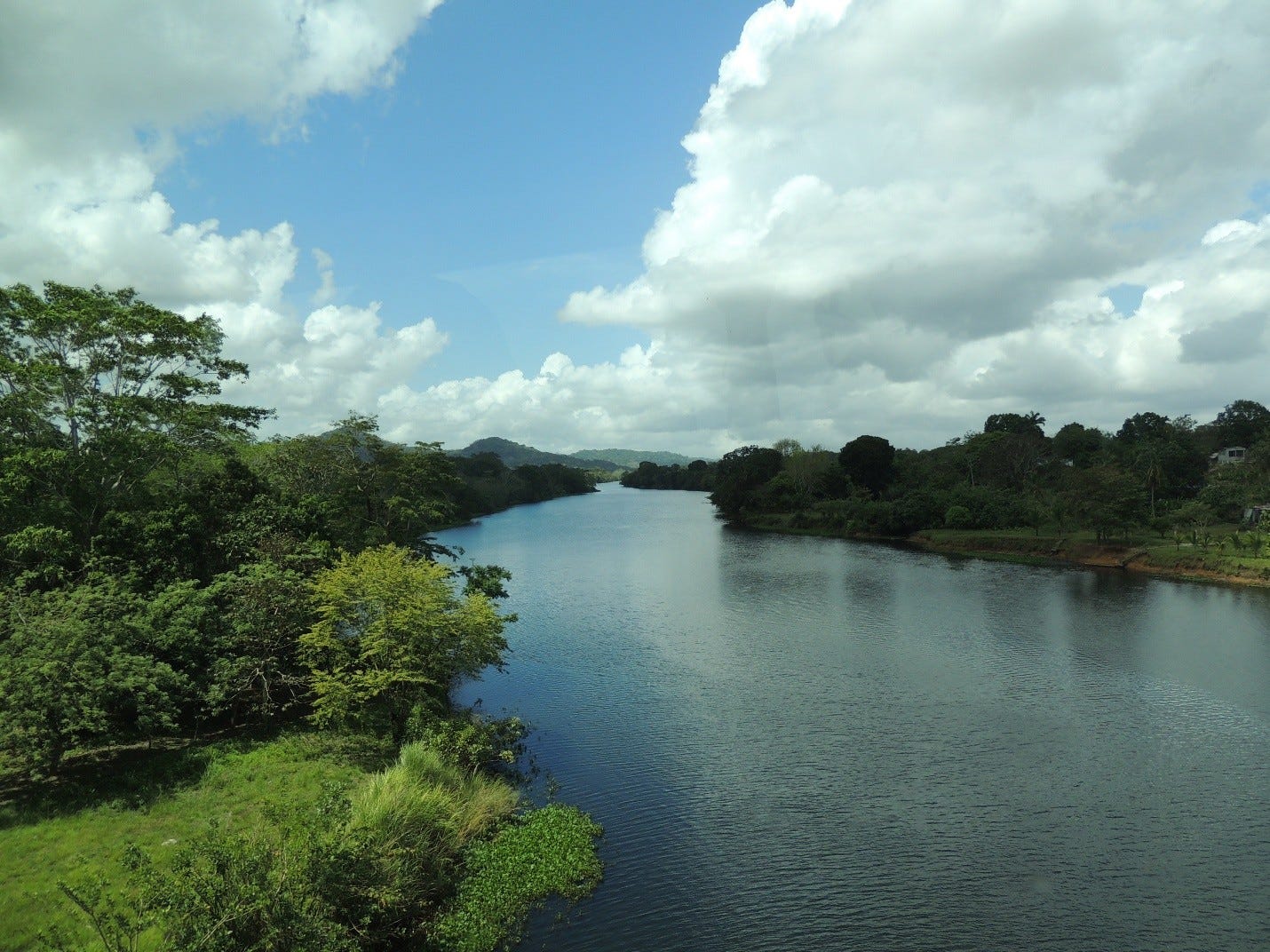
To reach the Pacific end of the canal, we had to ride a bus for a little over an hour. The ride was pretty uneventful. We did cross the picturesque Chagres River:
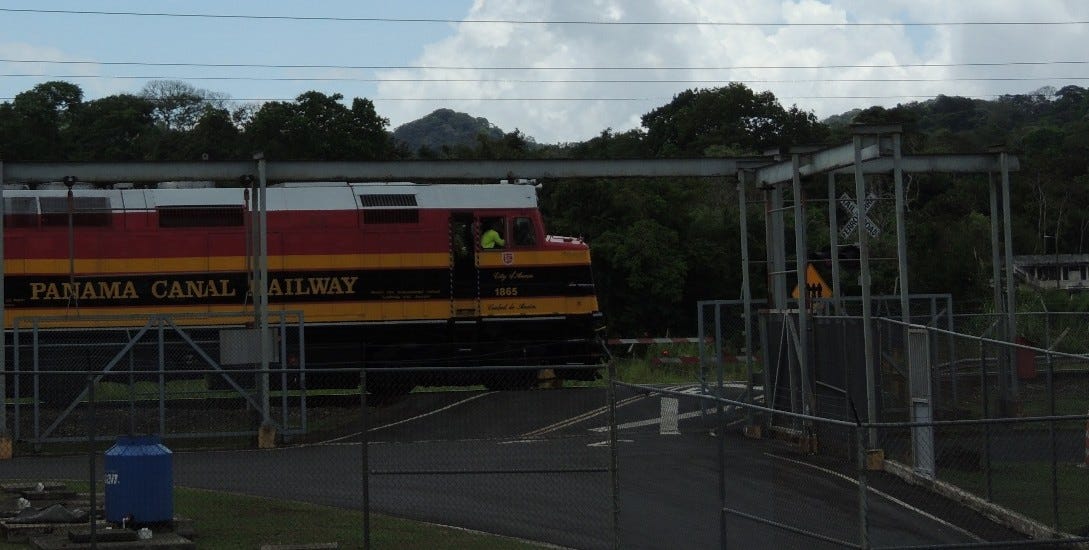
, and saw a Panama Canal Railway train thunder by:
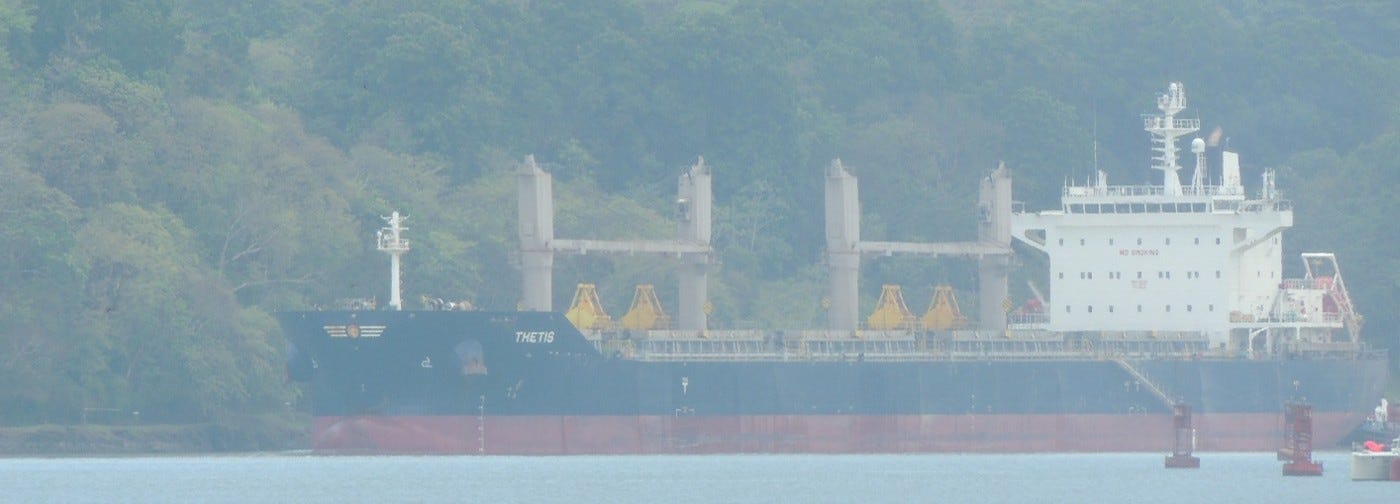
The main attraction, of course, was the ferry that would take us through the canal locks. Once we boarded the ferry, we encountered the first – of many – waiting periods that are apparently de rigueur during the passage through the Canal. First, we mere mortals had to make way for silver-footed sea-nymph, Thetis, the mother of Achilles, reincarnated as an ungainly Liberian-flagged (but Greek-owned!) bulk carrier:
Then we also had to make way for an MSC Pisa (yes, named for the city with the famous leaning tower – the company is Swiss-Italian owned and names its ships for Italian cities.)
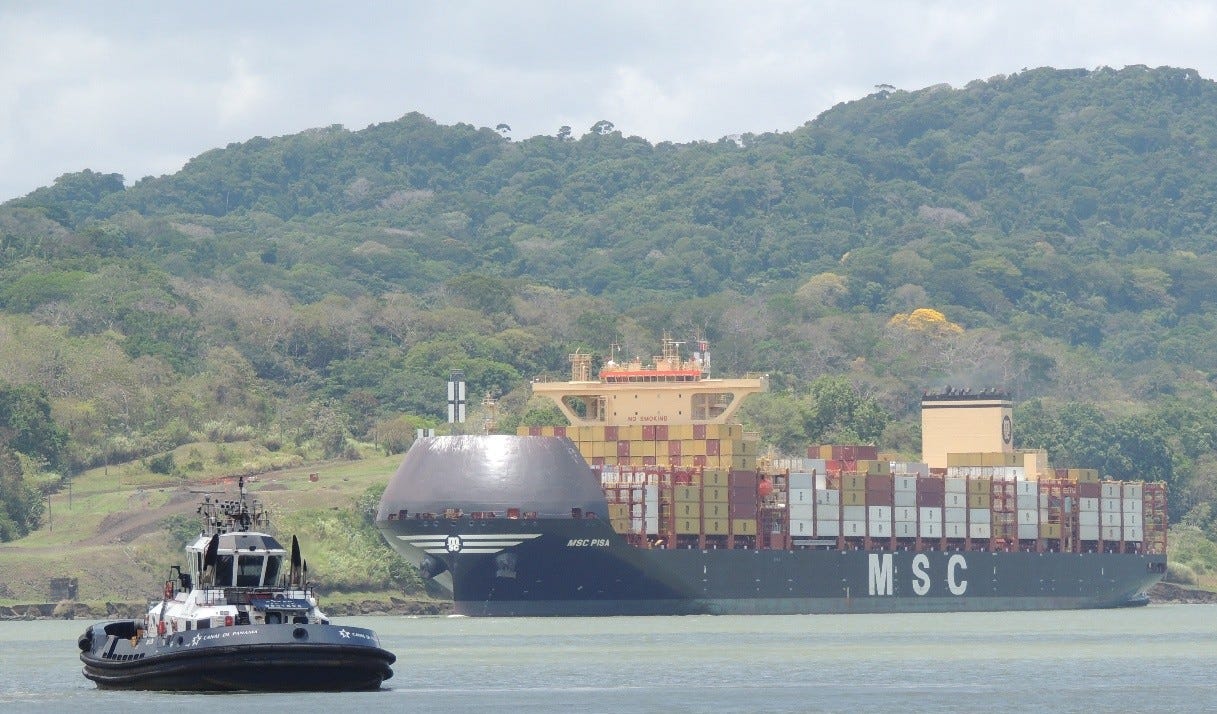
Notice the tug boat? There are dozens of them in the canal, guiding the ships into the locks.
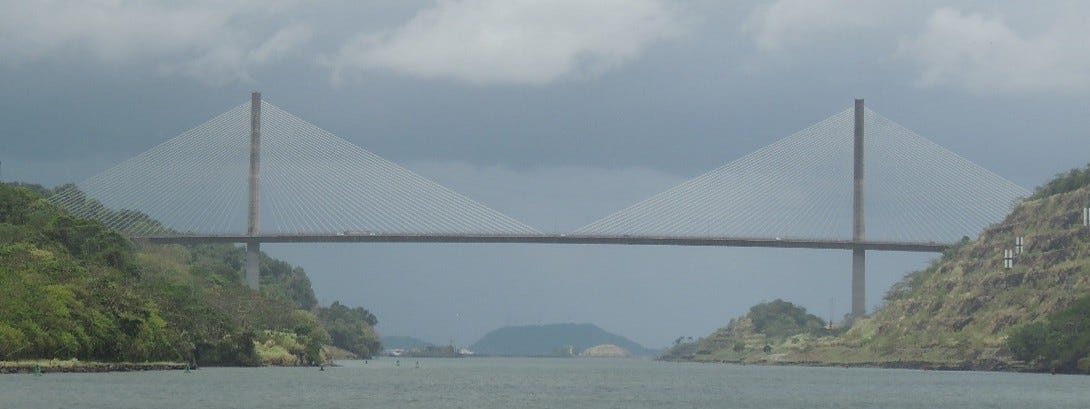
Once we were underway, we caught our first glimpse of the graceful Centennial Bridge, named to commemorate the one-hundredth anniversary of Panama’s independence from Colombia in 2003:
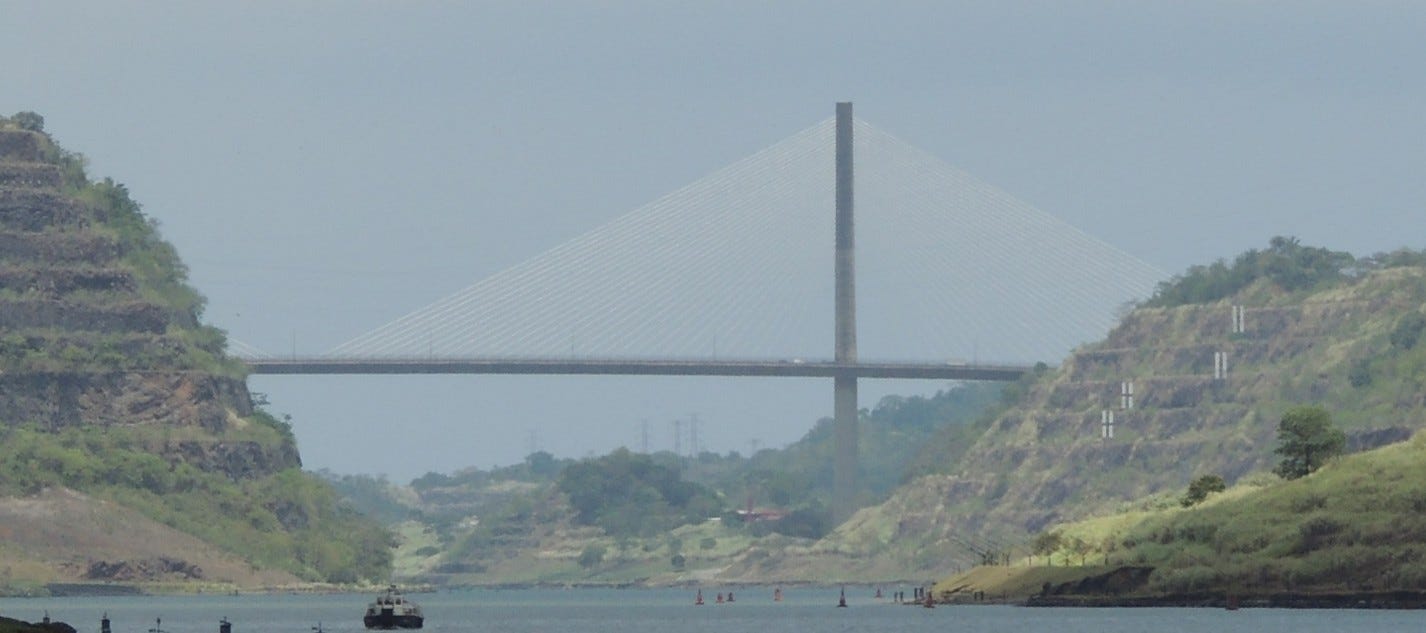
See the terraced hillsides on both sides of the bridge? You witness them all along the canal; they are built to prevent landslides, as it rains quite a lot in Panama (the Panama Canal region receives about 104 inches of rain per year. On average).
After following the water under the bridge:
, we arrived at the first lock:
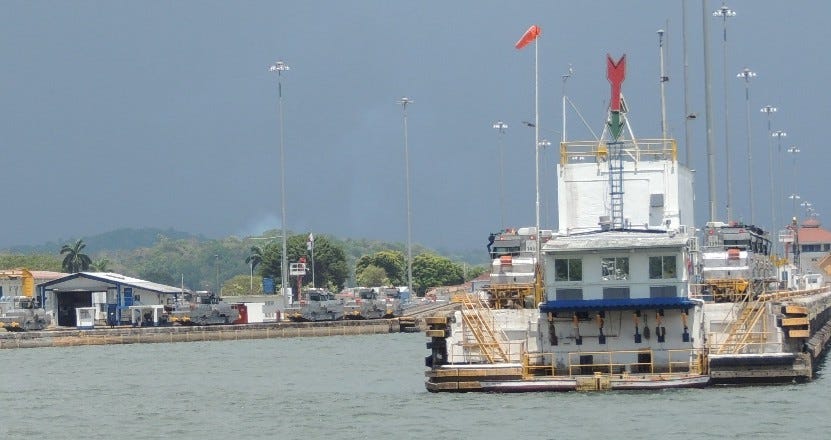
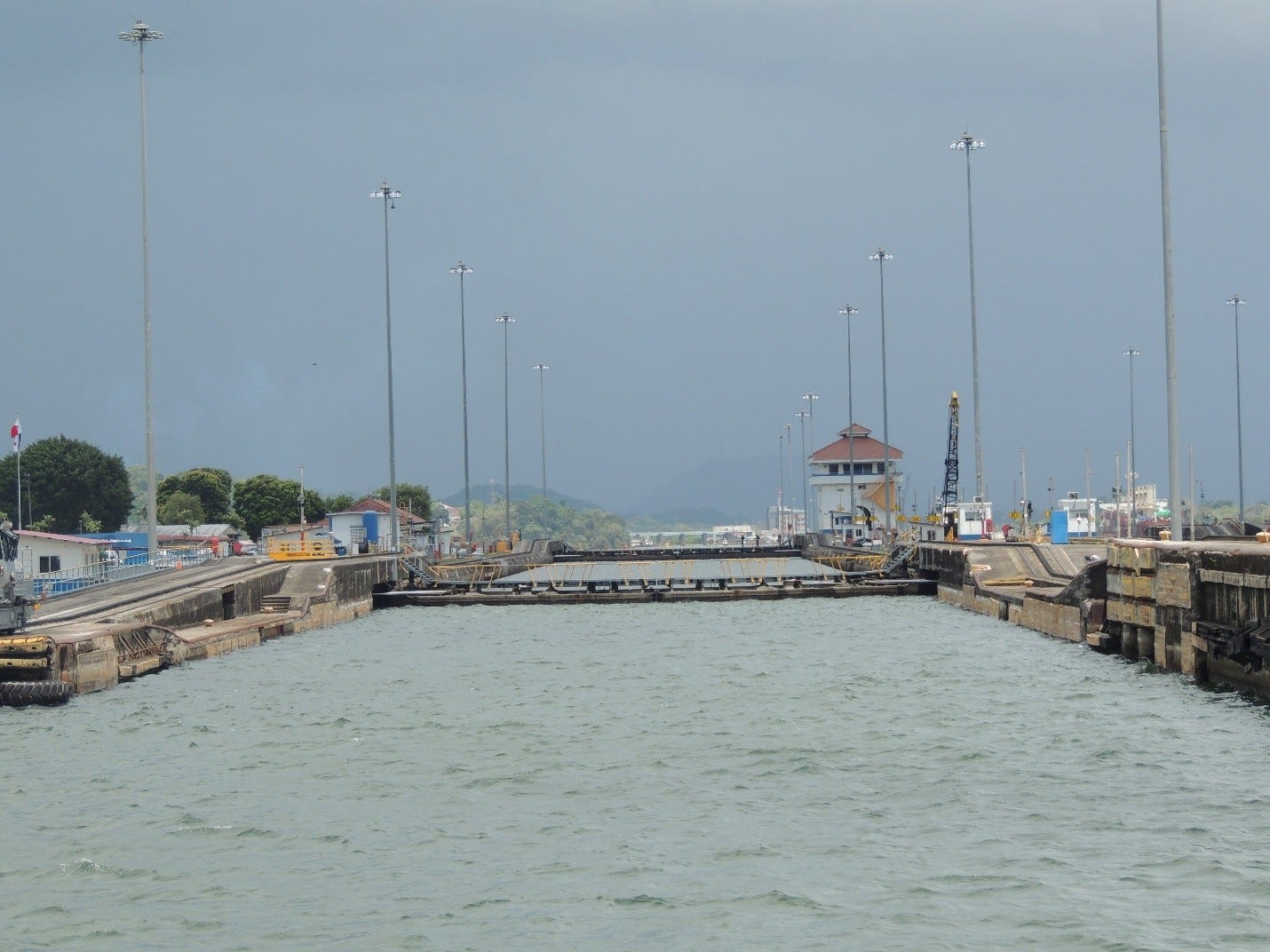
Everybody quivered with anticipation of the first passage through the heavy gates.
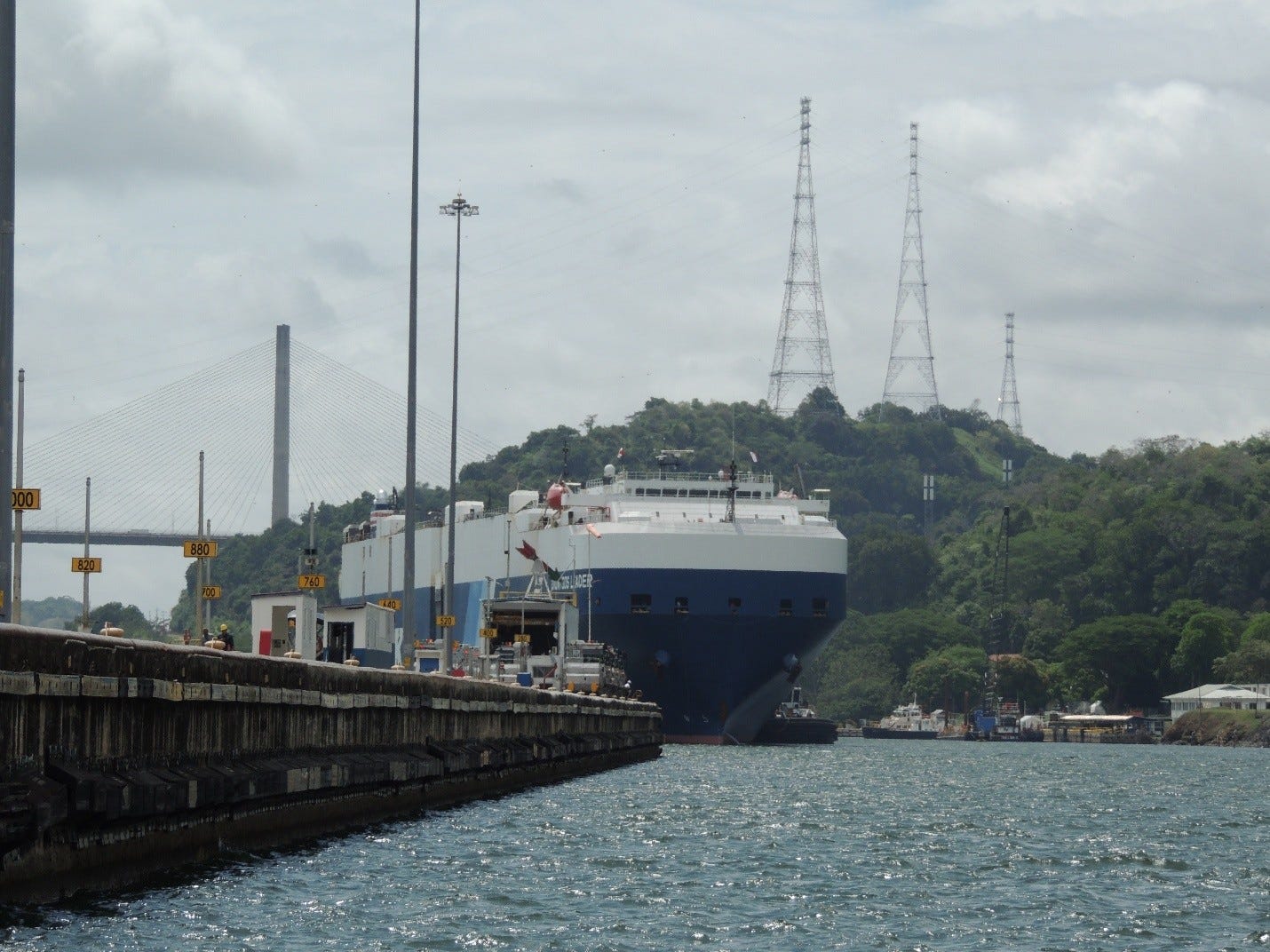
Unfortunately, we were left to quiver for quite a while. Turns out, a giant car carrier was to go through the lock with us. Normally, that wouldn’t be a problem – ships of multiple sizes routinely share the locks. This one was different, though – apparently, it was of a new design, and the canal tugboats were very, very, extremely, exceedingly, extraordinarily, excruciatingly, some might say even excessively, careful (slow) with moving it and positioning it just so.
From the time we saw the tugs angling the ship’s way into the lock:
, until it was positioned safely behind us:
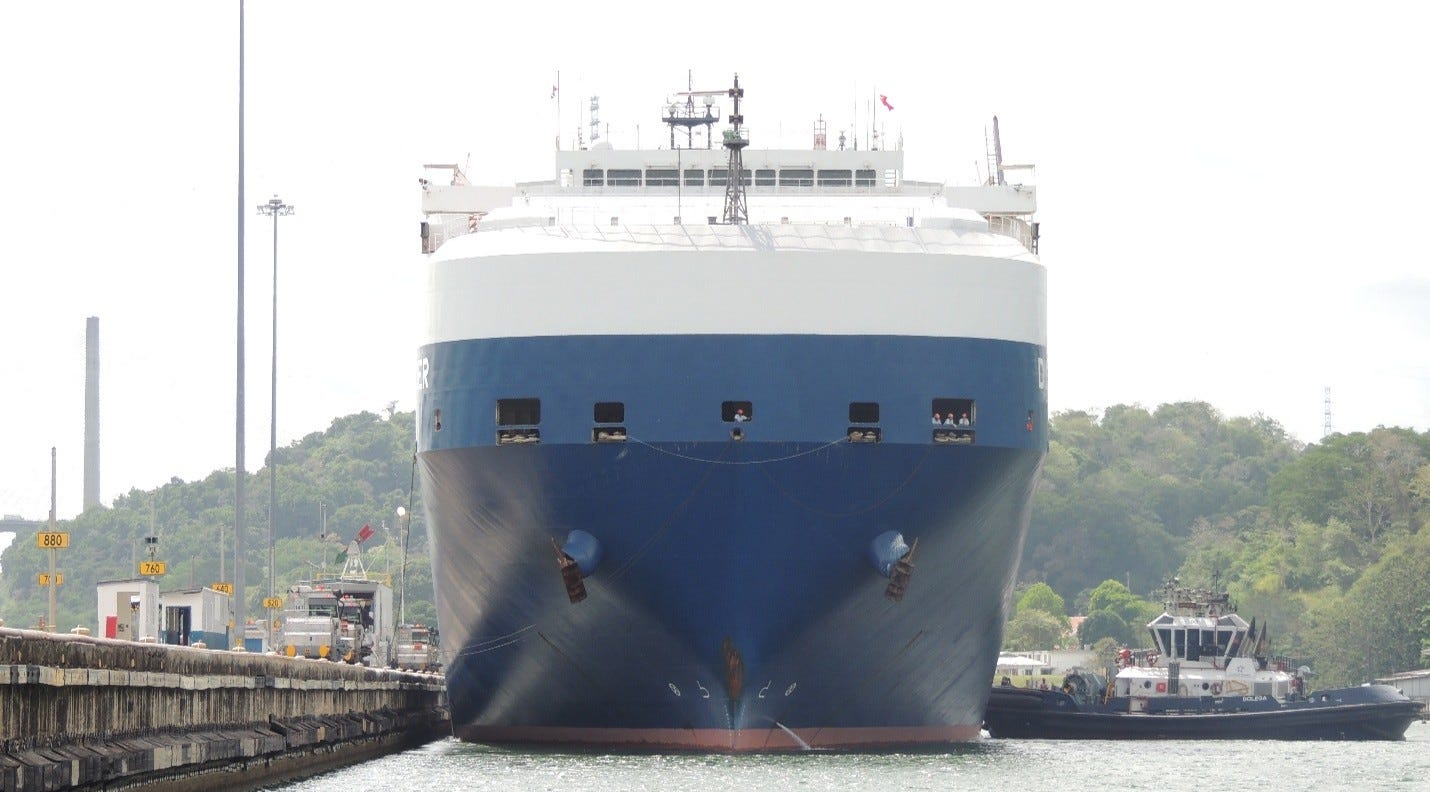
, a good part of an hour had passed.
Why, you may ask? Well, besides the novelty of it, there was its size and mass (momentum) to consider. The older locks were not built for monster-sized ships like this giant piled high with containers:
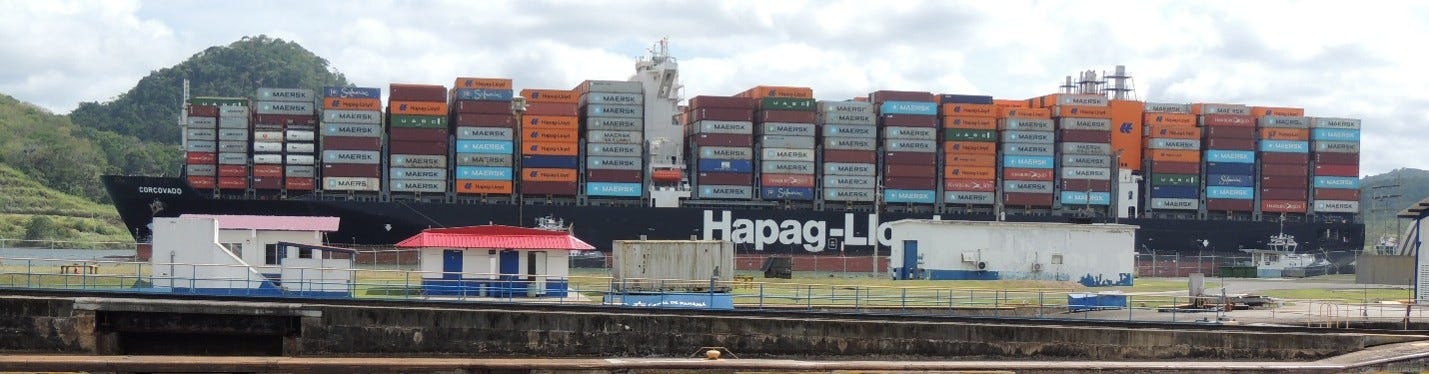
, (which was going through the parallel series of new locks, able to accommodate its length, width, and draught). But they do accept anything that fits within a few… inches?
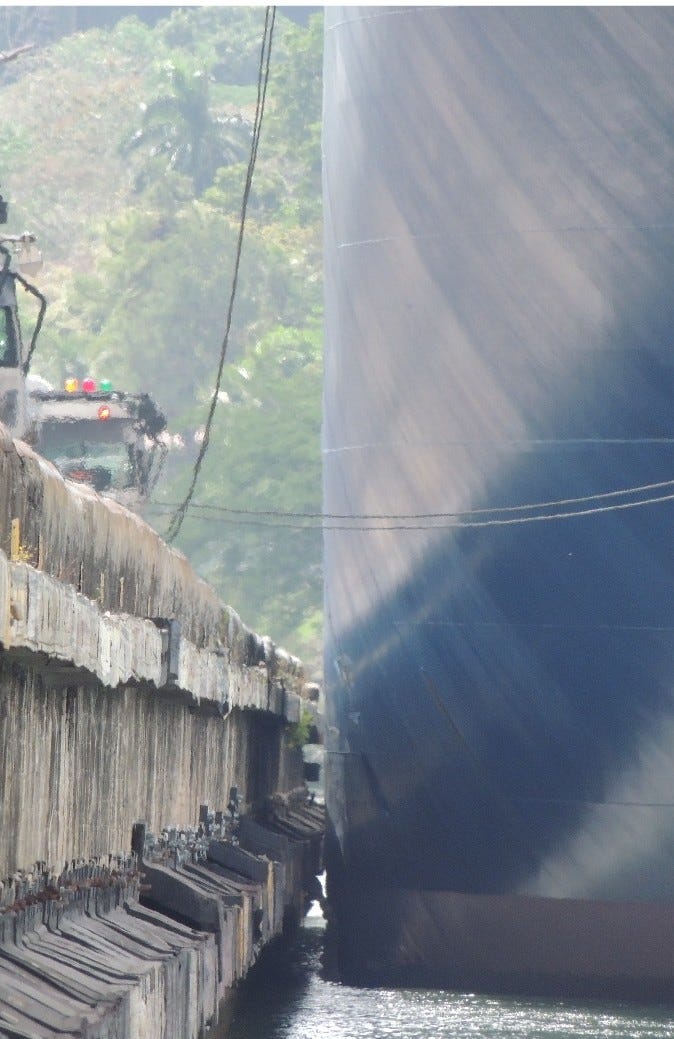
😱of the sides.
And that’s where the mules come into the picture.
To keep the ships correctly positioned in the lock chamber, and prevent these giants from crashing into the lock walls when the water rushes in or out to raise or lower the ship to the next stage of the passage, the Canal authorities employ a series of what they call “mules” – heavy-duty locomotives that position the ships properly before the gates, and maintain perfect alignment as the water moves through the lock:
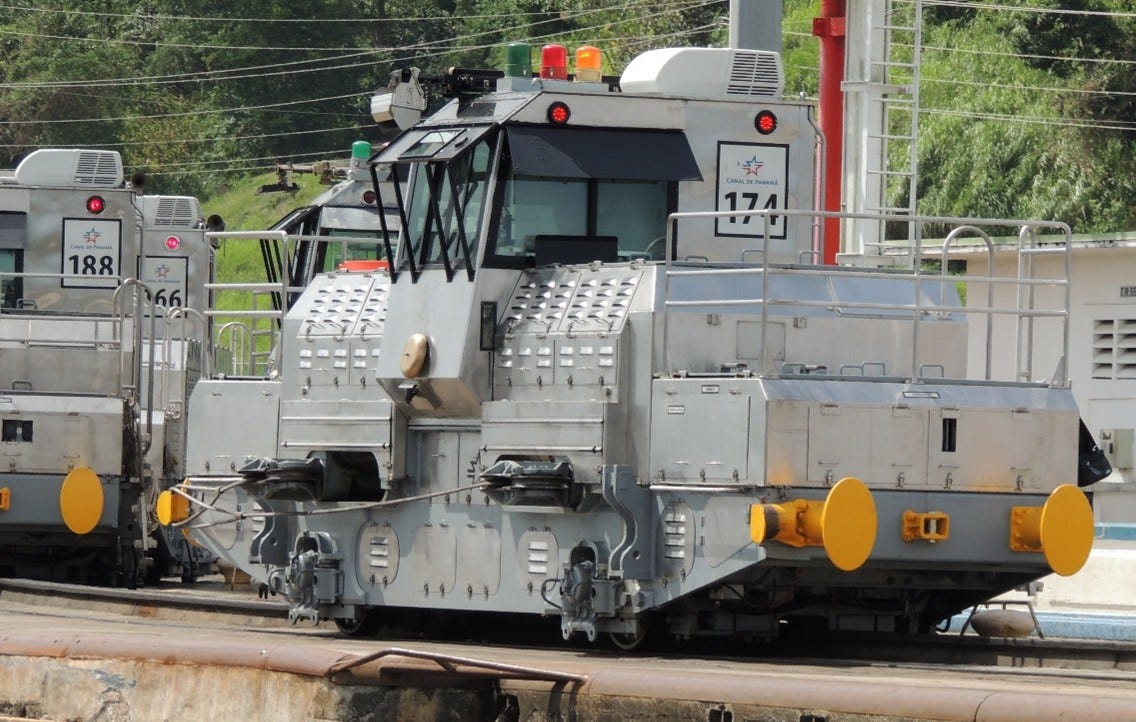
Each has 25,000 pounds of holding force, so many are needed for each ship.
In order to attach the ship to the mules, a couple of workers get into a canoe to catch the heavy tug lines lowered from the ship and bring them to the lock side, where the mules are waiting:
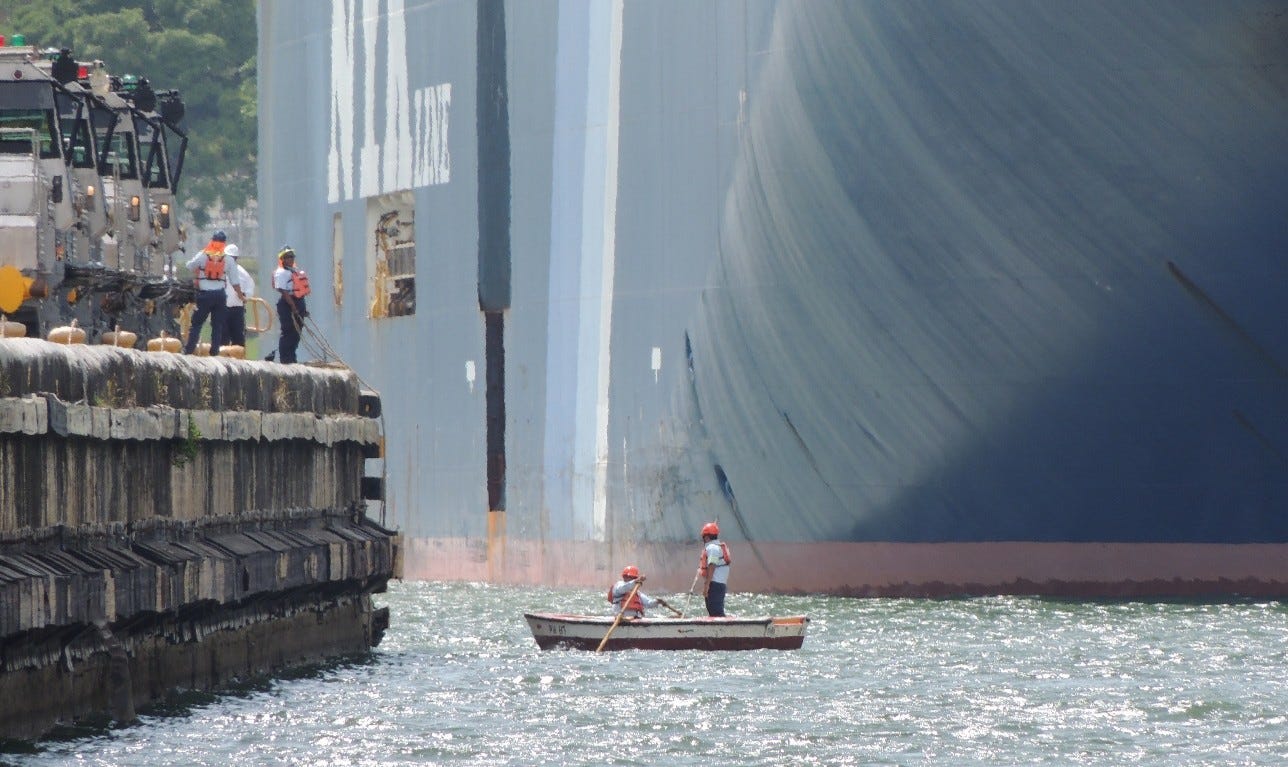
(The whole operation has a strong whiff of the 19th century about it, doesn’t it? Read on for the apparent consequences of this perceived obsolescence.)
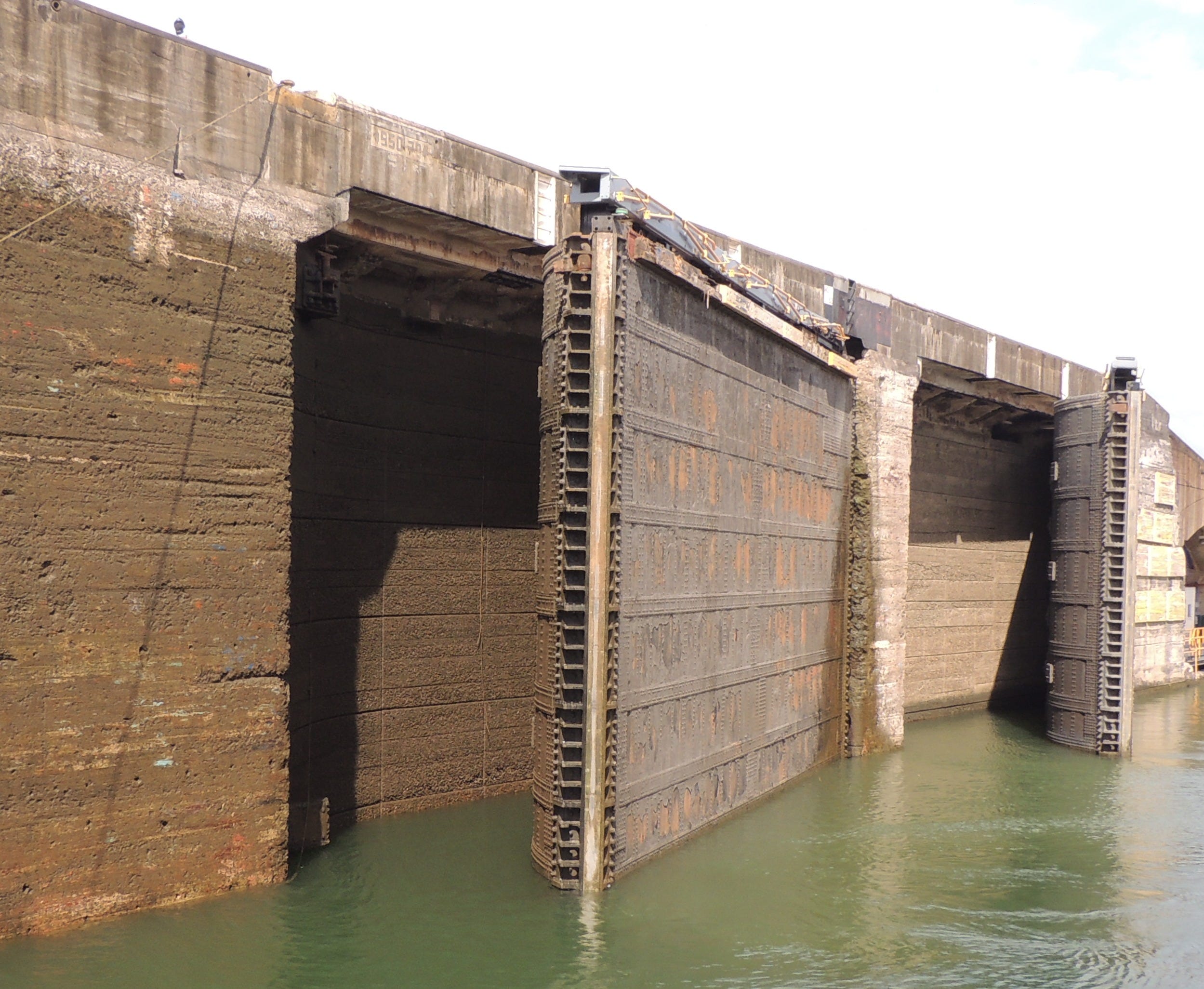
Finally, everything was positioned properly, and the water began to rush out of the lock. The water level in the first, Pedro Miguel Lock, with one chamber, goes down 30 feet. Once it reached the level of the subsequent portion of the canal, we could see the true dimensions of the gates:
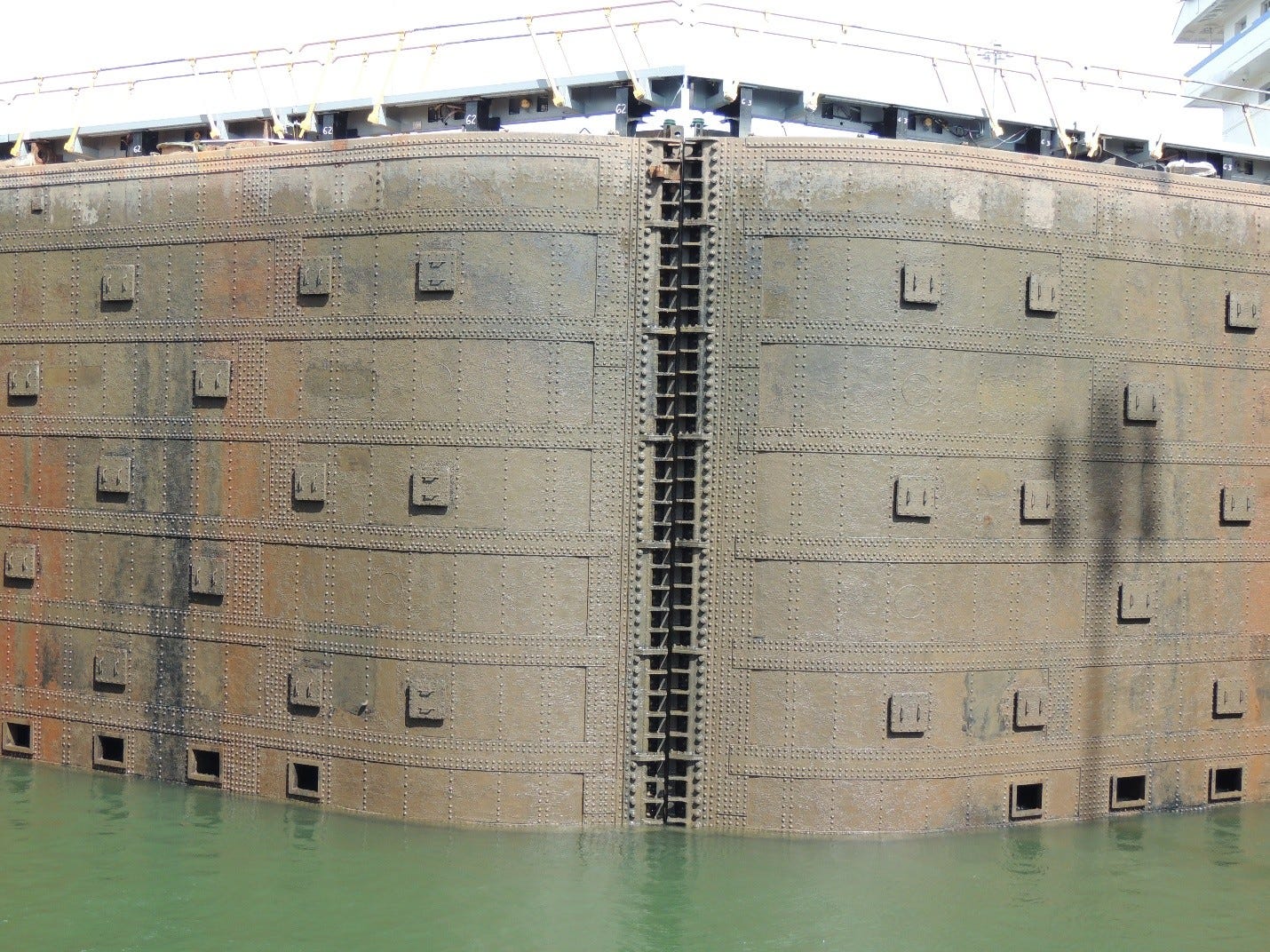
Here’s me for scale:
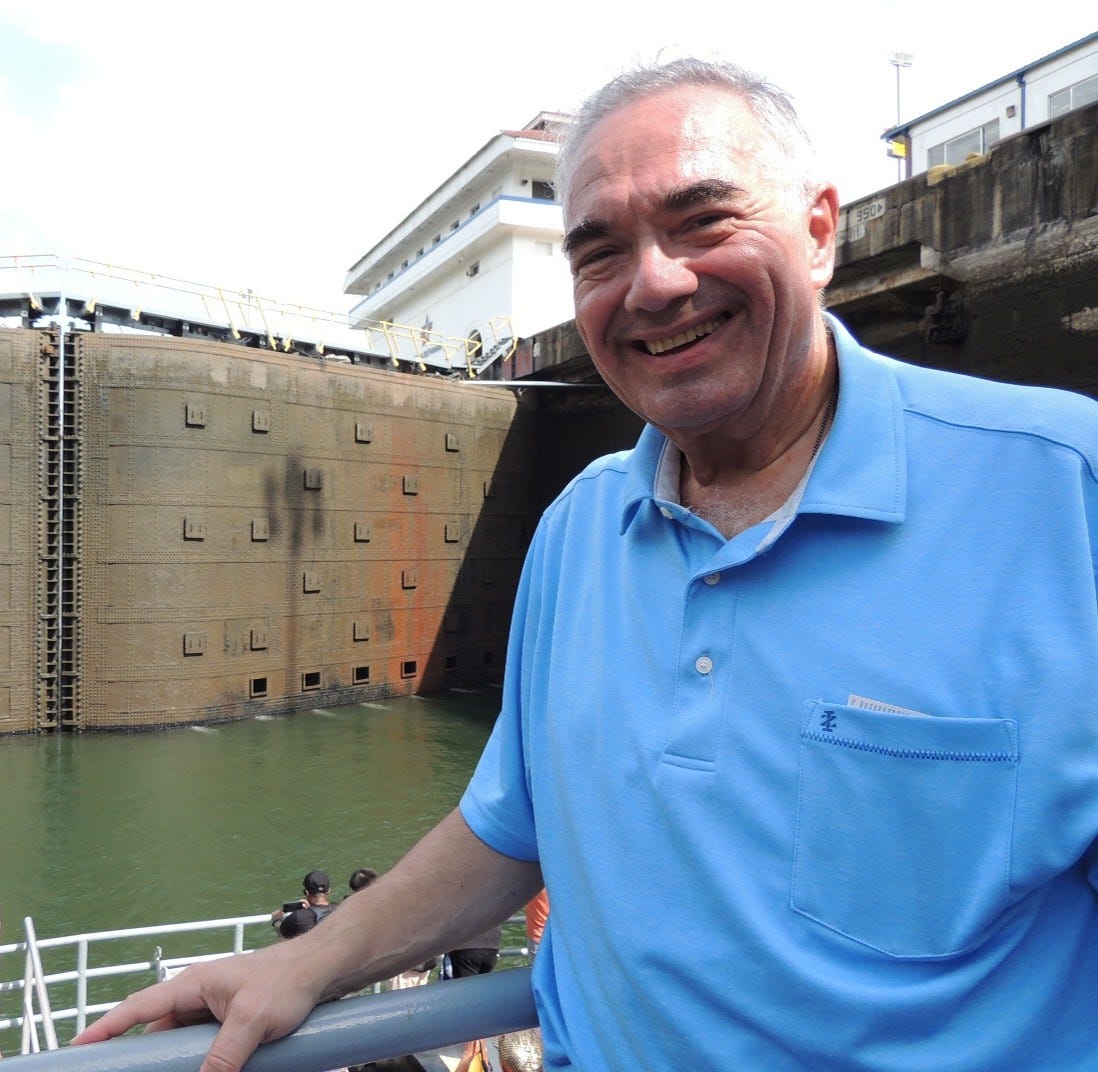
(Wait a minute, am I taller than the gates?🤔)
The gates opened majestically:
, and we were able to see both sets (the second is a security backup; both are held close by the enormous pressure of water in the lock).
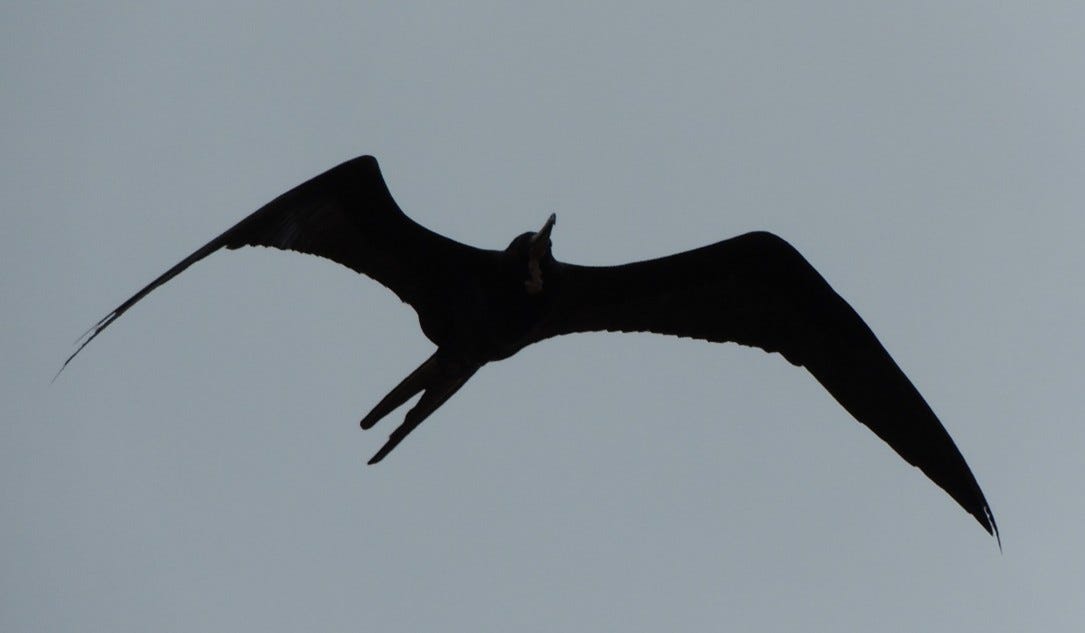
Once through the lock, we started seeing seabirds, especially male:
and female:
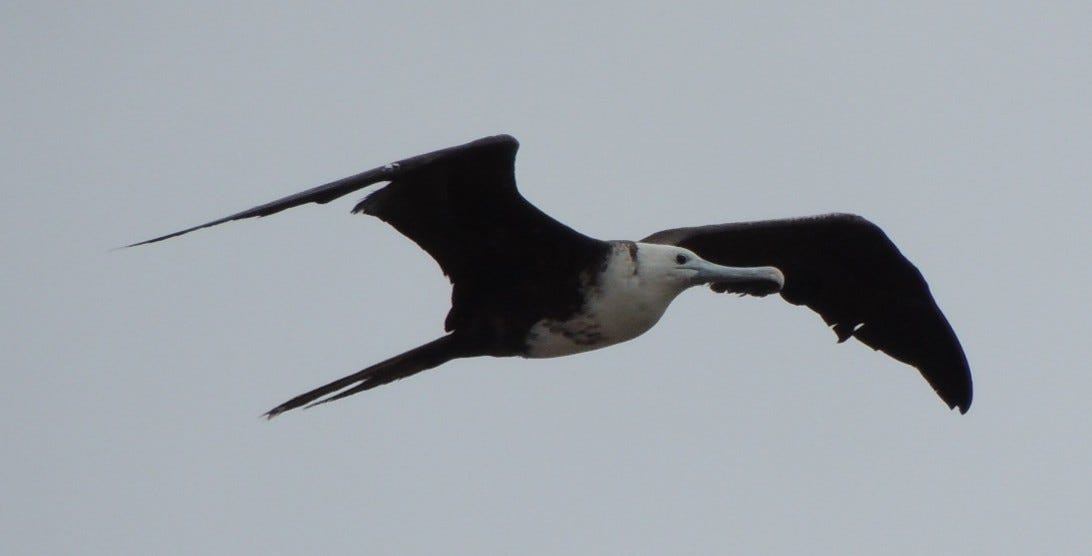
Magnificent Frigatebirds (Fregata magnificens, Google informs me; it also said a white body and head distinguish females).
At the double Miraflores locks:
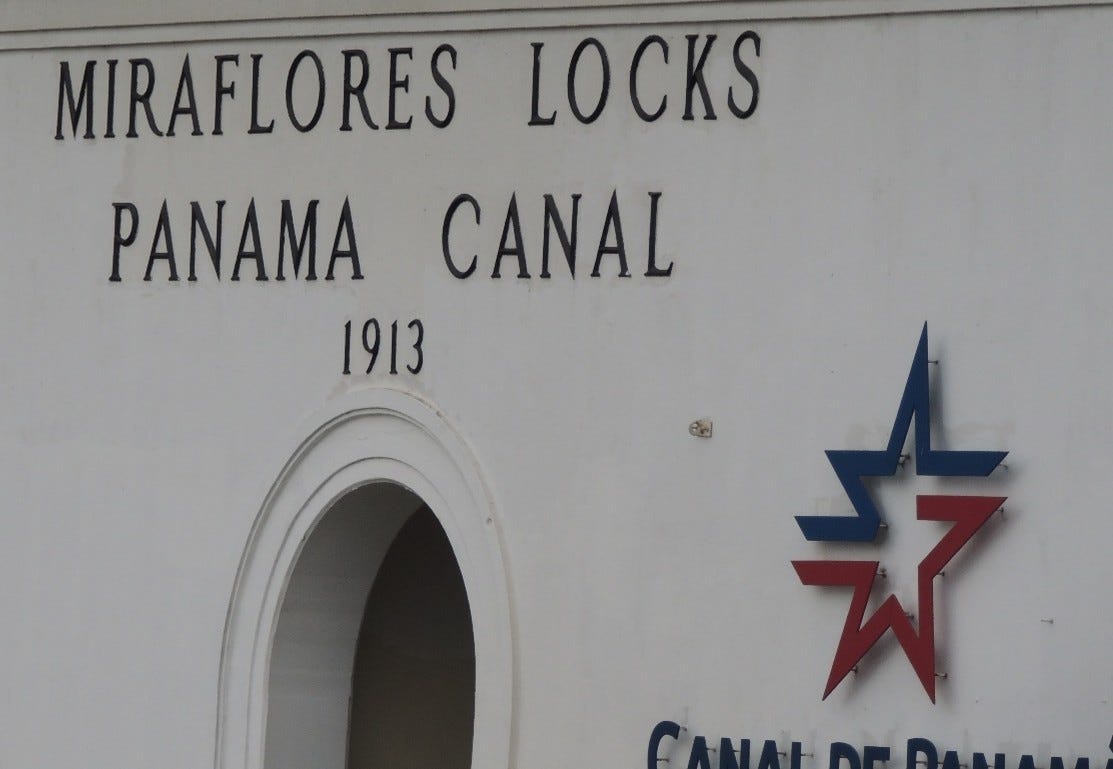
, the same painfully lengthy procedure with the auto carrier positioning had to be repeated twice, lowering us a total of 60 feet (the total elevation change from the Atlantic to the Pacific is around 85 feet). Our veteran guide, with over 30 years in the business, told us that she’s never seen this excursion take so long. By now, we were in danger of missing not only dinner reservations but also “all aboard” time. Well, there was nothing we could do, so we took some pictures:
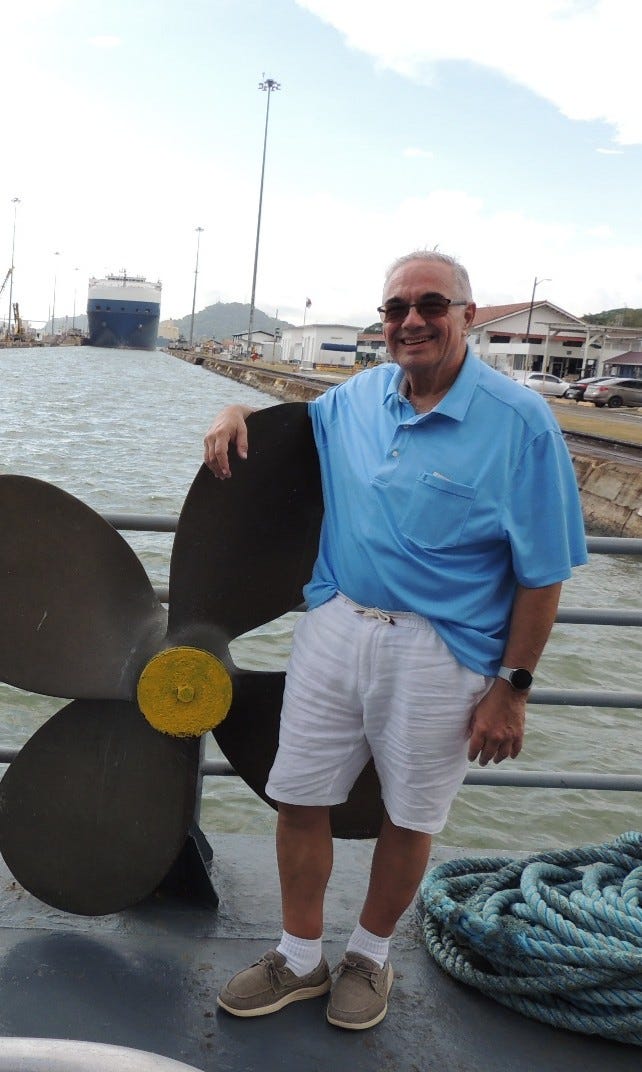
, and engaged in silly antics:
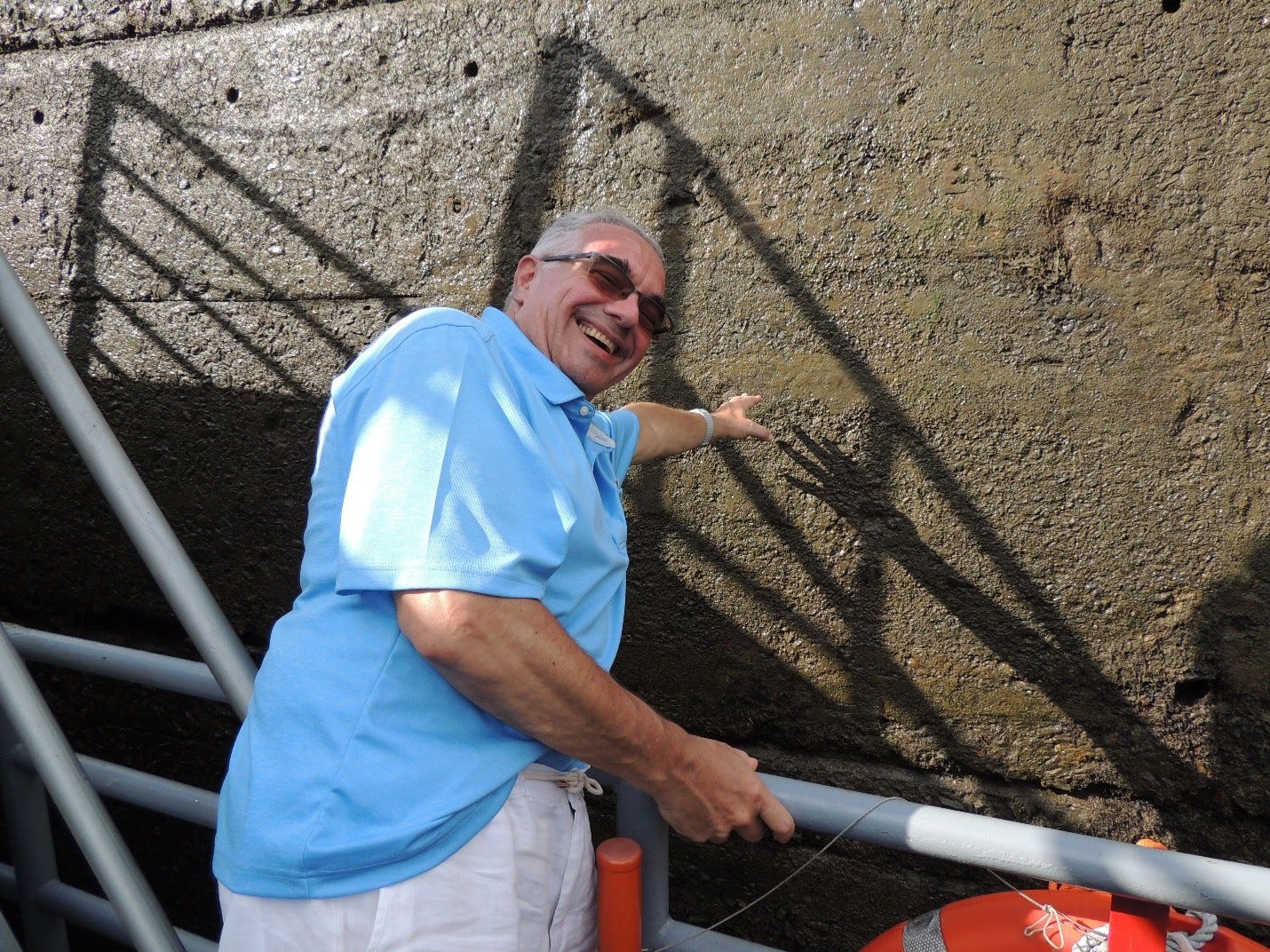
(for the curious, the lock wall felt, as expected, quite slimy).
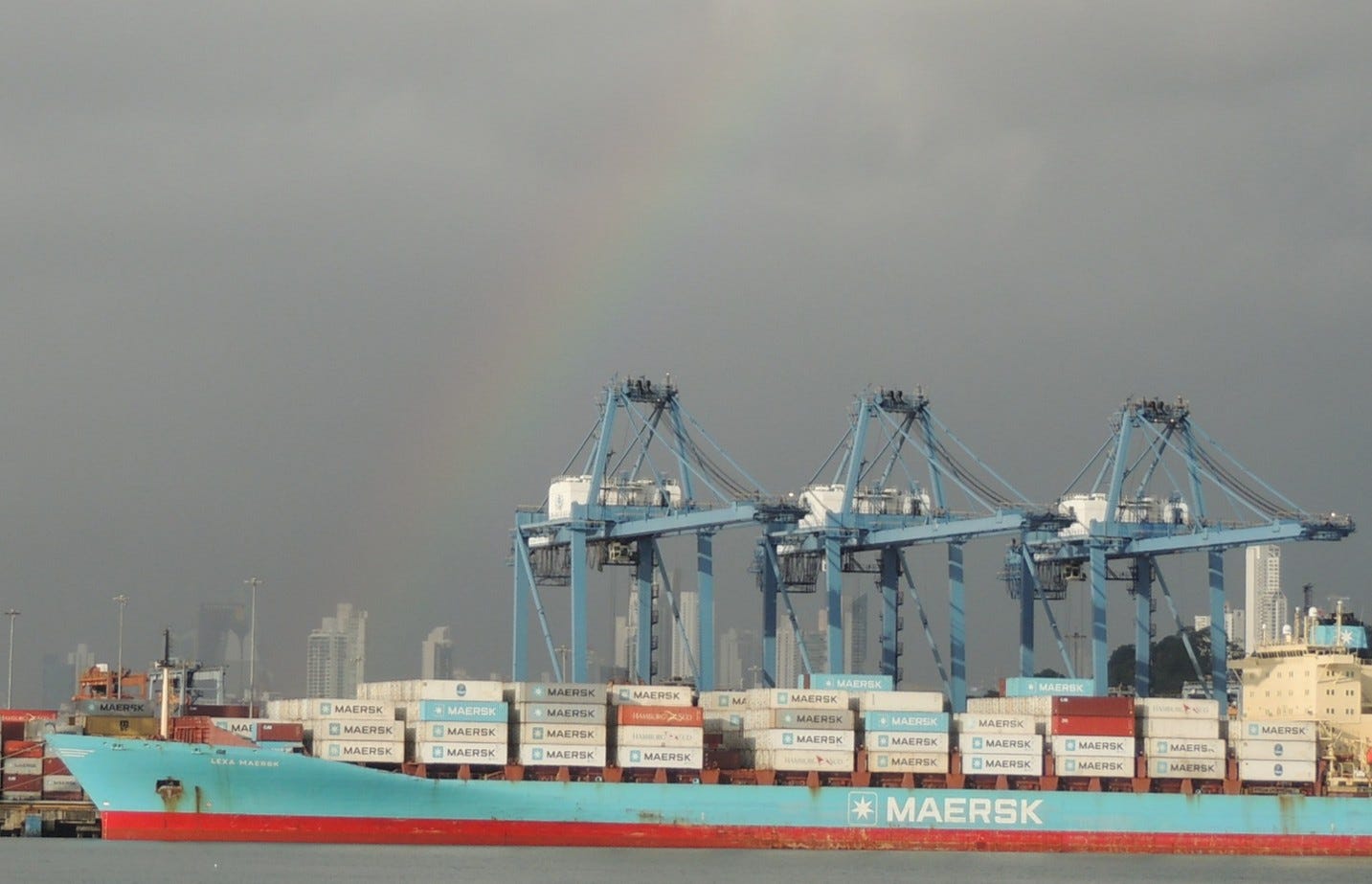
By this point, rain clouds were gathering on the Pacific end, and we were treated to a rainbow over the port:
, and under the Bridge of the Americas, connecting North and South America over the Pacific end of the Panama Canal:

As we got closer to the end of our excursion, the heavens opened up but good. Luckily, our buses lined up close to the pier, so we got only moderately soaked in the 30-yard dash to the bus door.
Also luckily for us, we were on an official Norwegian excursion, so the ship waited for us for almost two hours. By the time we showed up, our final 30-yard dash from the bus to the gangway was jeered by multiple irate passengers who were informed, over and over again, that some wayward group was delaying the ship; our “gang of 135” was talked about for days afterward (not much newsworthy happens on board, I guess).
The next day, the cruise ship transited the Canal through new locks, still quite slowly, but without the excruciating delays of the previous day. By now, we were old hands at that and paid much less attention to the passage.
It was interesting to note that the massive gates on the new locks closed laterally instead of swinging open:
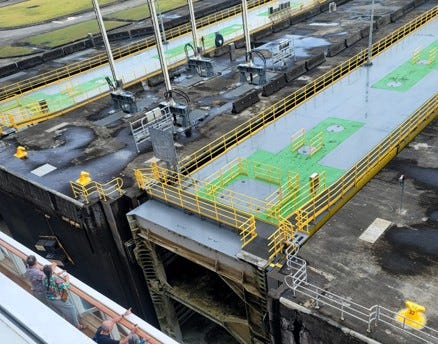
(the grey-and-green sections with the yellow fences are the gates).
Entering the lock on our huge ship was still pretty impressive:
No wonder they put rubber pads on the sides!
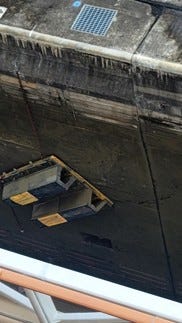
It was instructive to see just how much the water levels differed between the lock sections:
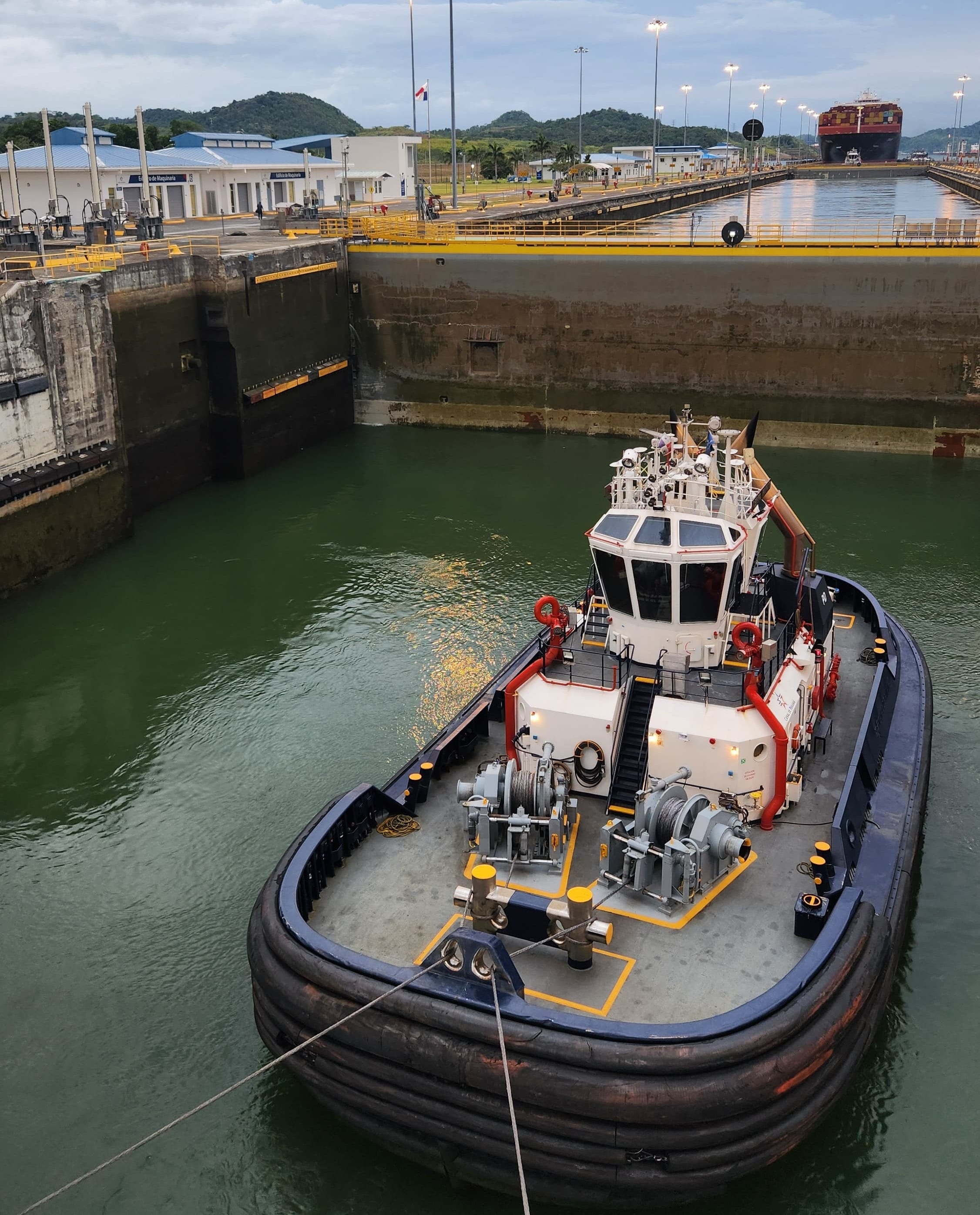
Finally, we were through to the Pacific!
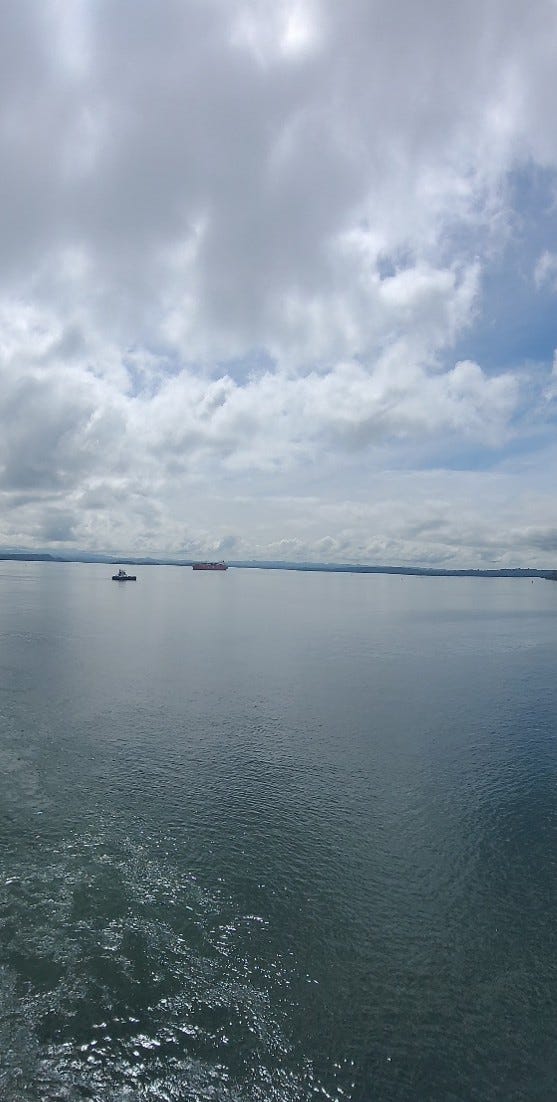
Goodbye, Panama Canal!
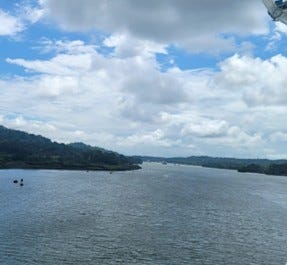
As a final note, having experienced both the new and the old canal passages, I was surprised by their inefficiency. Only 38 ships transit the canal on an average day, very, very slowly. We saw dozens lined up on both ends, waiting to enter. Yet the guides and all the materials we saw only sang the praises of the canal and its engineering achievements – which, granted, were great at the turn of the century – the 20th century. They were also very proud of the billions of dollars that are spent maintaining the canal, as well as reserved (in theory) for the needs of the country. Billions that are paid by ships going through the canal – from tens of thousands of dollars by private yachts to hundreds of thousands and, sometimes, millions(!), paid by cargo carriers. Those prices seemed a bit steep to me. And, apparently, to the owners of the ships as well. Capitalism always finds a better way, and there is now a cheaper, faster way to go between the Atlantic and the Pacific:
https://indiandefencereview.com/mexico-rail-corridor-panama-canal-drought-alternative/
Next port: Guatemala!